🕹️ Demos & Simulators
Below are the 73 interactive tools from the course, grouped by domain. Pick a demo, change its parameters and see right away how the algorithms respond.
💭 Reasoning
Symbolic reasoning with constraints, paths, optimization, planning.
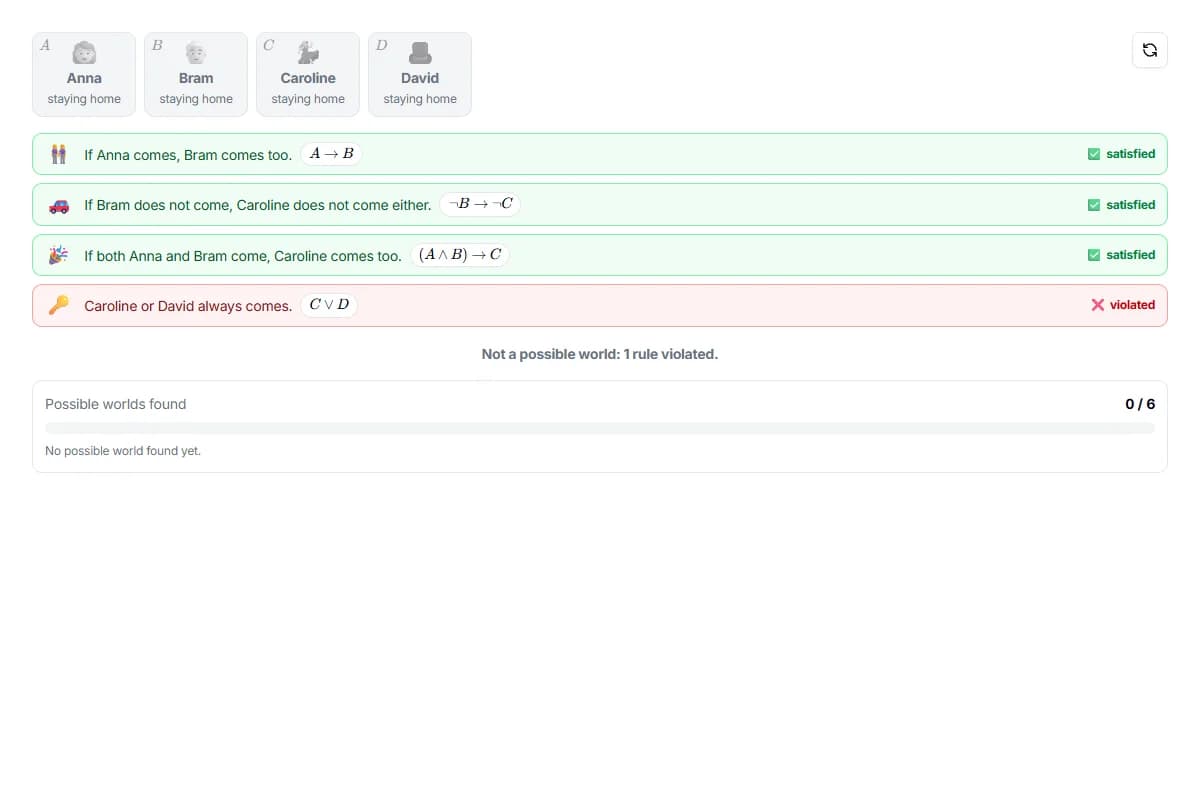
Possible worlds
Tick who comes to the party and discover which combinations respect every rule.
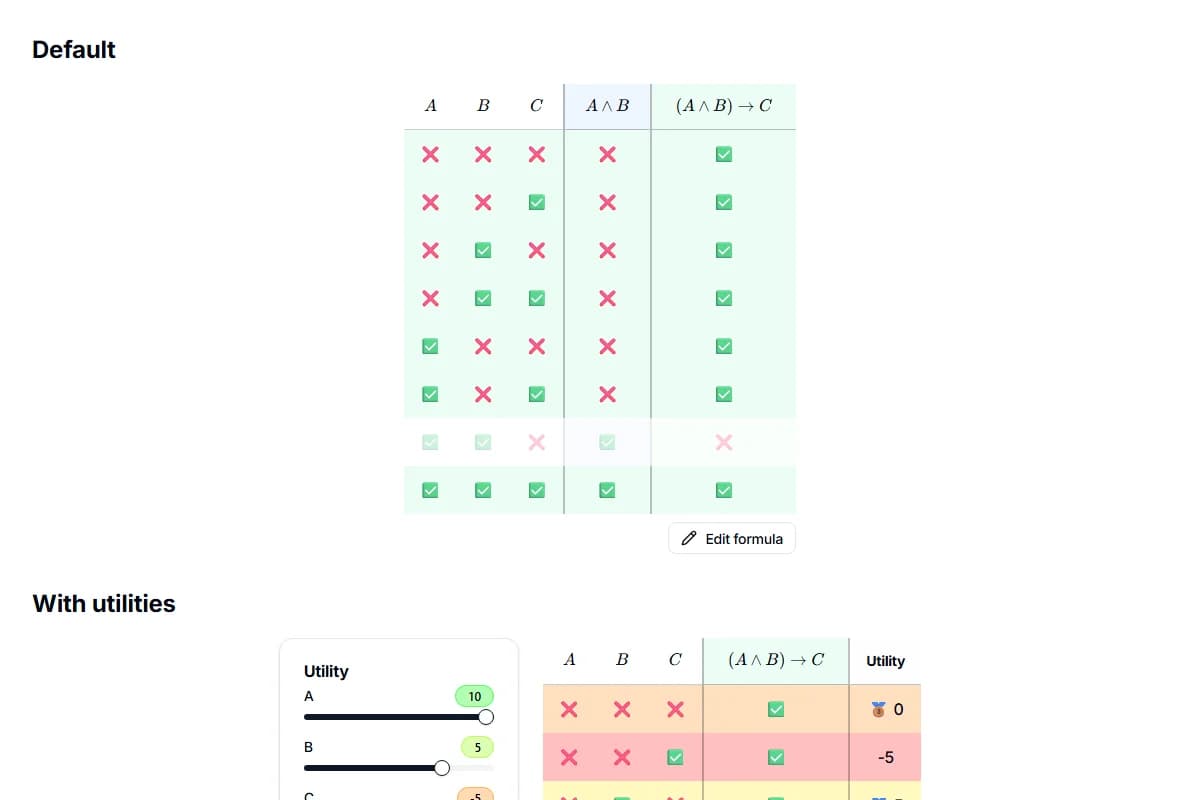
Truth tables
Build propositional logic formulas and use the truth table to see when they are true.
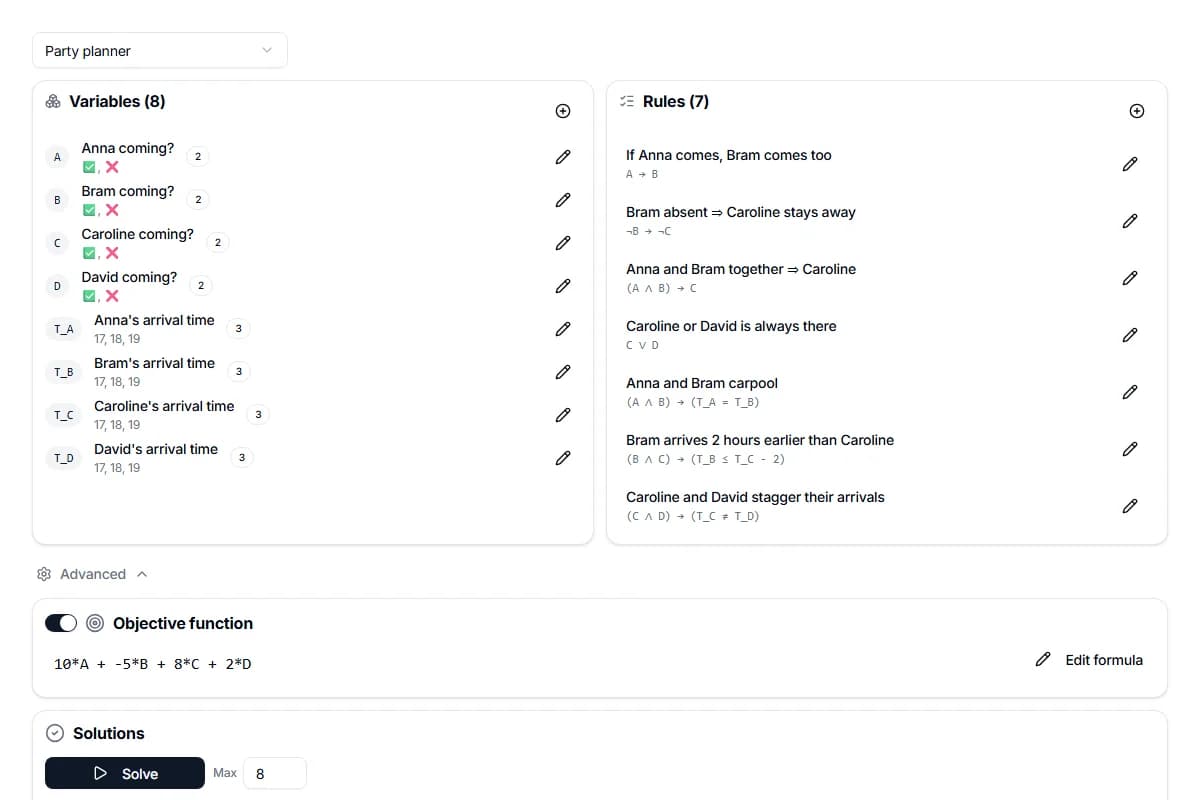
Constraint solver
Define a constraint optimization problem and let the solver compute the best option.
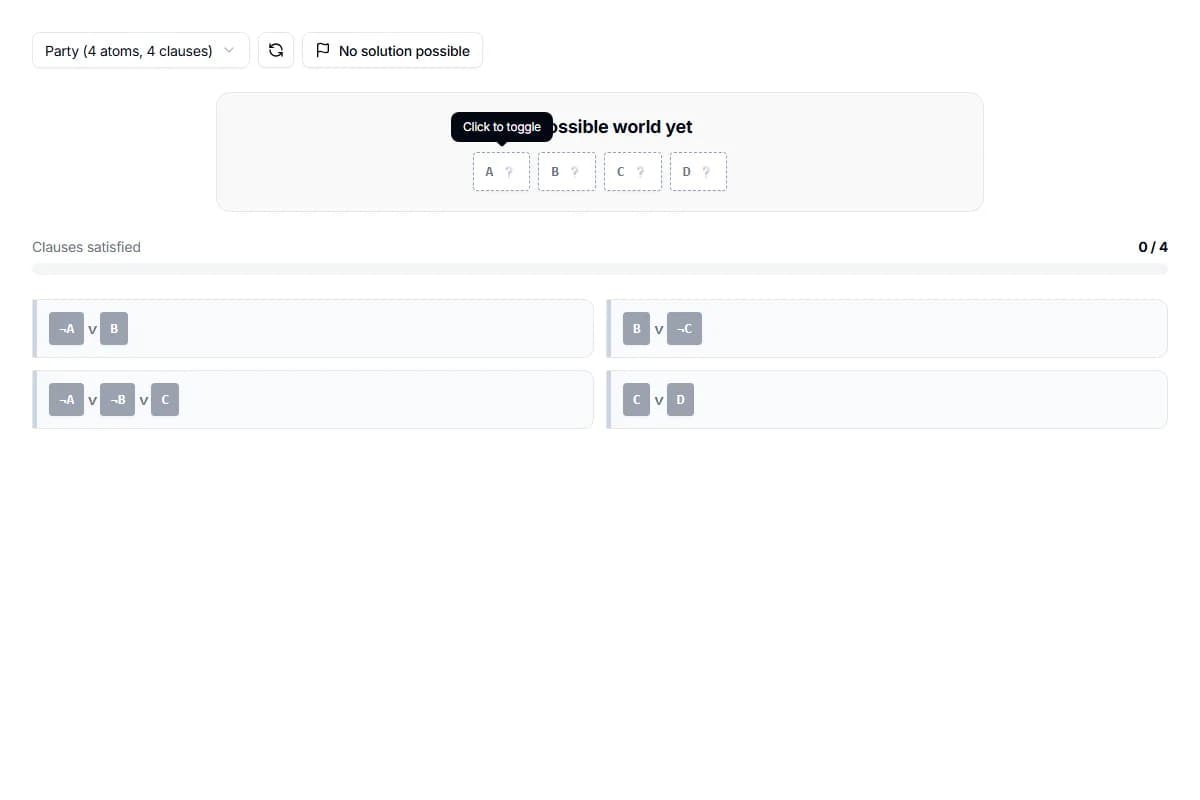
SAT puzzle game
Find a solution to a logical theory.
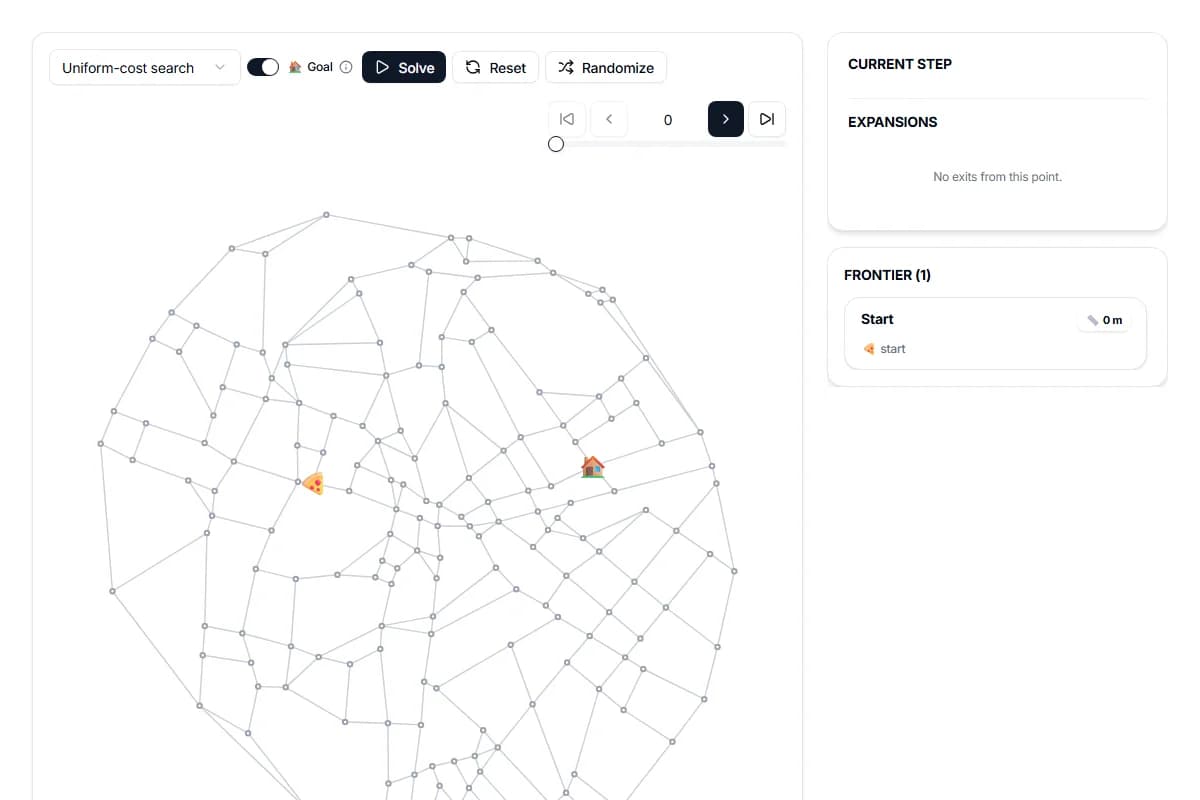
Leuven route planner
Find shortest paths on a map of Leuven, like a GPS.

Maze searcher
Compare search strategies for an agent in mazes.
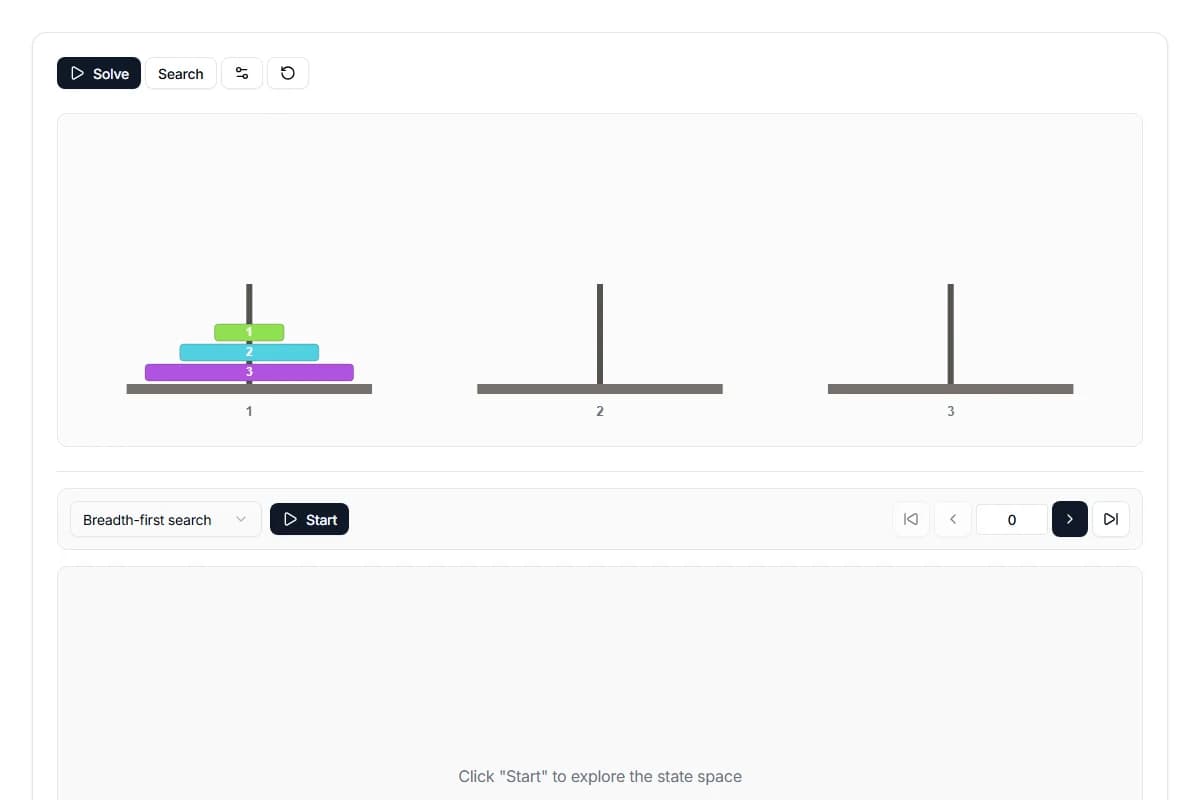
Tower of Hanoi
Search steps for the classic tower puzzle.
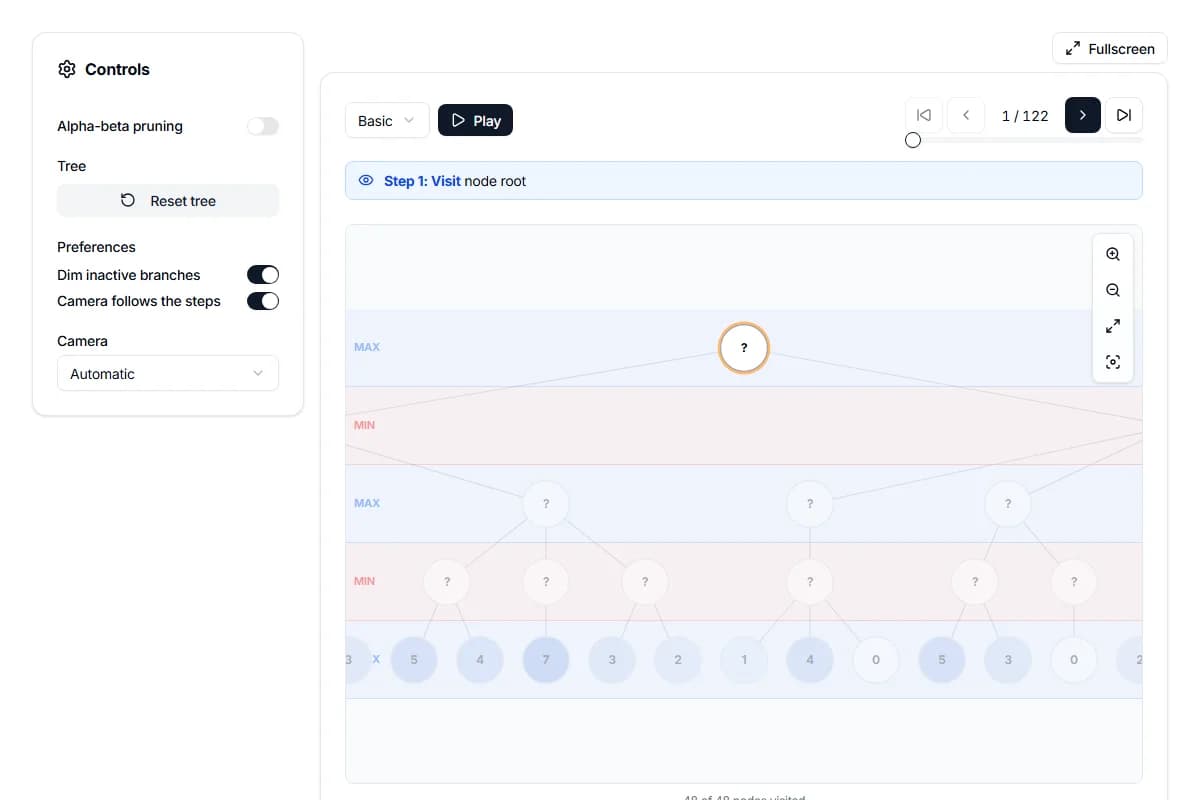
Minimax game tree
Step through how a minimax game tree works out which move is best in a given game position.
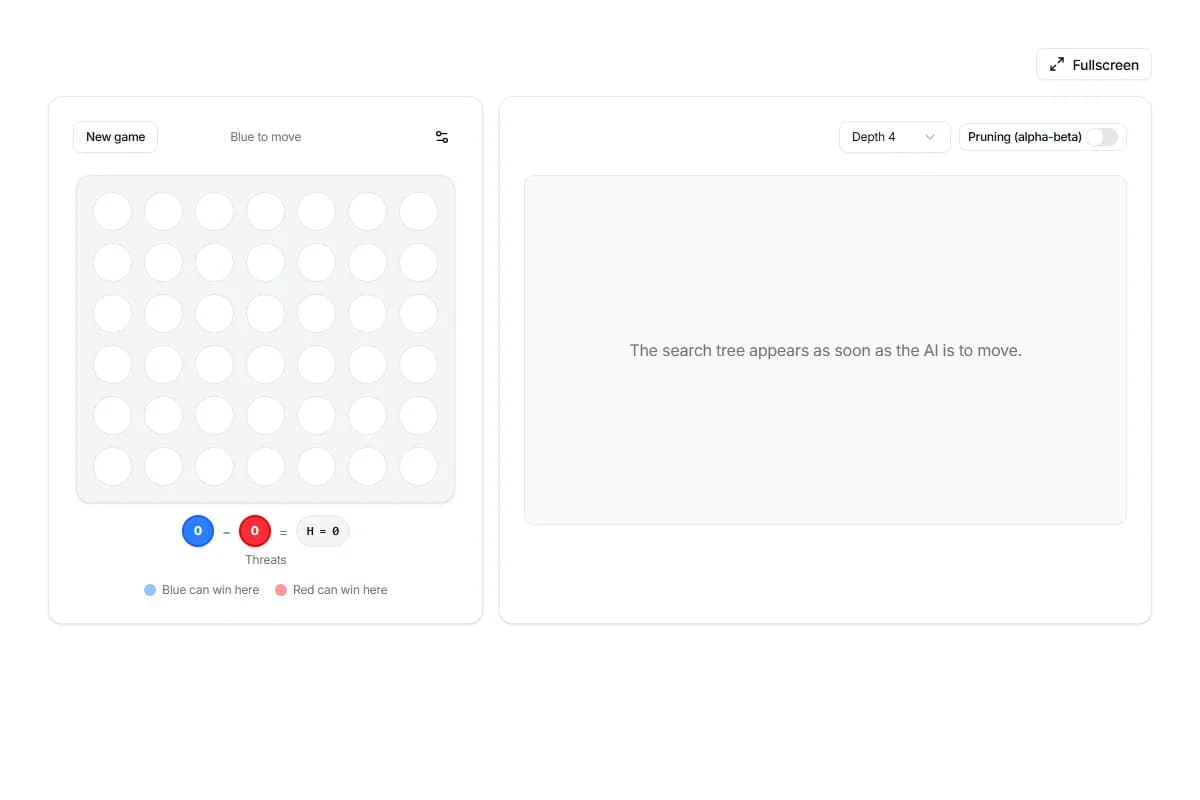
Connect Four AI
Play Connect Four against an AI and watch the minimax game tree pick its move.
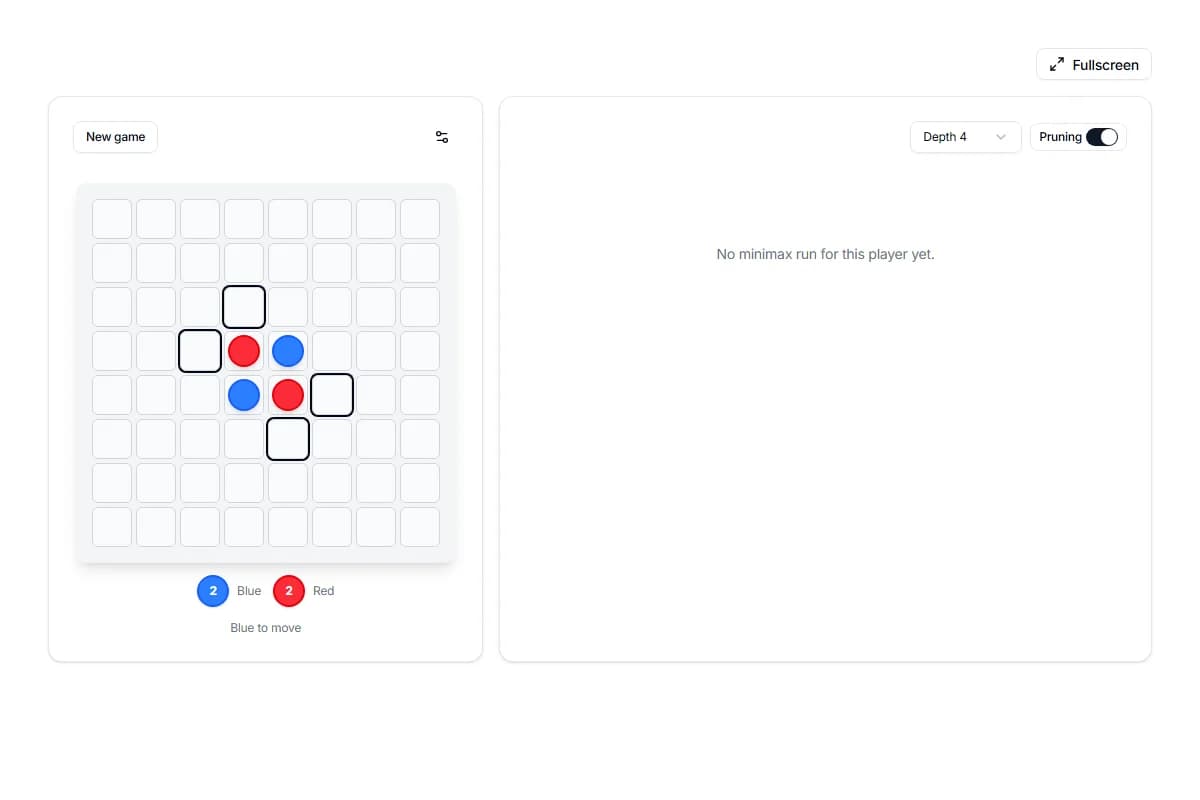
Reversi AI
Play Reversi against an AI and explore the minimax tree.
📊 Statistical models
Reasoning with probabilities, distributions and Bayes.
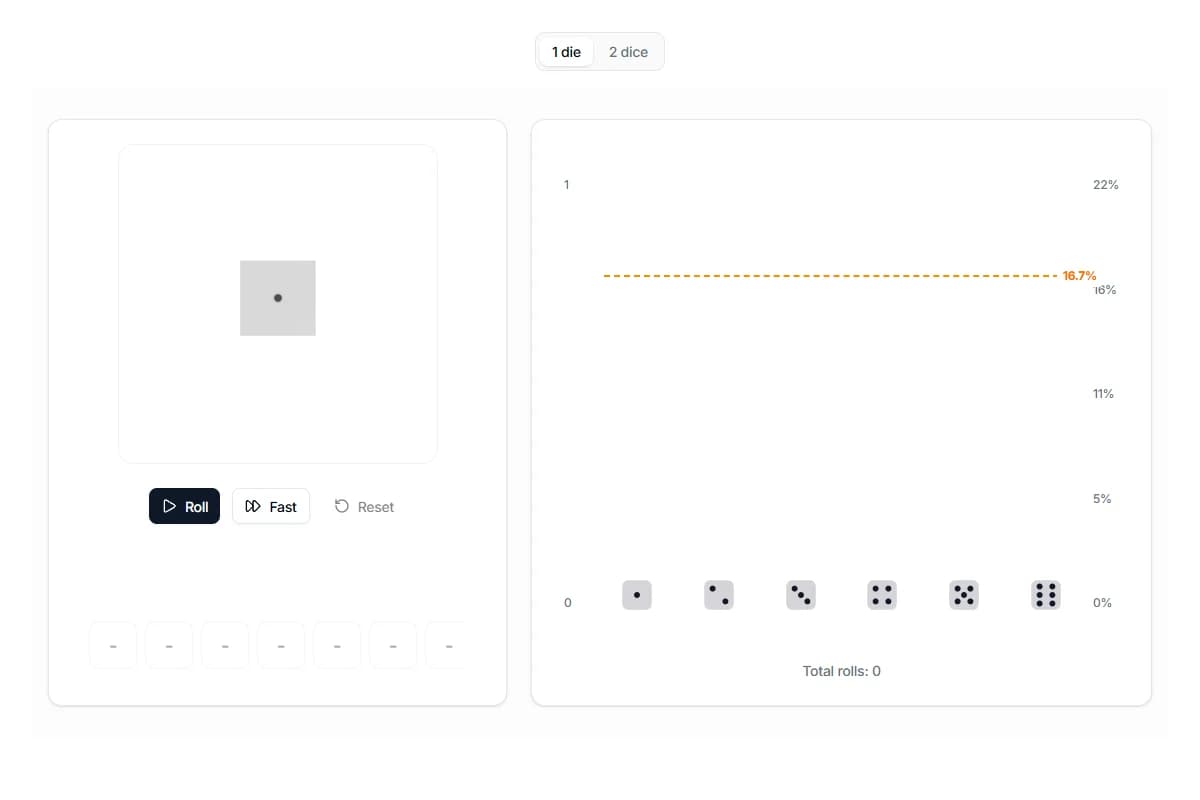
Dice counter
Count how often each roll or combination of rolls comes up, and compare it with the theoretical probability.
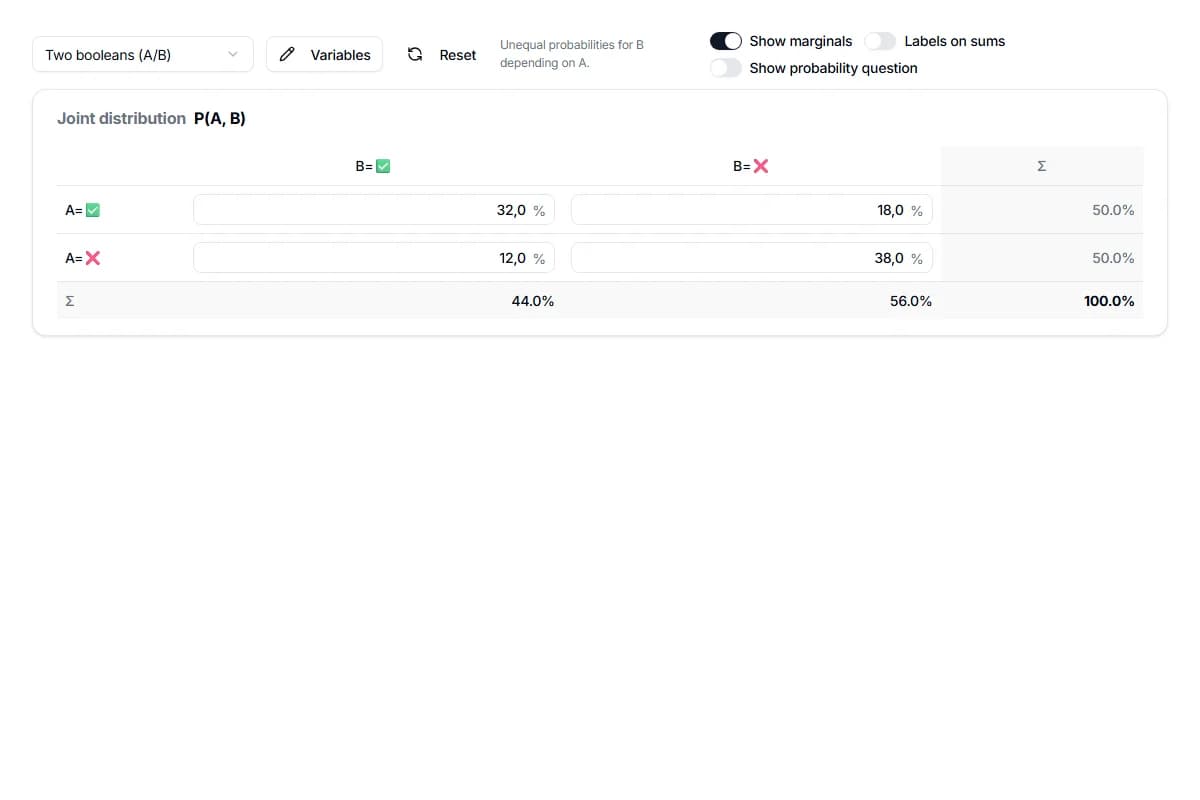
Probability table
Calculate probabilities from the probability table.
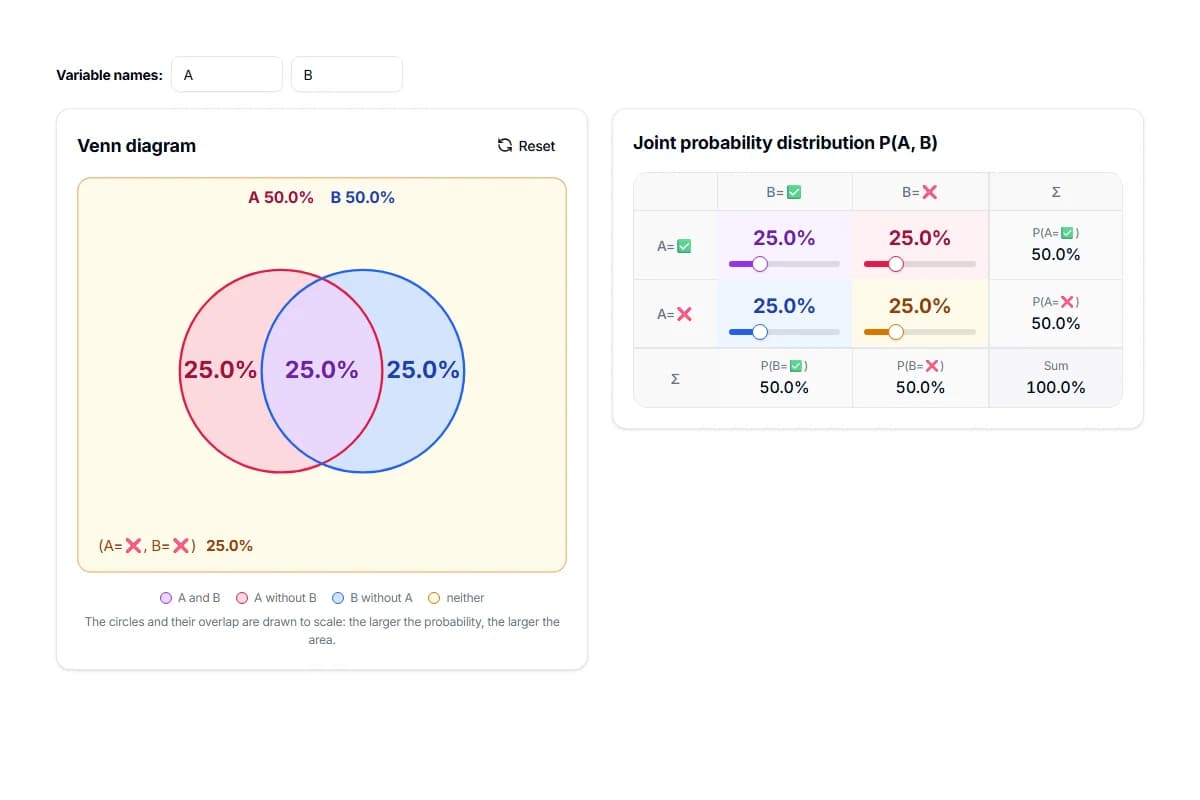
Venn diagram
Venn diagram of two Boolean variables based on their joint probability distribution.
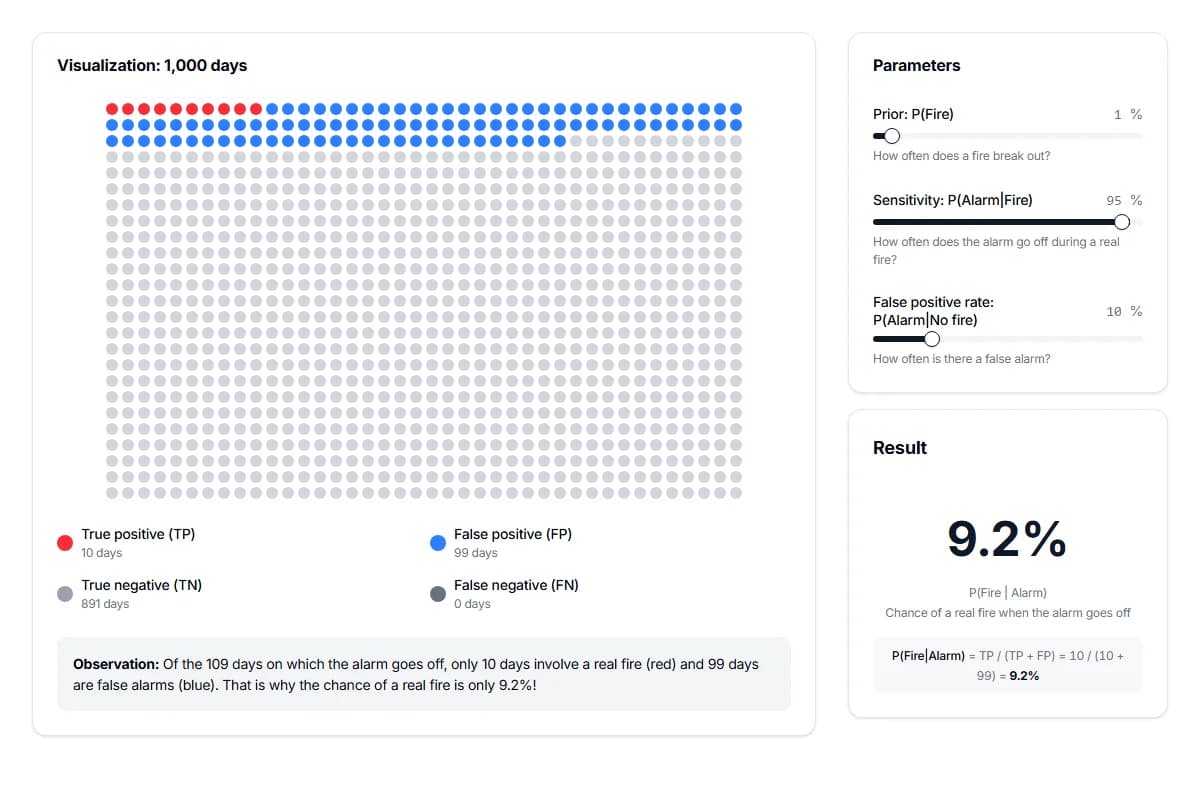
Bayes alarm
Visualizing Bayes' theorem with the fire alarm example.
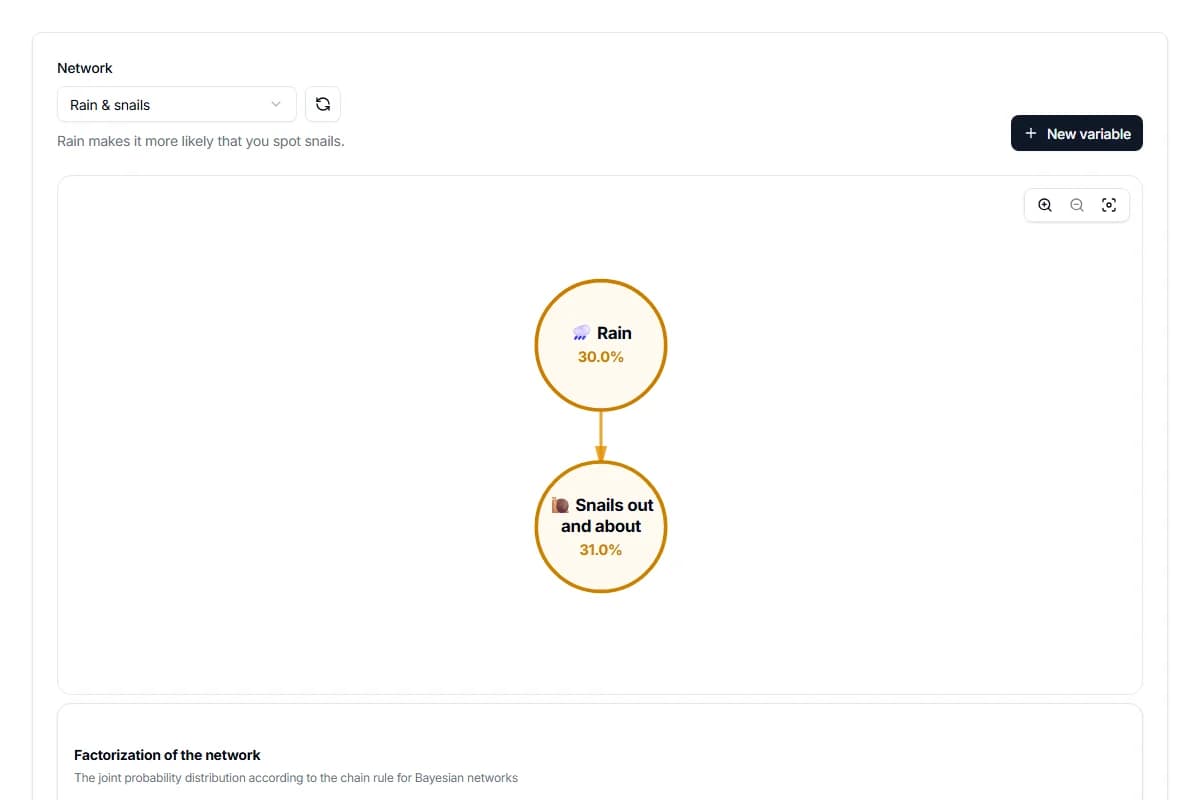
Bayesian network
Build a network, adjust probabilities and see how the other probabilities change throughout the network.
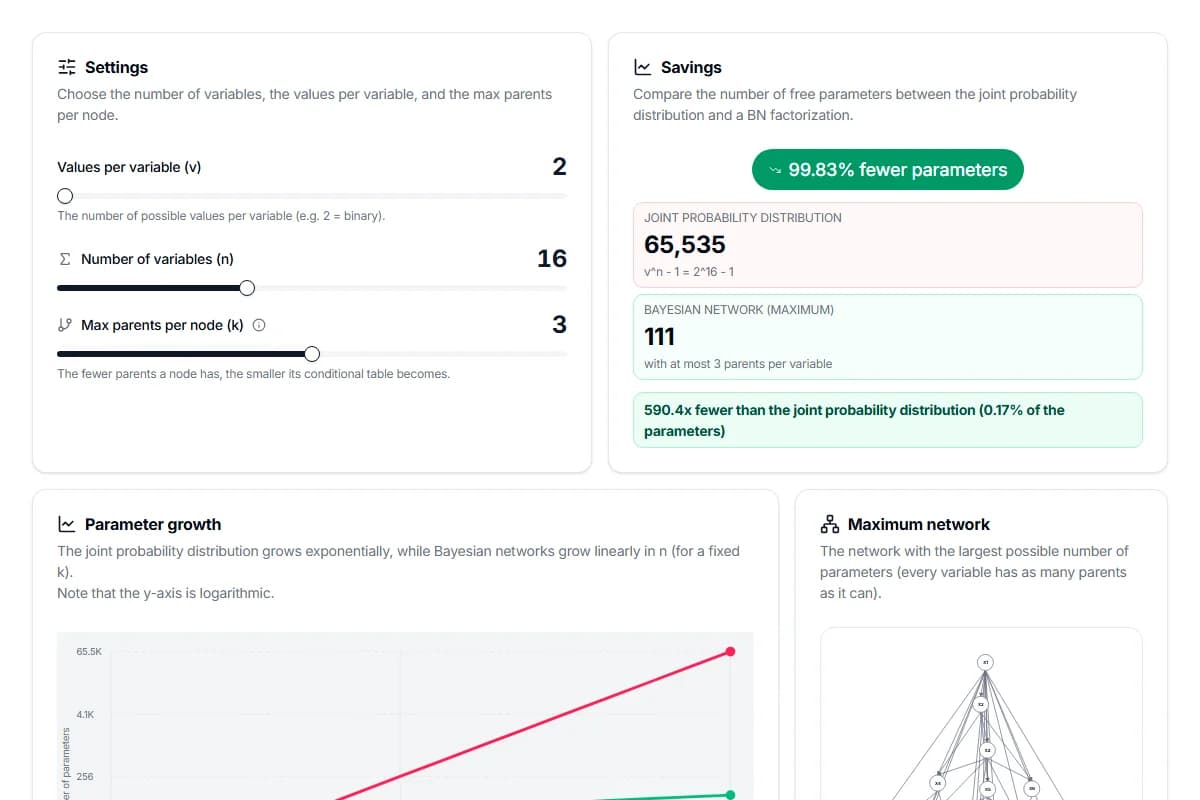
Bayesian Network Parameters
Compare how many parameters a Bayesian network saves relative to the full joint probability distribution.
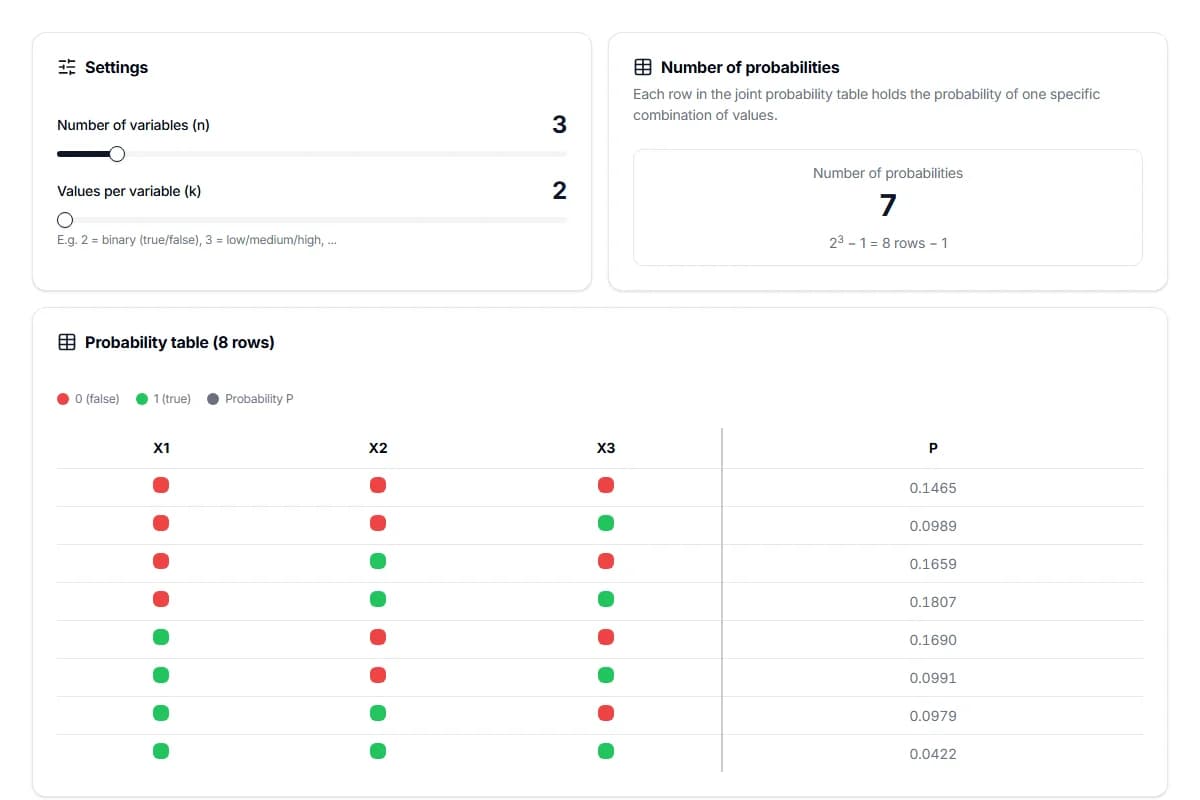
Size of probability tables
Visualize how exponentially large a joint probability distribution becomes.
🏋️ Machine Learning
Automatically learning patterns from data.
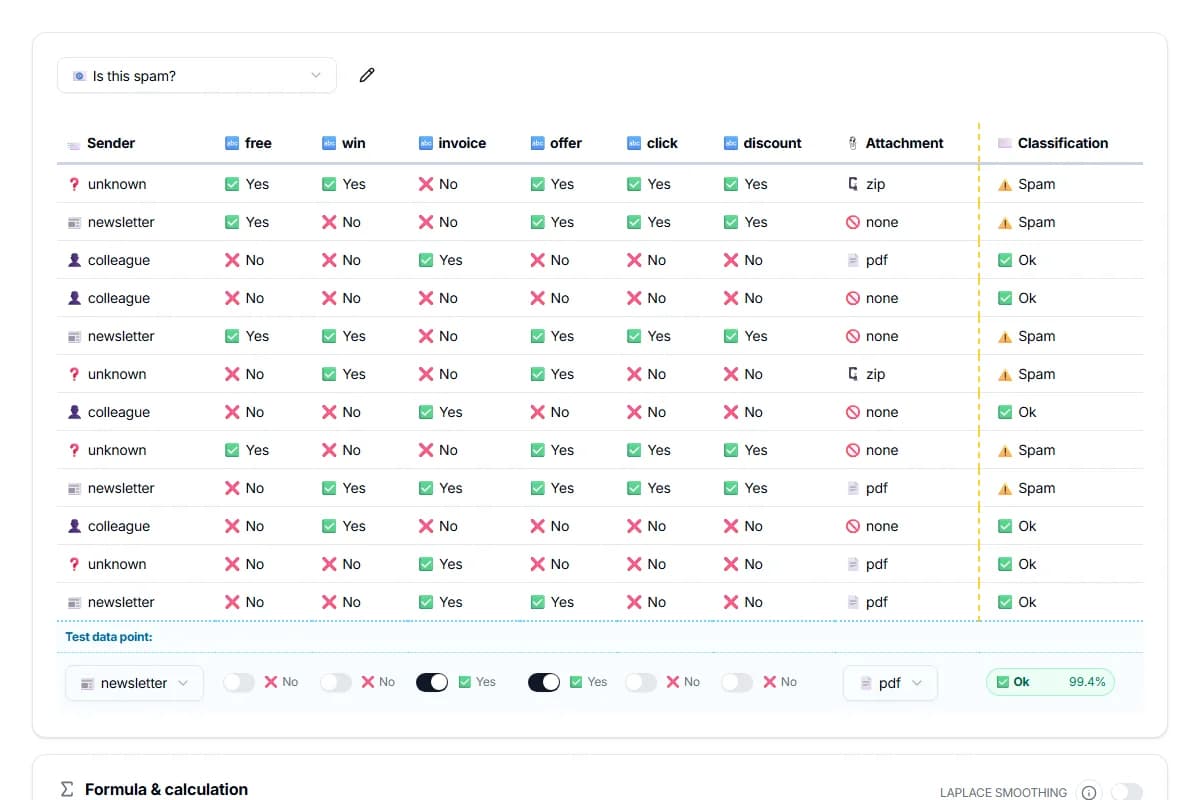
Naive Bayes
Calculate the probability of an event from examples and the independence assumption, or let one bar per label race the others in the race view.
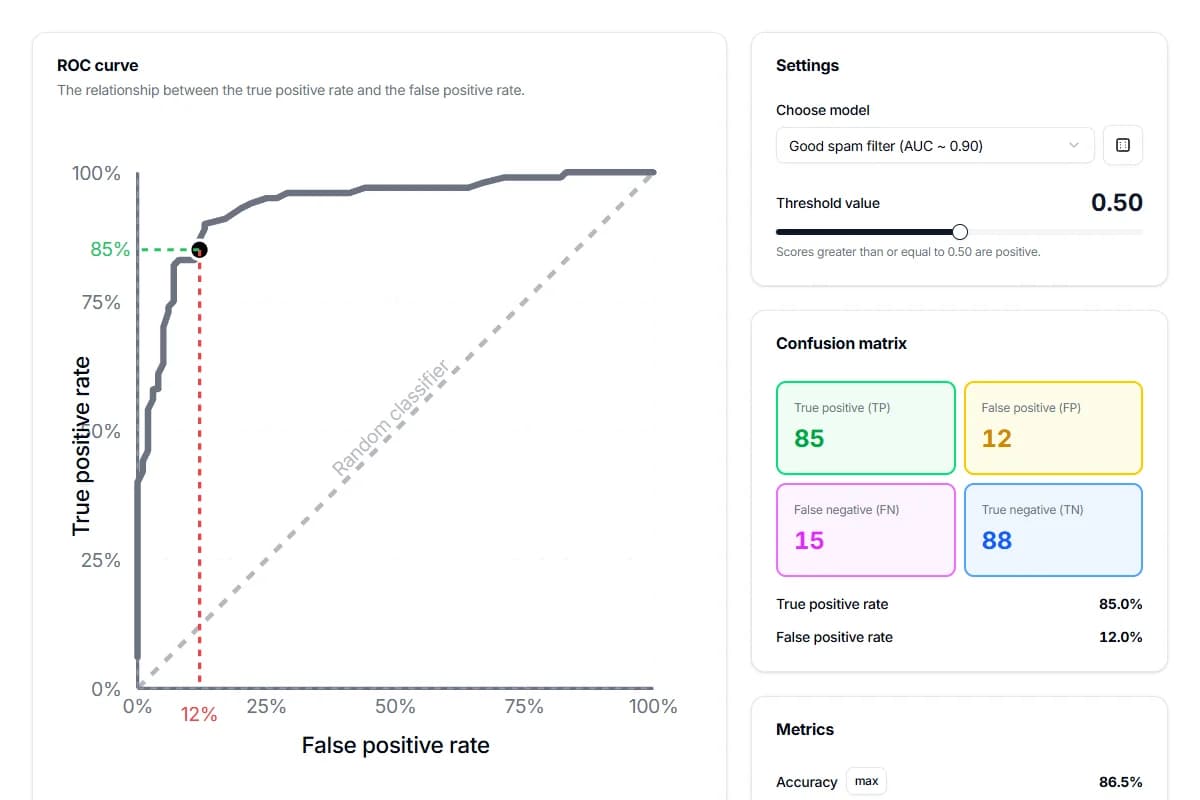
ROC curve
Set the threshold and watch straight away what happens to true and false positives and to the evaluation metrics derived from them.
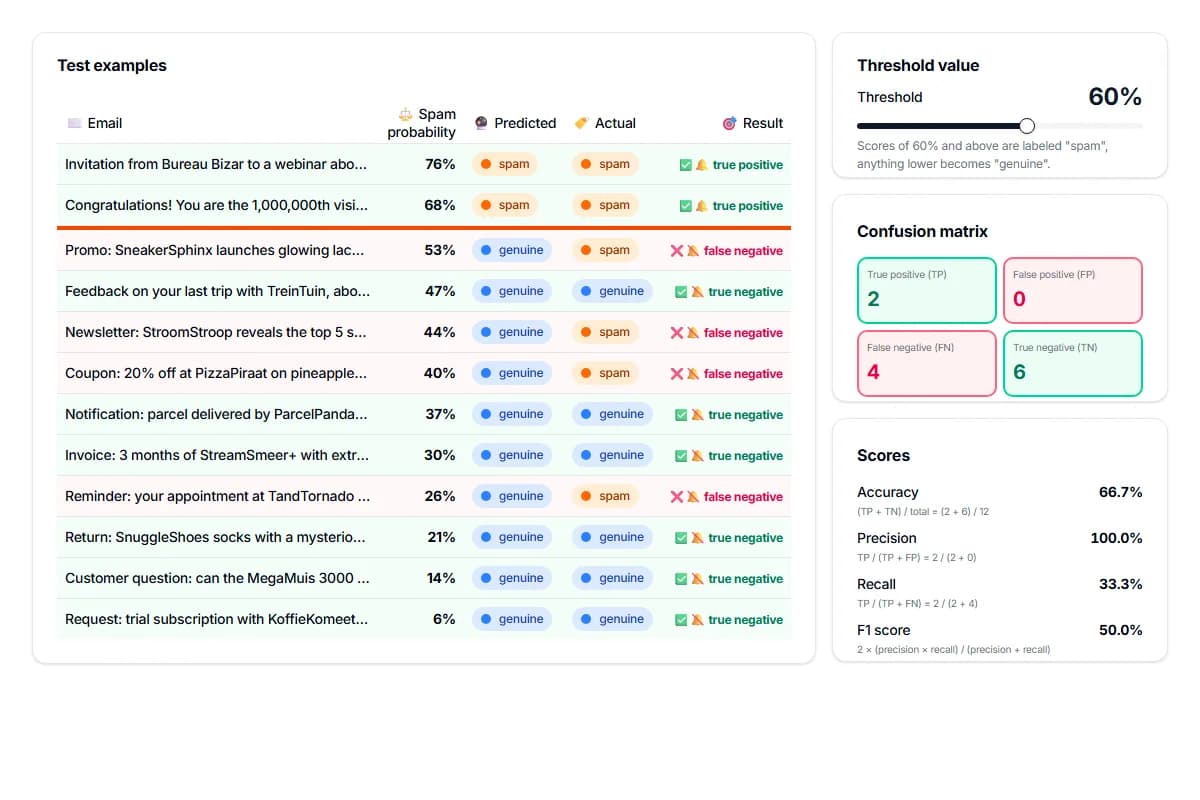
Threshold-based classifier
Choose a threshold and see how well the predicted probability helps detect spam.
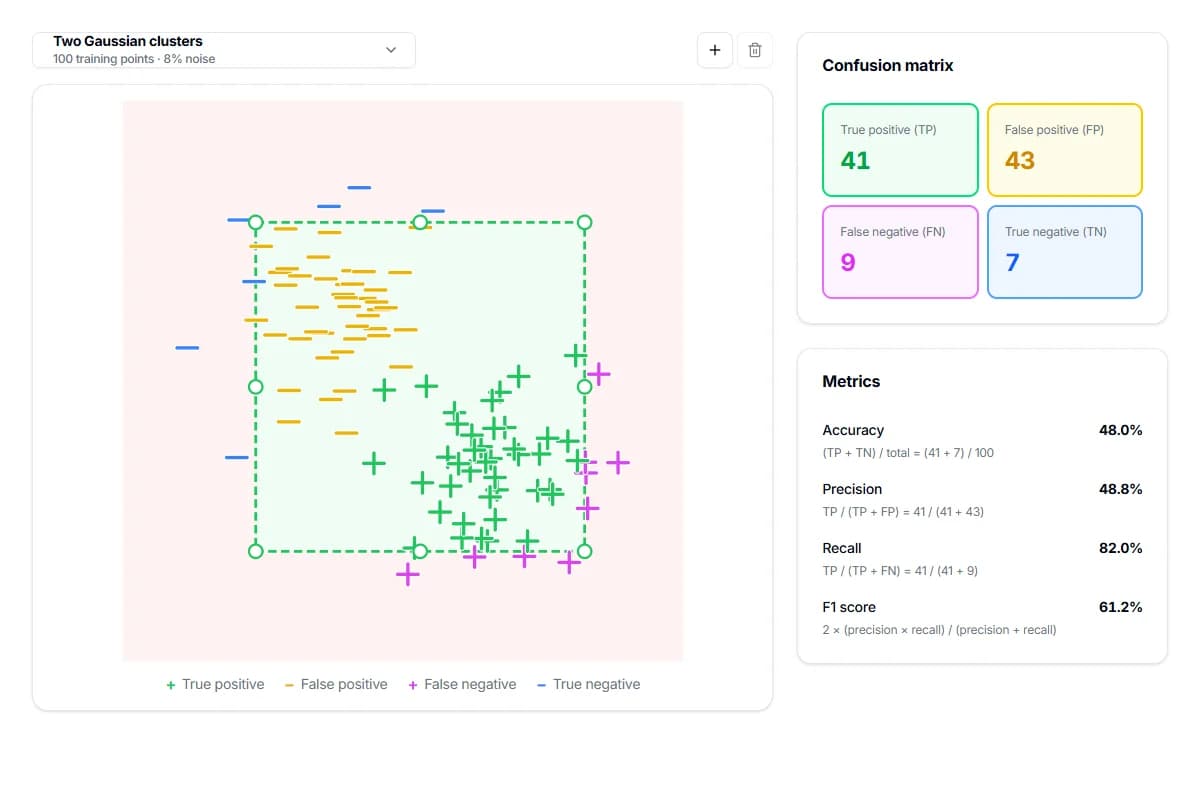
Classification errors
Drag a rectangle to classify points and see which predictions are right and which are wrong.
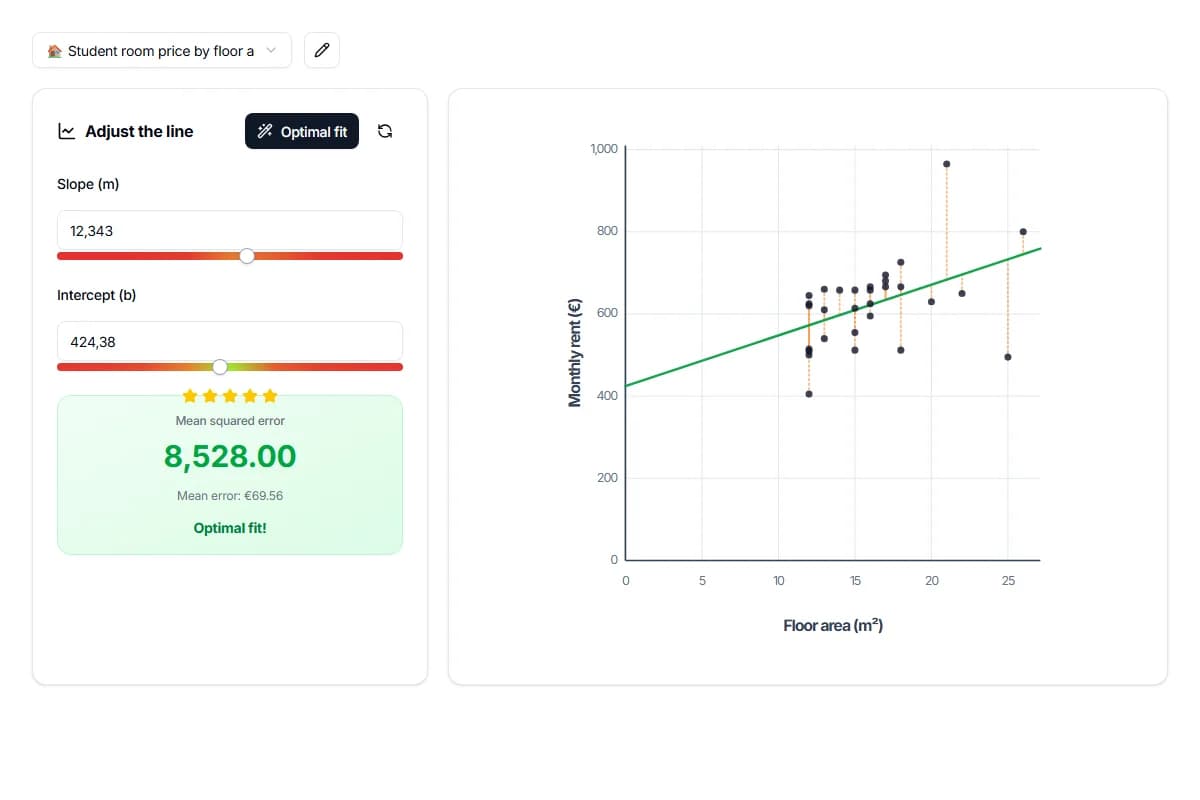
Linear regression
Find the best line through a 2D dataset by adjusting its slope and intercept.
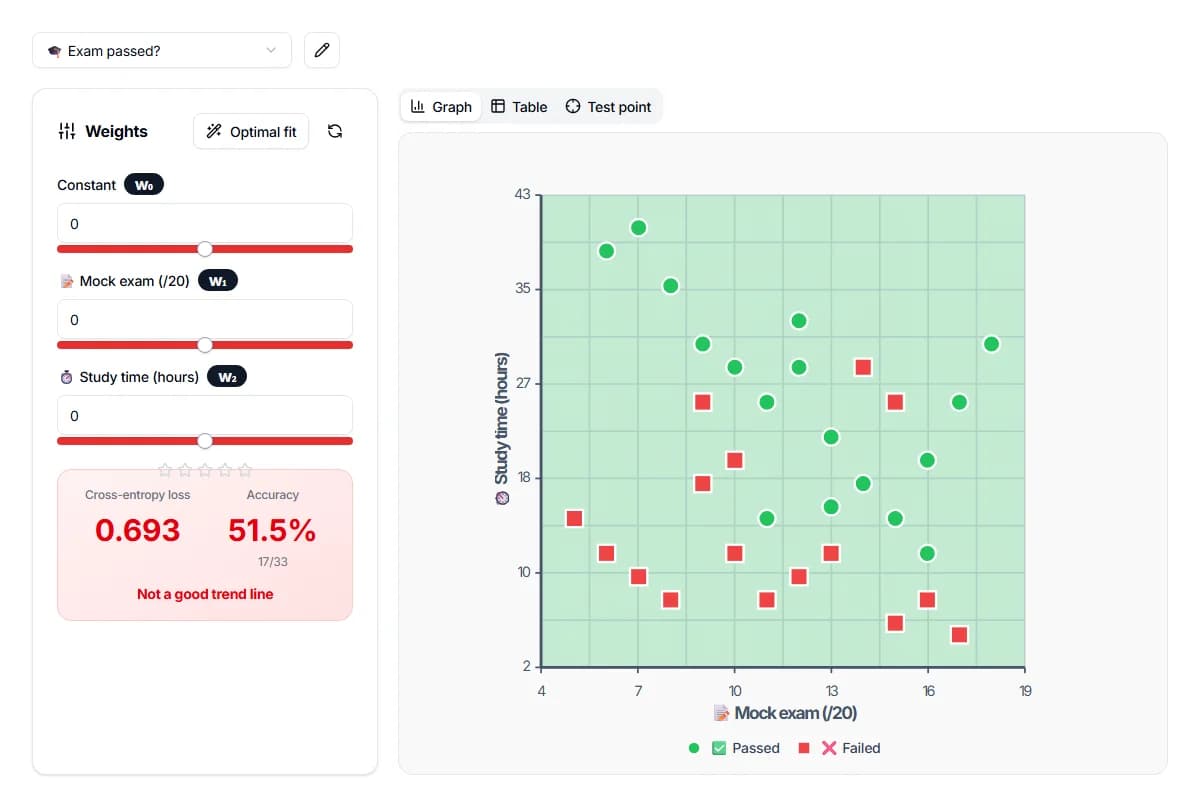
Logistic regression
Classify examples with a sigmoid function based on weighted features.
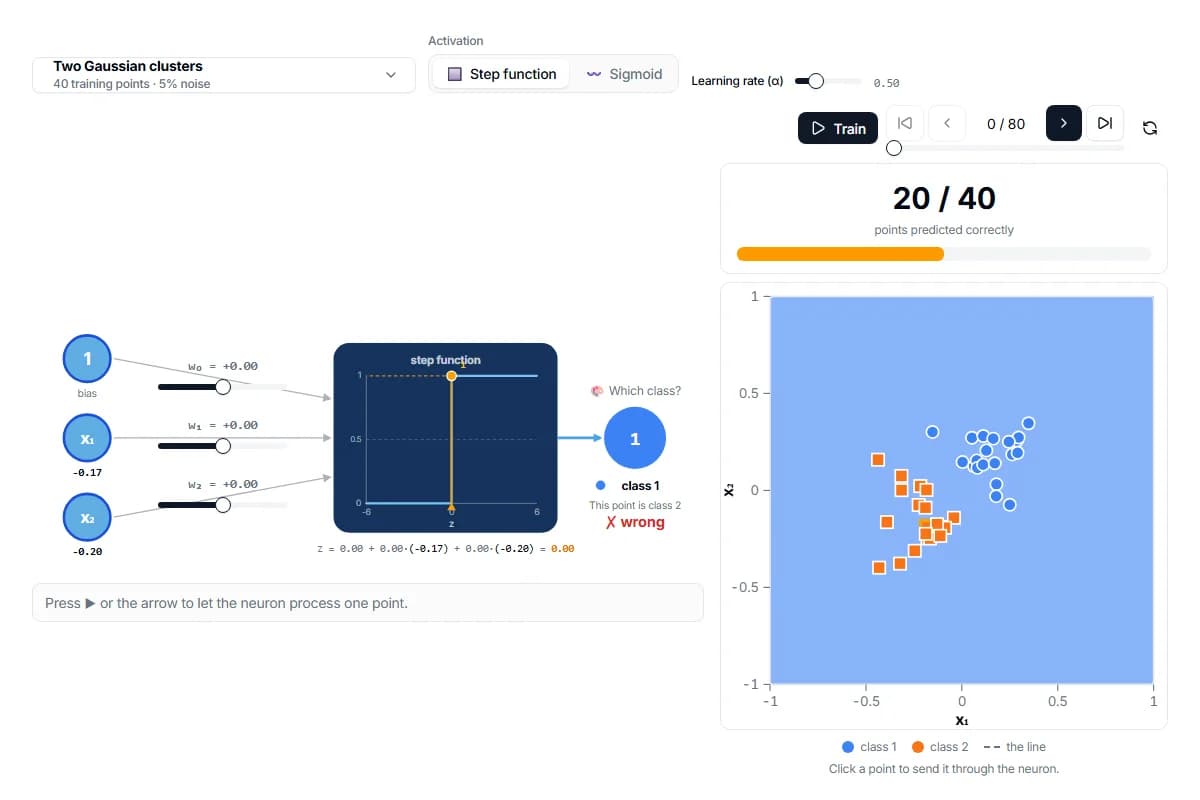
Perceptron
Discover step by step how a perceptron learns to classify.
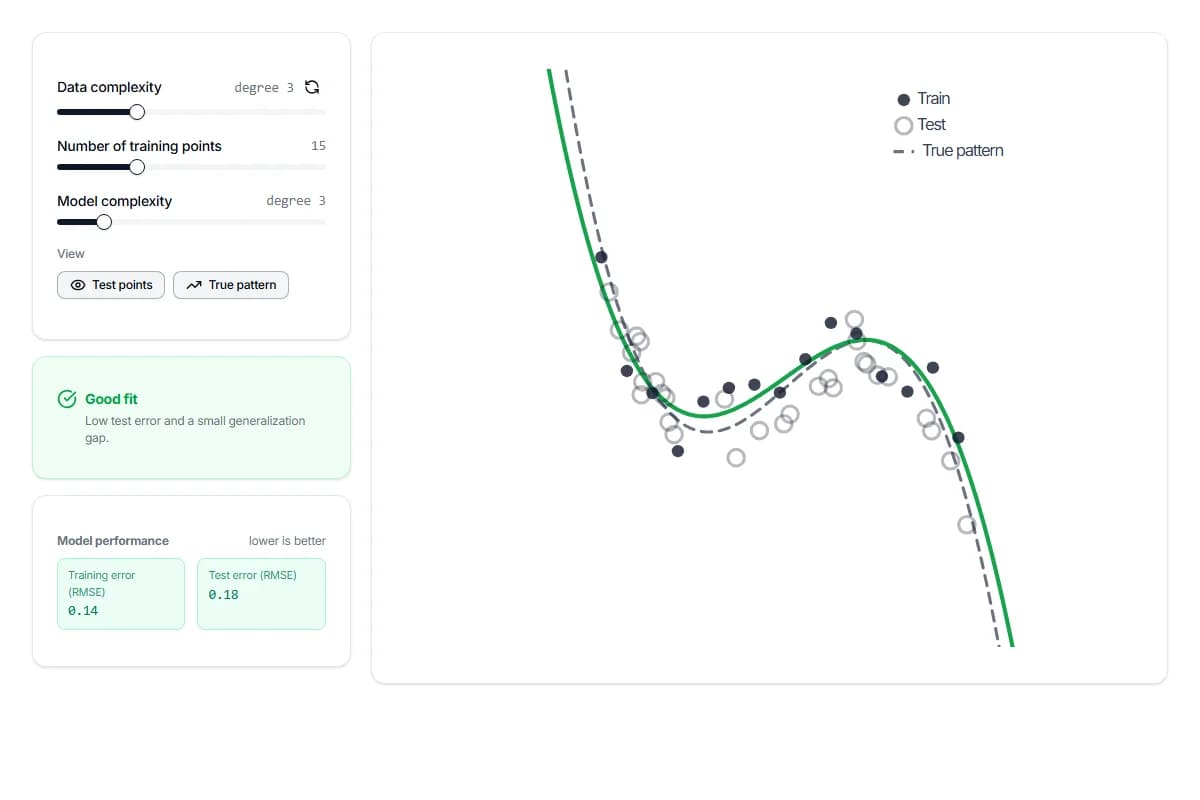
Overfitting
Compare how training and test error change for models that are too simple and too complex.
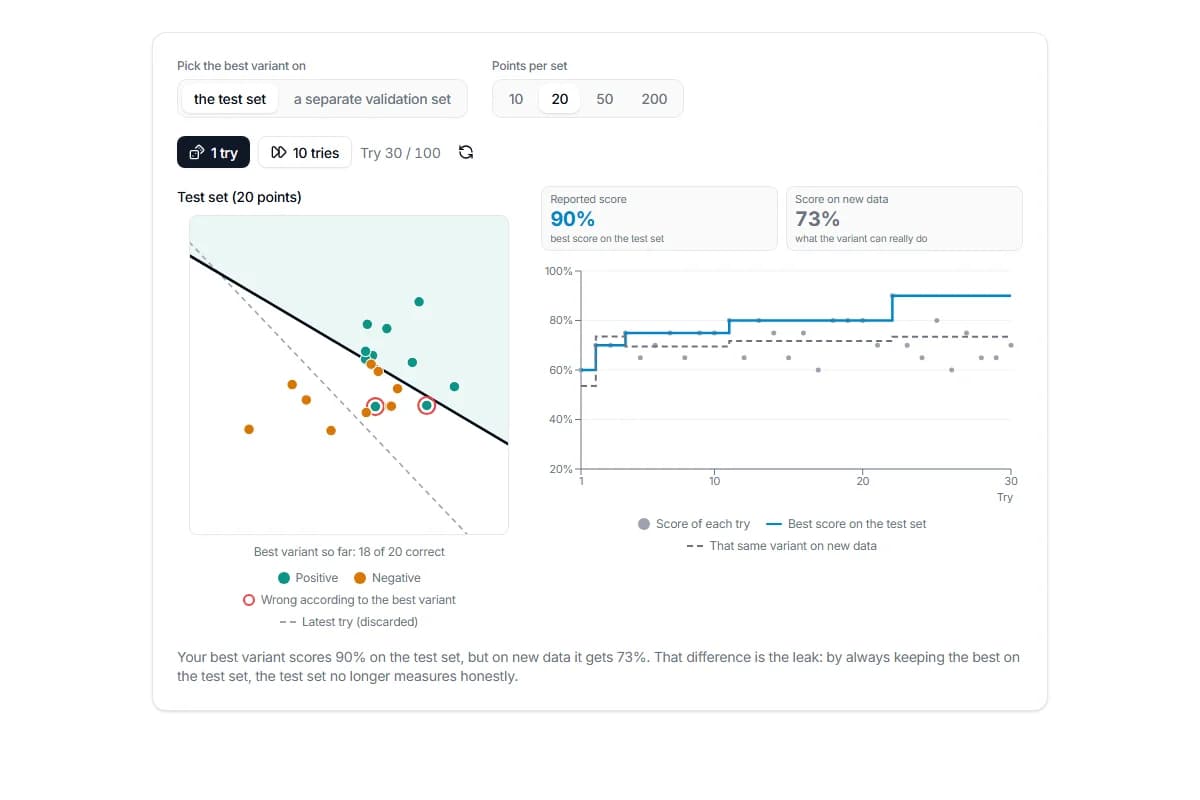
Tuning on the test set
See how your reported score becomes too good when you pick variants on the test set instead of on a separate validation set.
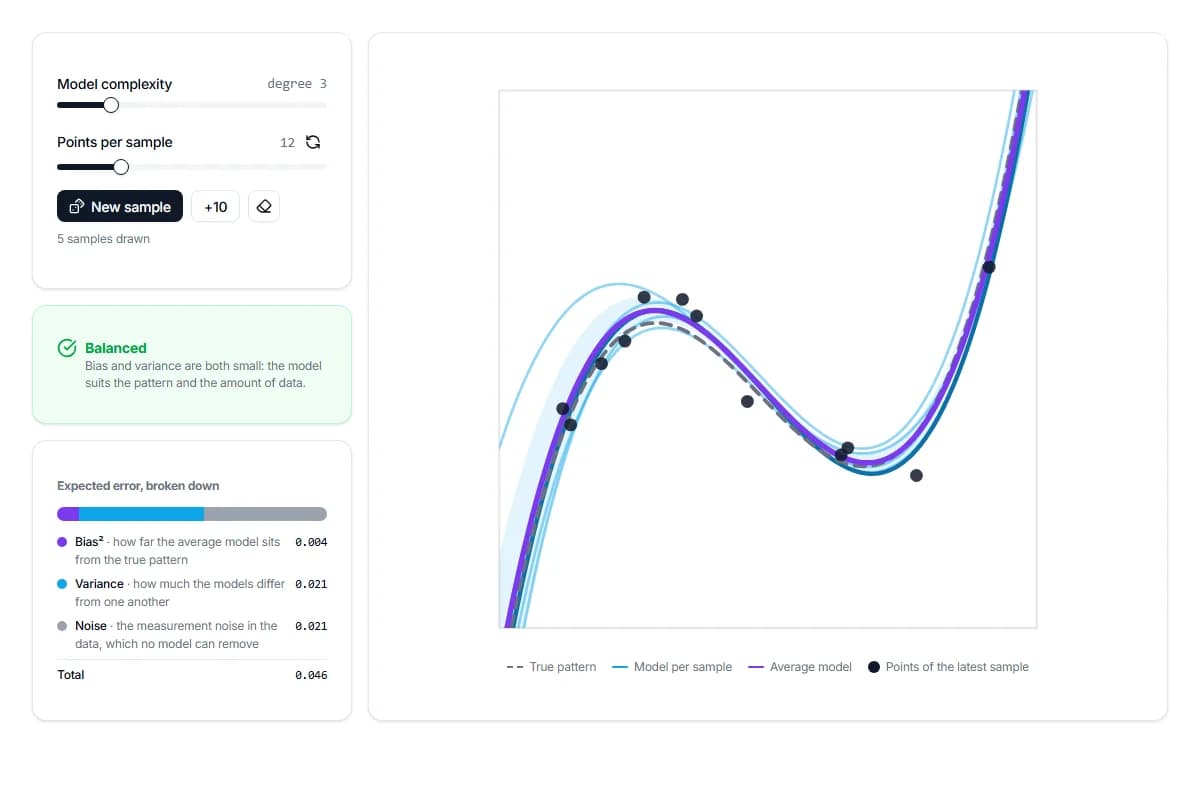
Bias and variance
Draw sample after sample from the same pattern and see whether the fitted models all miss in the same way (bias) or scatter all over the place (variance).
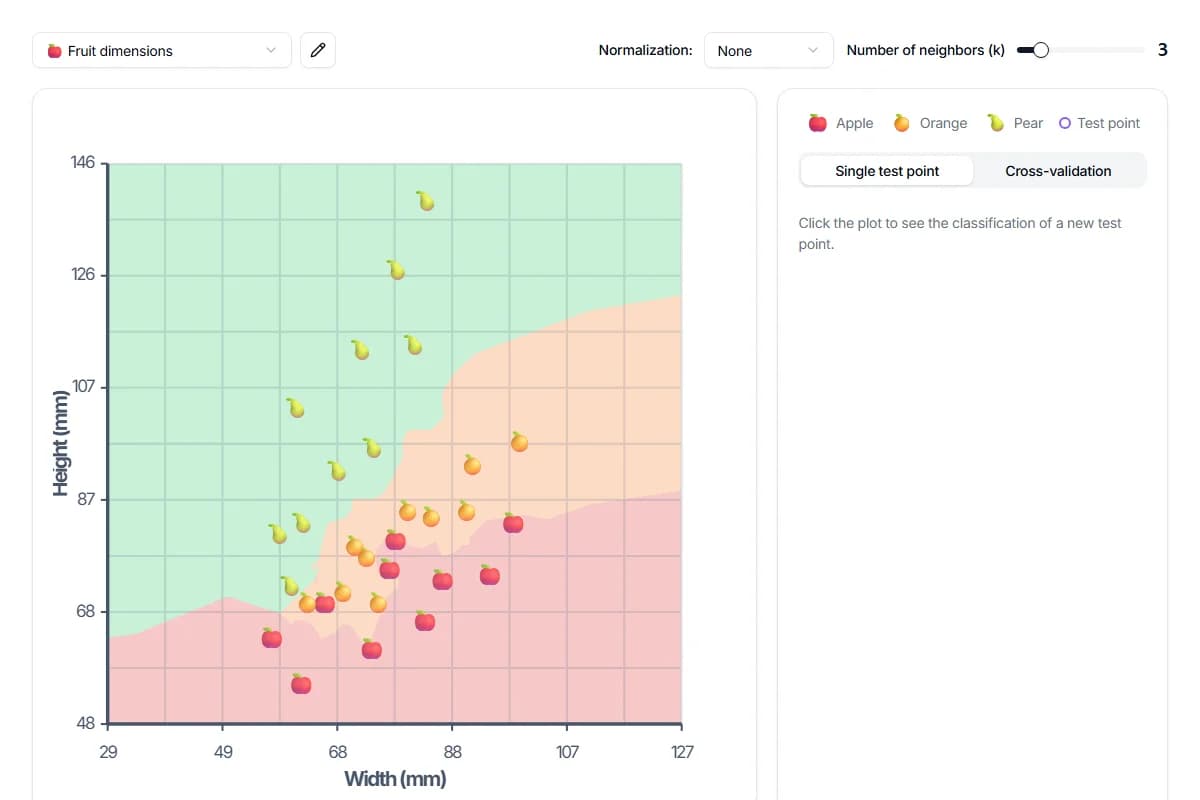
Nearest neighbors
Place a test point and see how the nearest-neighbors algorithm classifies it.
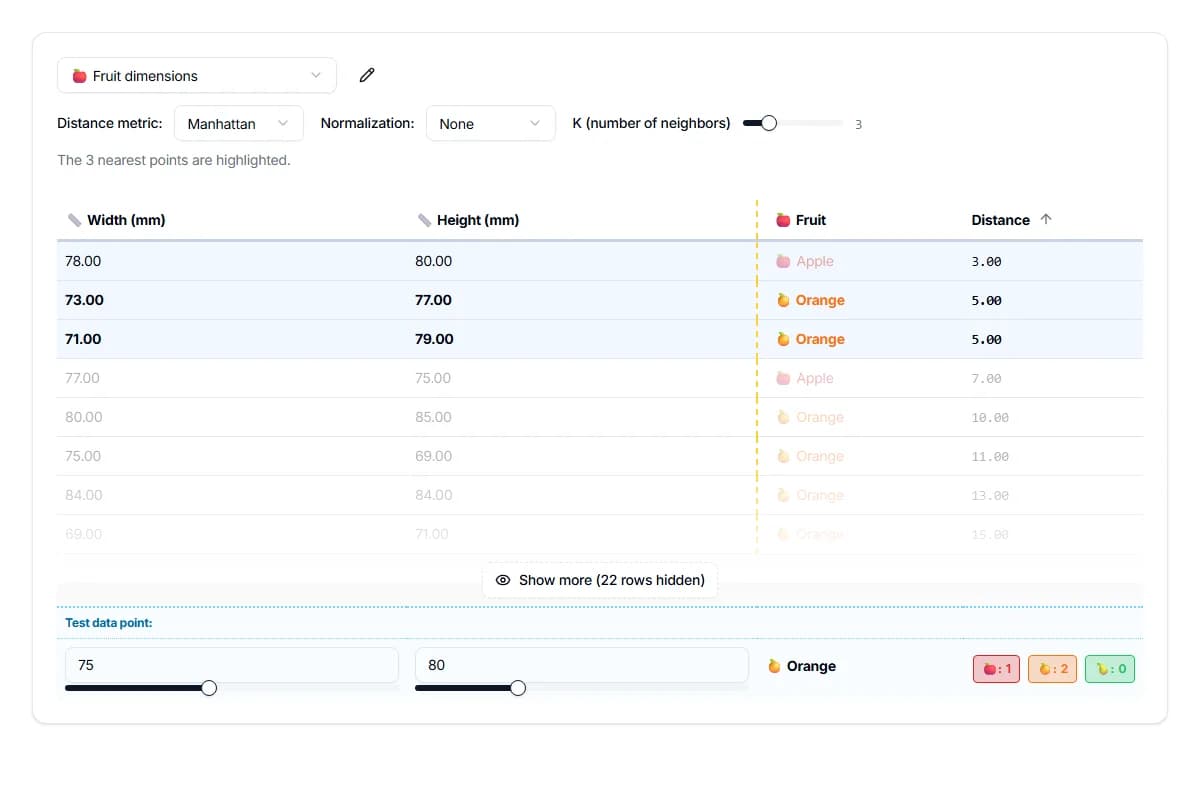
Nearest neighbors table
A table view of how the nearest-neighbors algorithm works.
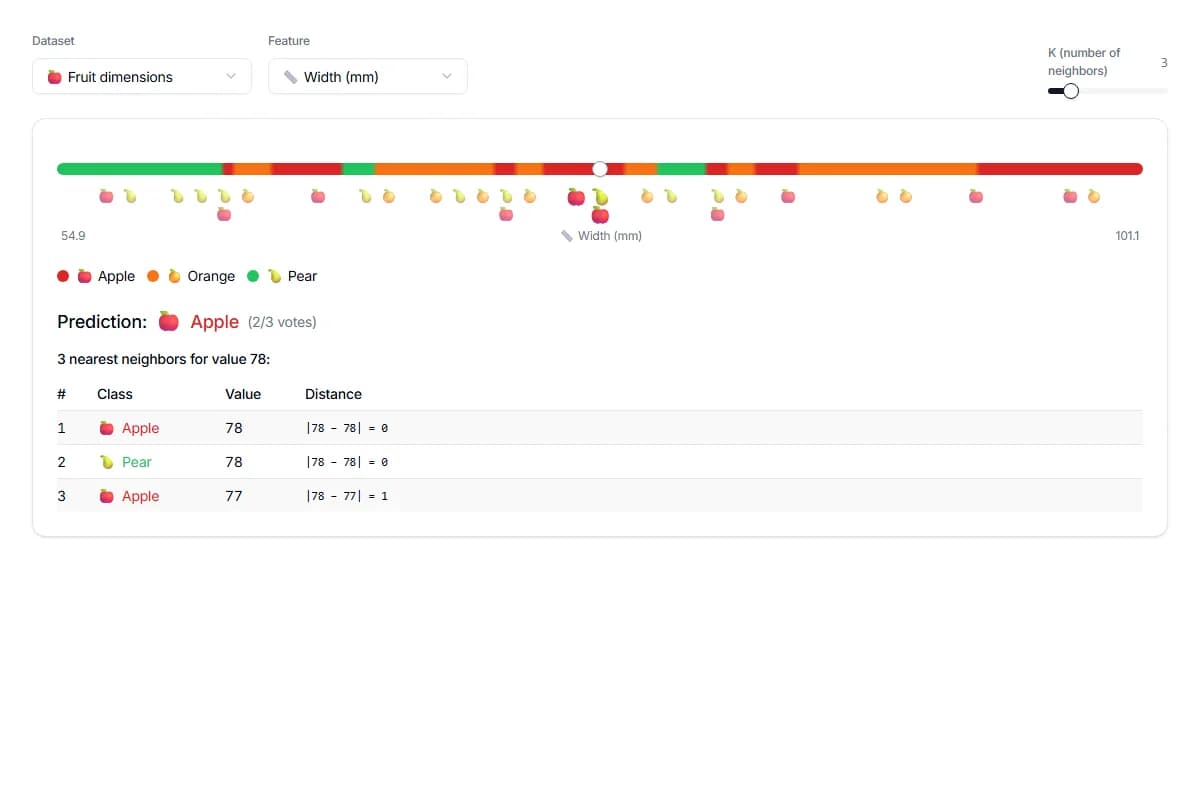
Nearest neighbors 1D
Classify points on an axis with the nearest-neighbors algorithm and see how the prediction changes.
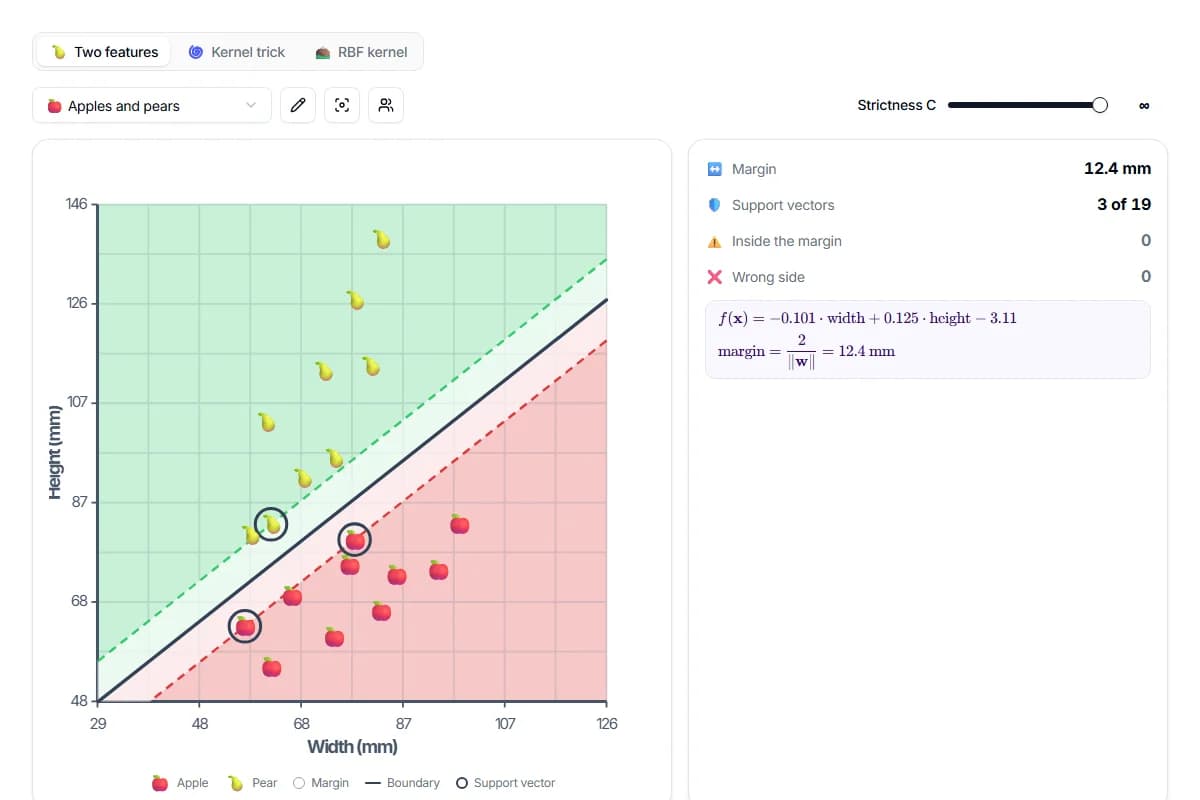
Support vector machine
Find the widest margin between apples and pears, and see which pieces of fruit hold it in place.
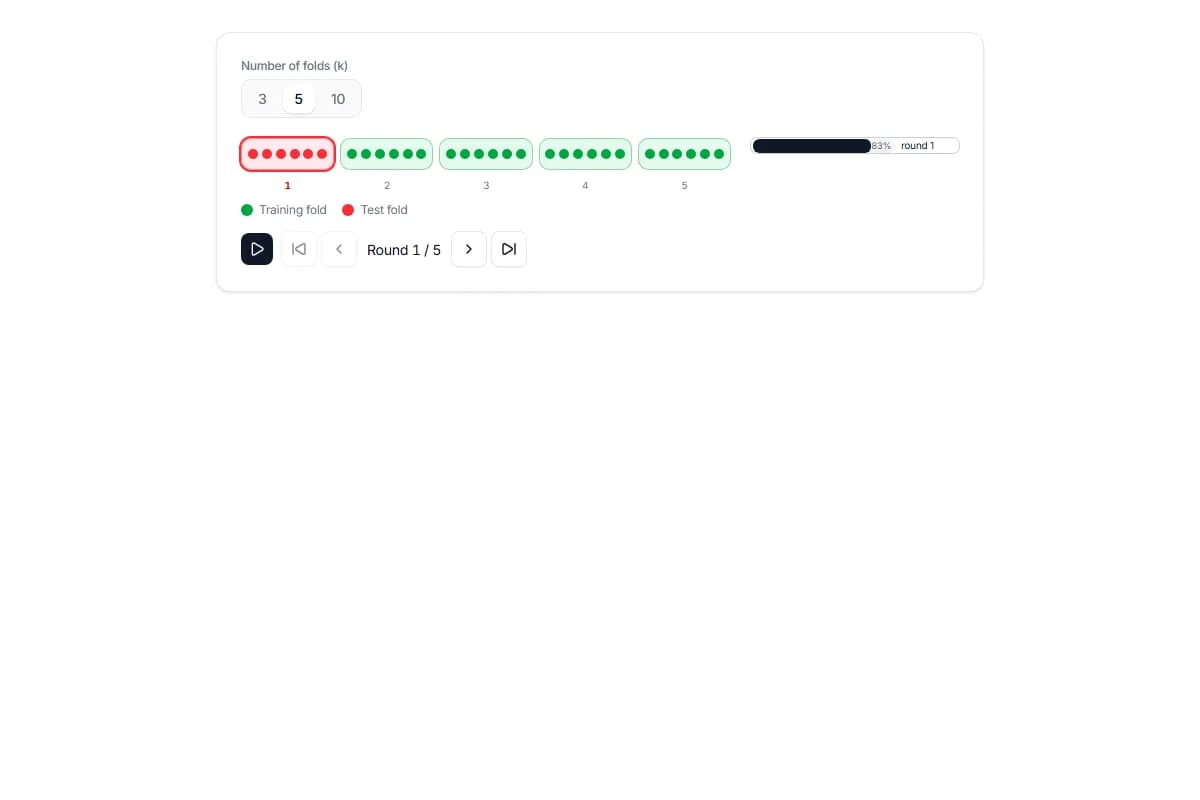
Cross-validation folds
Watch the test fold shift one block further each round, and how the per-round accuracies add up to one average with an error margin.
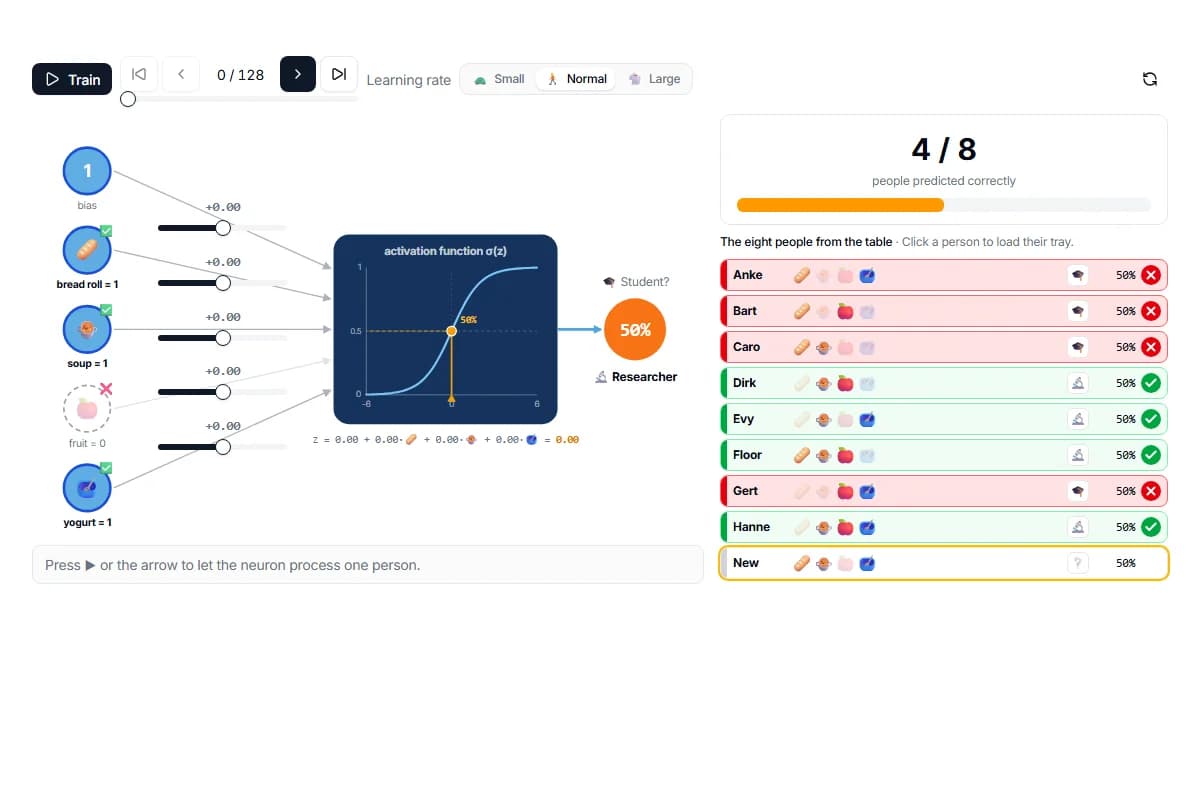
Neuron simulator
Set the weights of a single neuron with the sliders, load the eight people from the Alma table and then let the neuron learn its weights step by step from its mistakes.
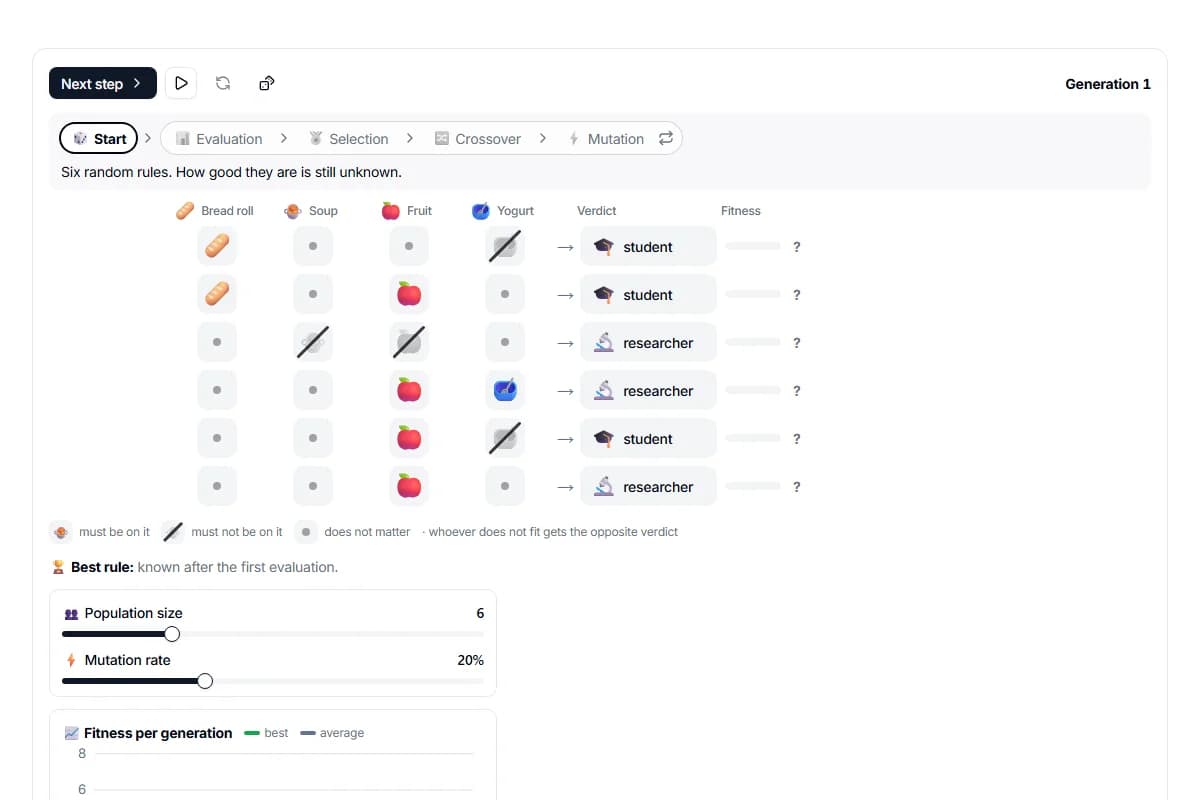
Genetic algorithm
Watch a population of rules evolve through selection, crossover and mutation until they can predict who at the Alma is a student.
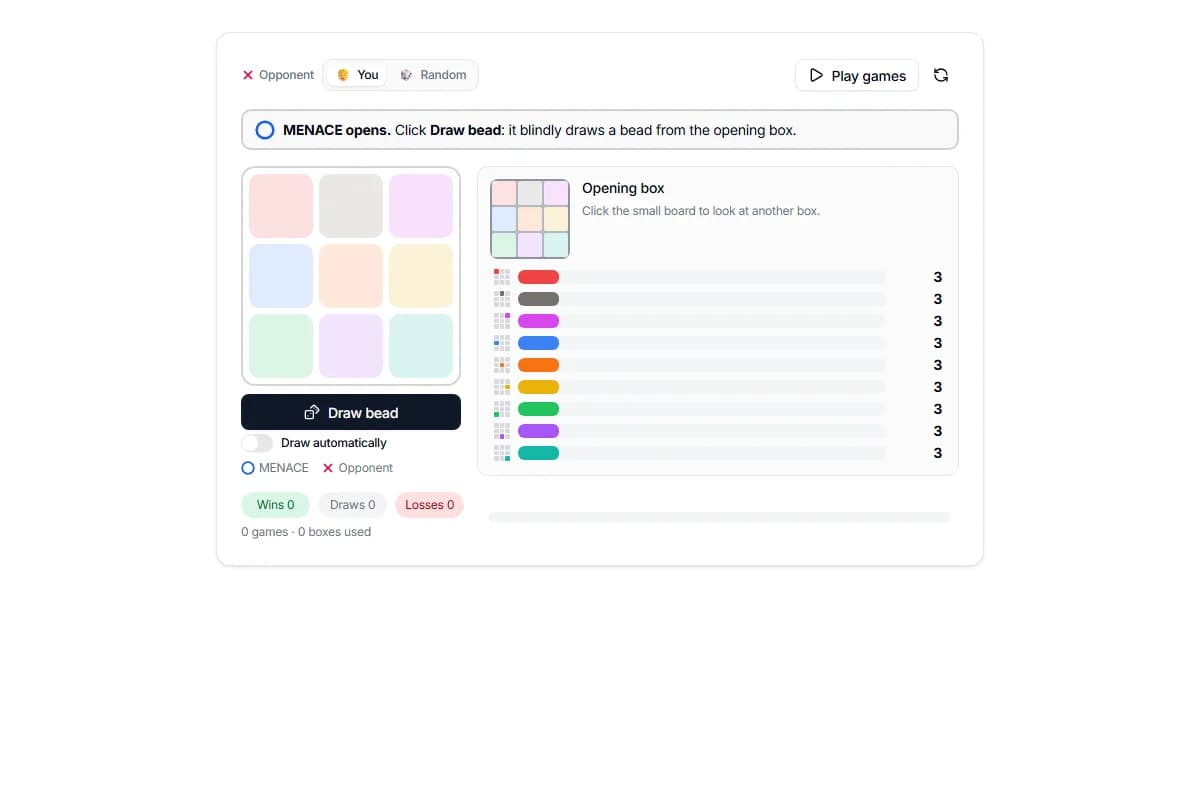
MENACE matchboxes
Draw a bead from the matchbox for the current position and watch MENACE learn to play tic-tac-toe, game after game.
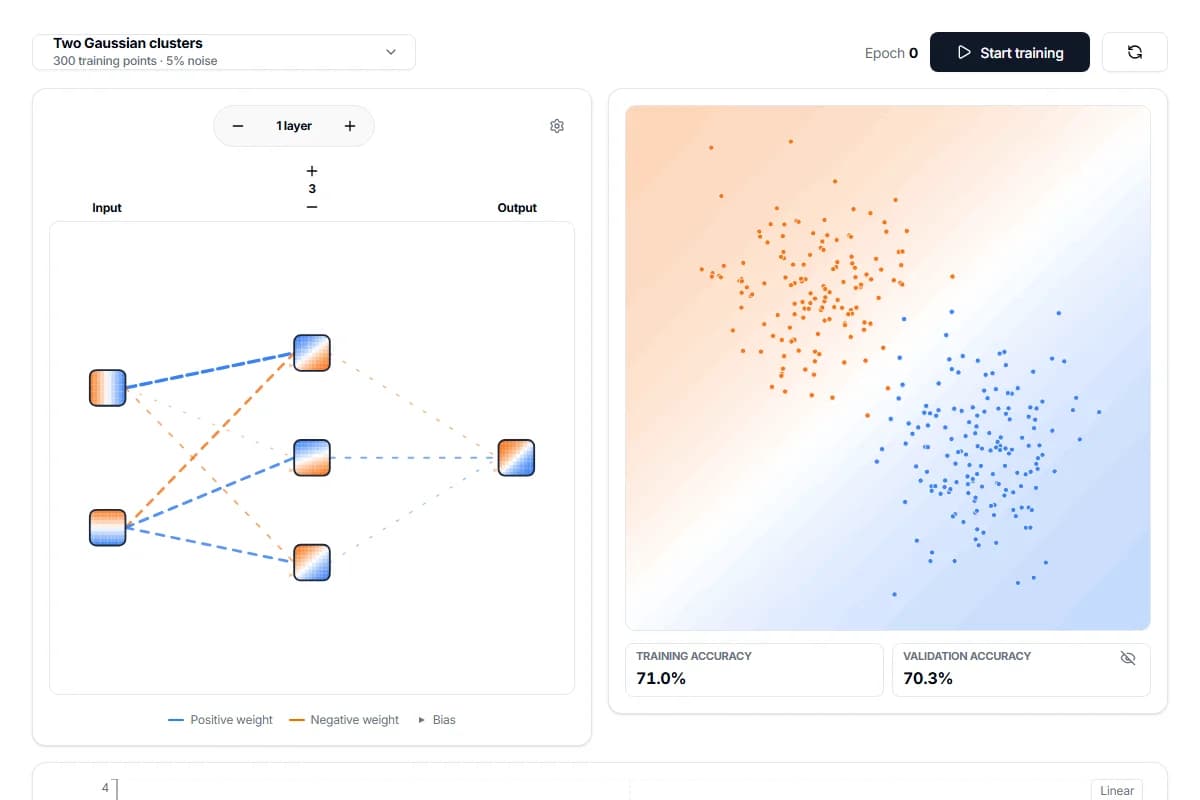
Neural Networks
Build your own neural network for a binary classification task.
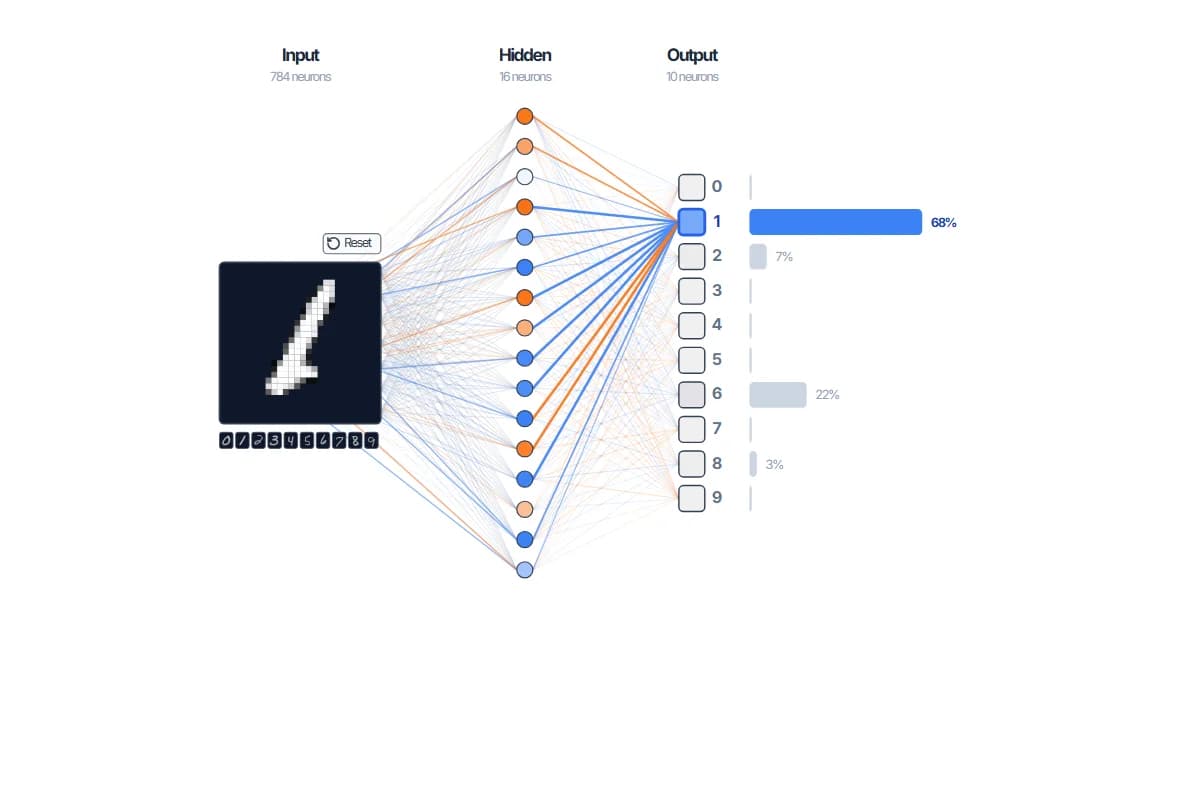
Digit recognition
Draw a digit and let a neural network recognize it.
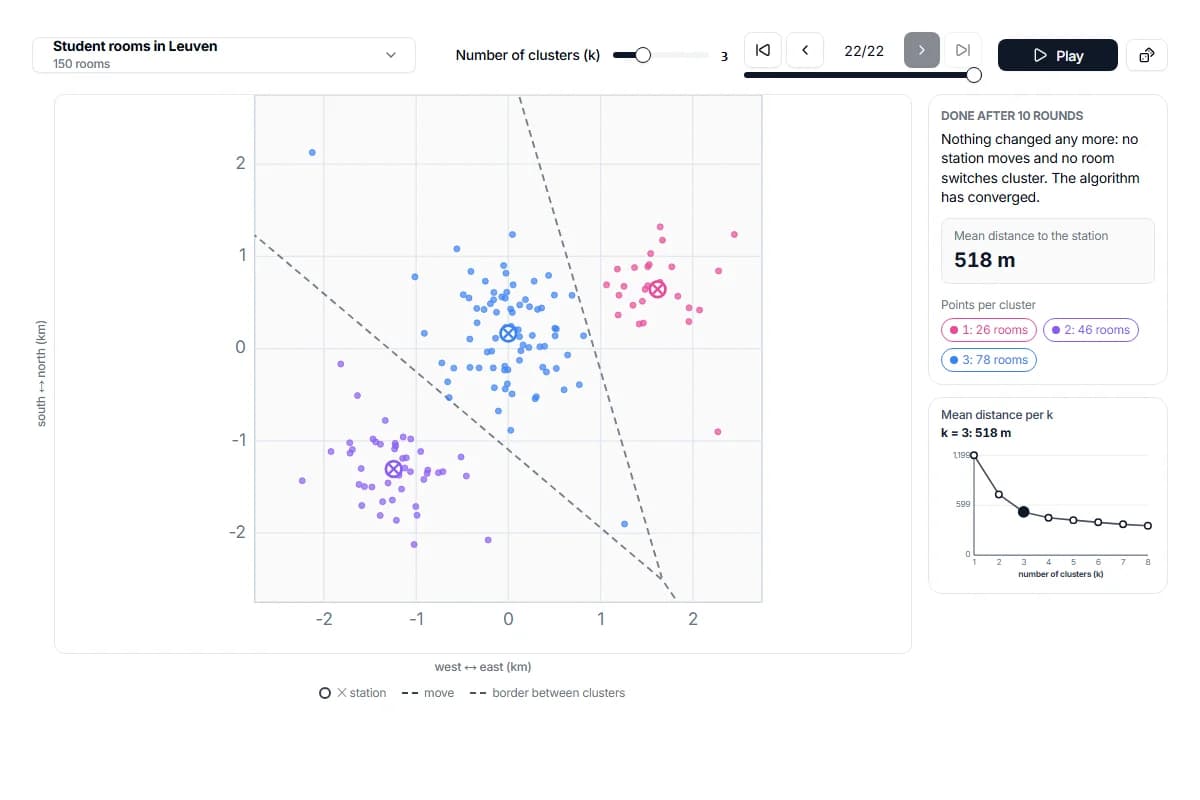
K-Means Clustering
Place bike-sharing stations on a map of Leuven yourself or let k-means move them step by step, and pick the number of clusters with the elbow curve.

Color quantization
Reduce a photo to k colors with k-means: every pixel is a data point with three features (red, green and blue) and every centroid becomes a palette color.
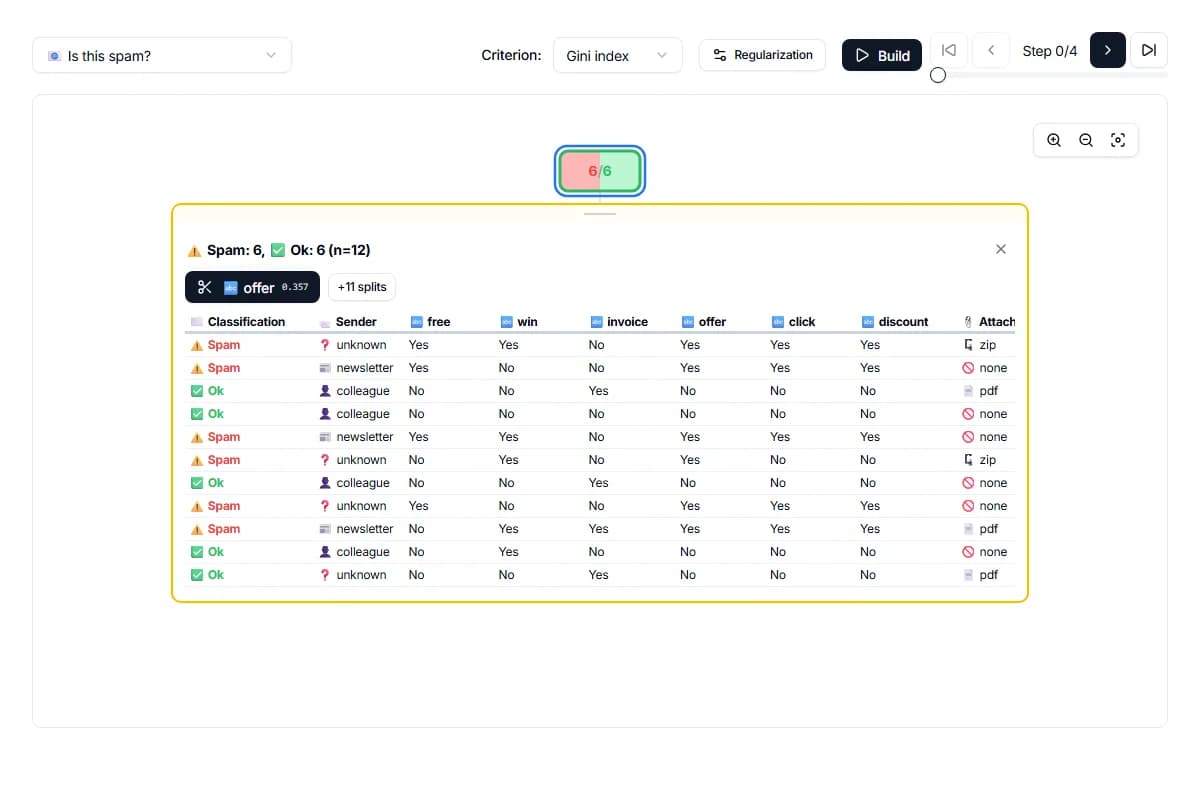
Decision tree
Learn a decision tree step by step and see how split decisions are made based on information gain.
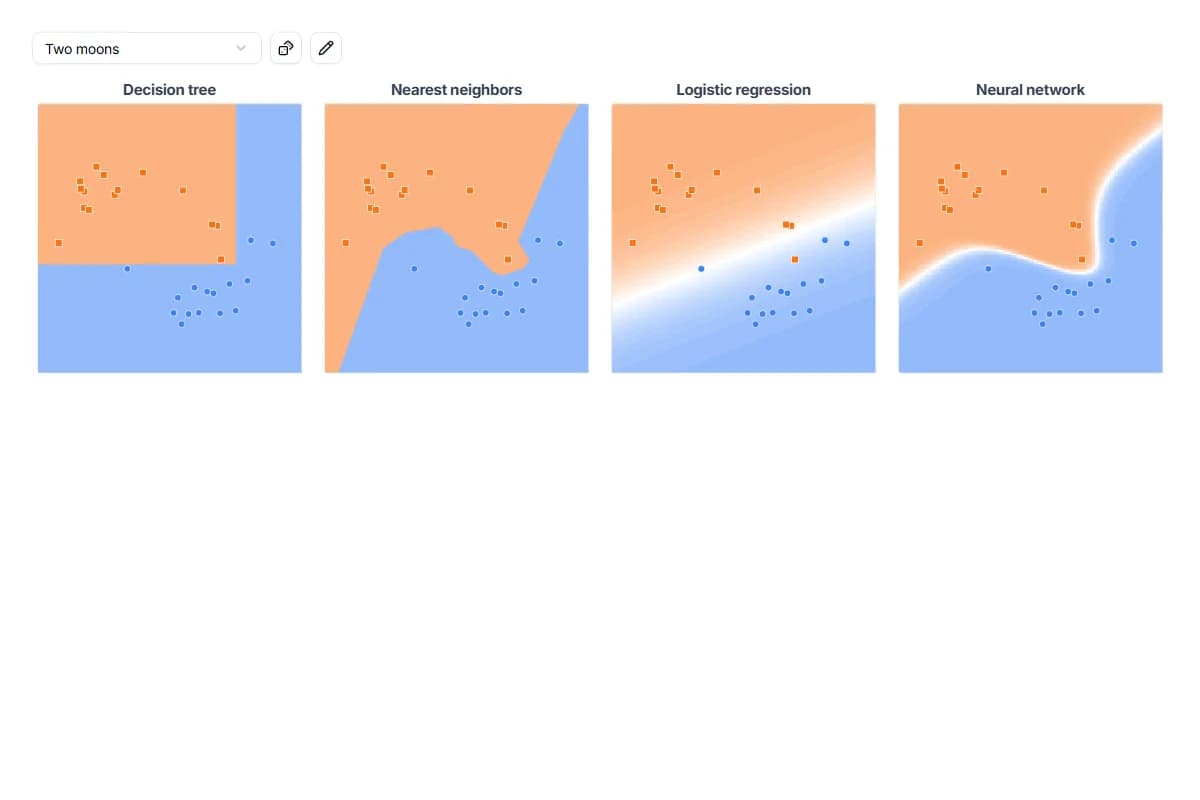
Comparing decision boundaries
Compare the decision boundaries of a decision tree, nearest neighbors, logistic regression and a neural network on the same dataset.
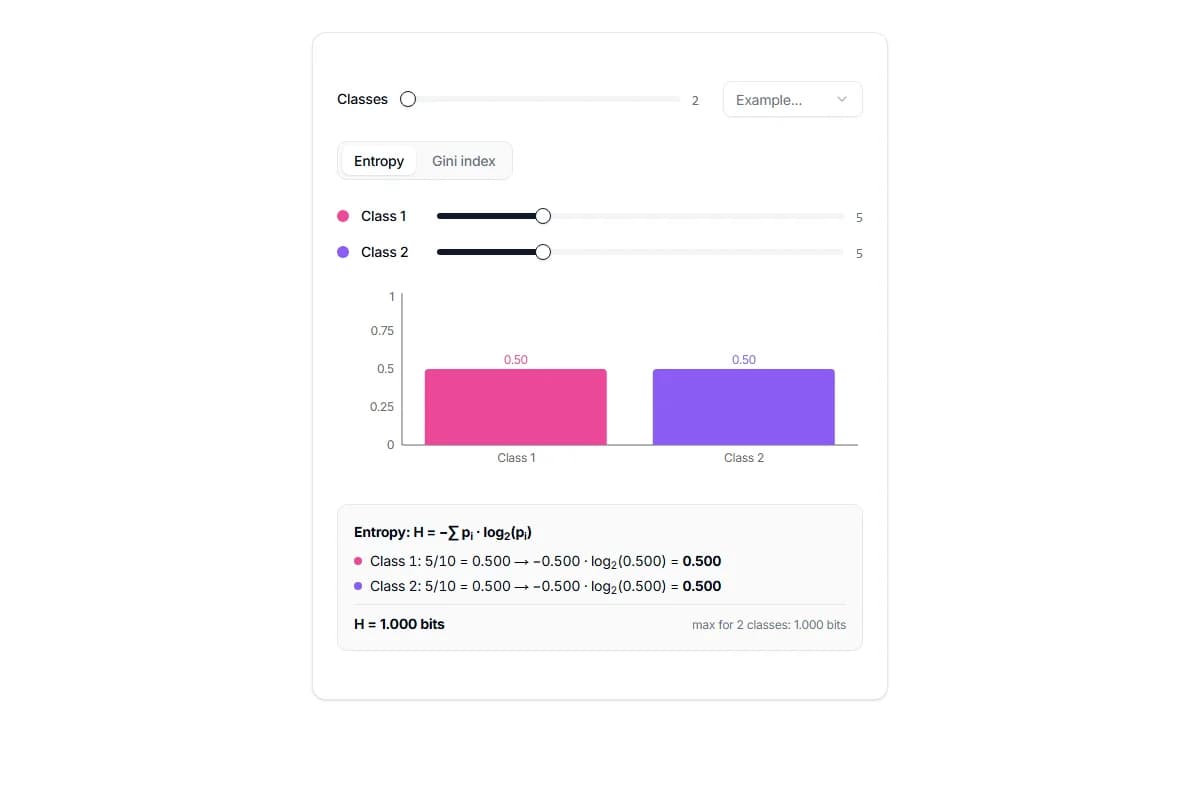
Entropy calculator
Adjust the number of classes and instances and see step by step how the entropy is calculated.
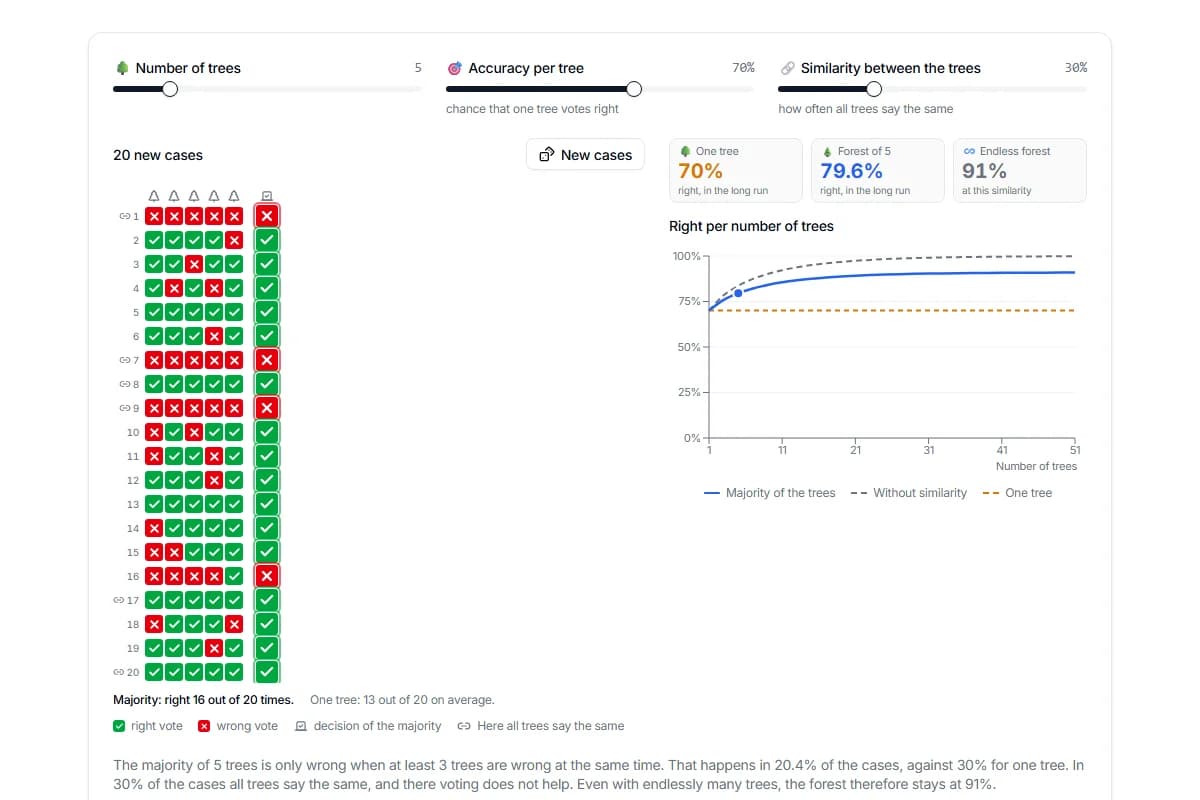
Wisdom of the crowd
Let trees vote on new cases and see how the majority beats every single tree, as long as the trees are not too much alike.
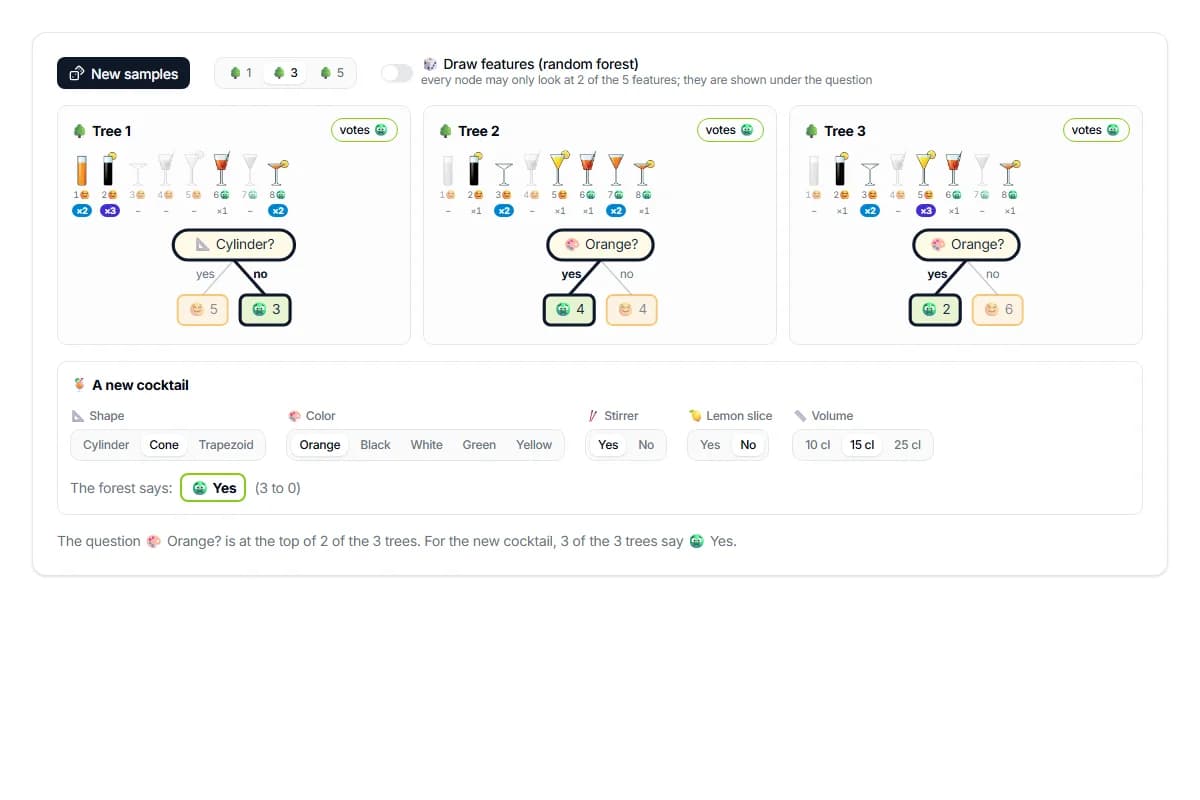
Cocktail forest
Draw bootstrap samples from the cocktails, see which tree each sample yields, draw the features per node like a random forest, and let the trees vote.
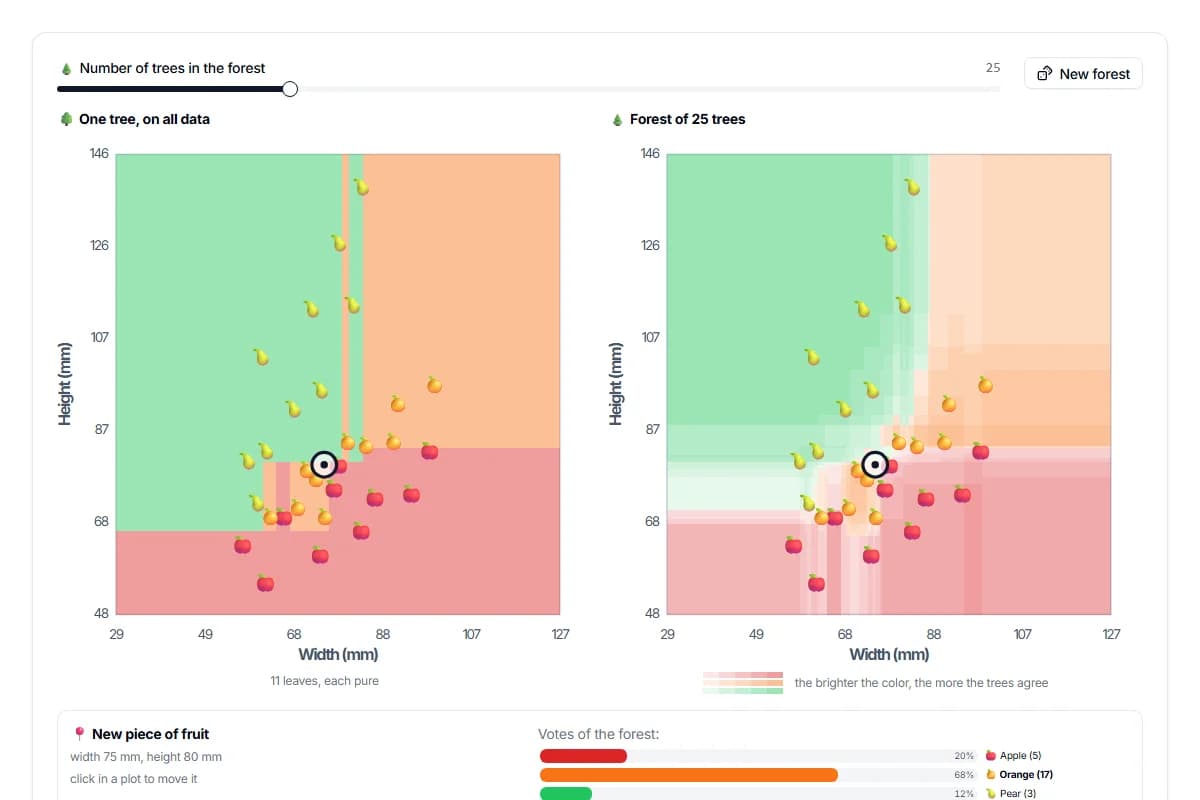
Bagging
Compare the decision regions of one deep tree with those of a forest of trees on bootstrap samples, and see how extra trees vote the chance rectangles away.
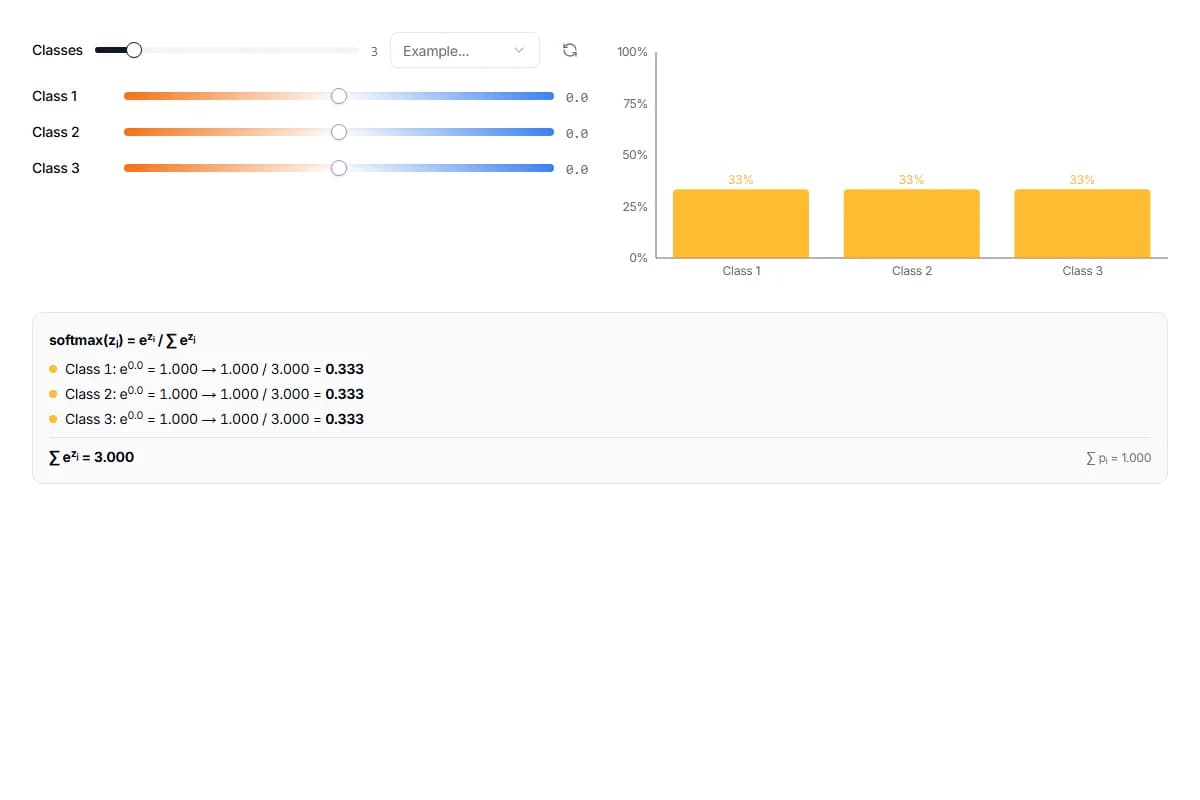
Softmax
Adjust the input values and see how the softmax function turns them into a probability distribution.
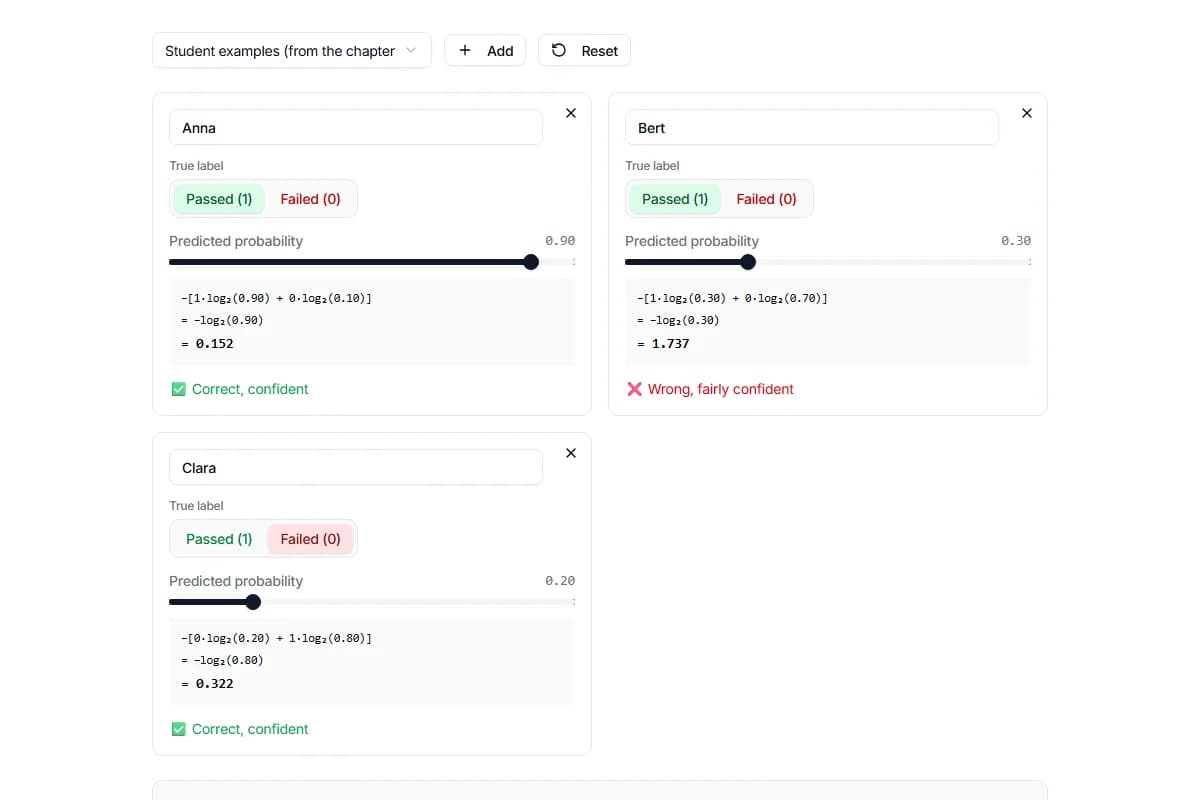
Binary cross-entropy
Experiment with binary labels and predicted probabilities, and see how cross-entropy measures error.
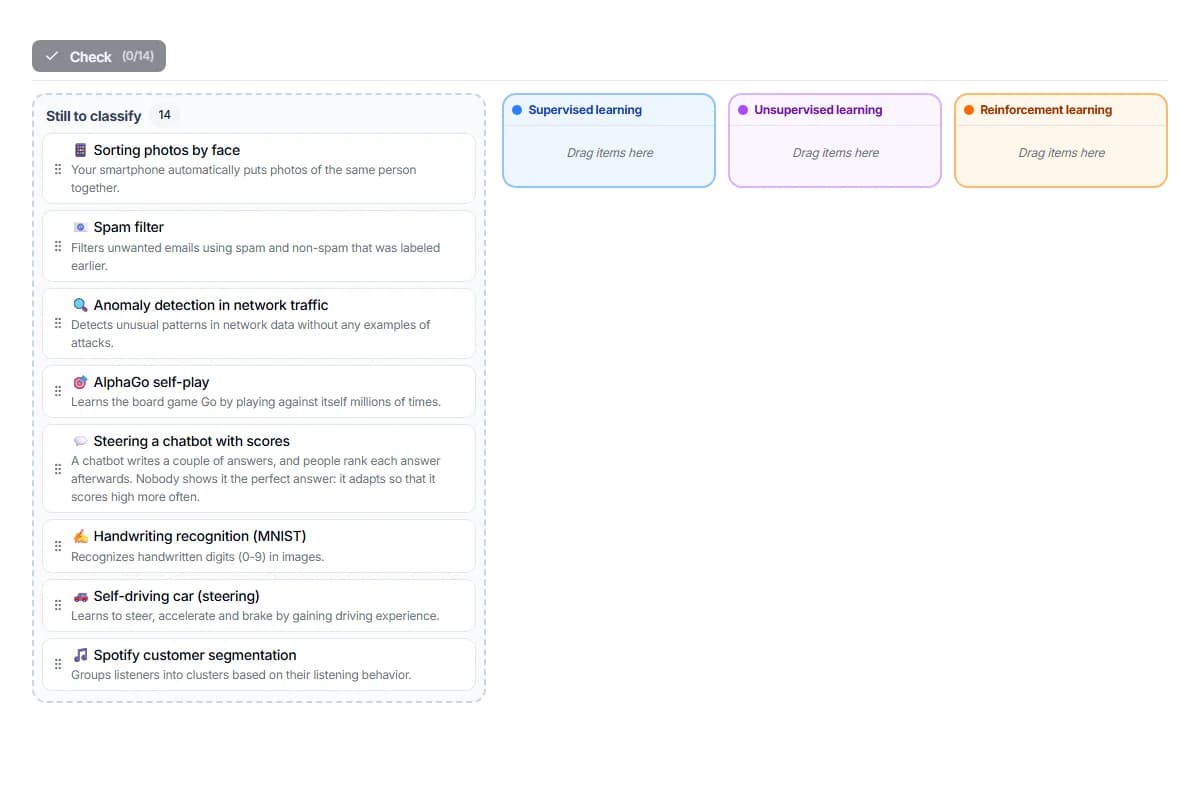
Feedback Type Classifier
Classify AI applications by how they learn: supervised, unsupervised or reinforcement learning.
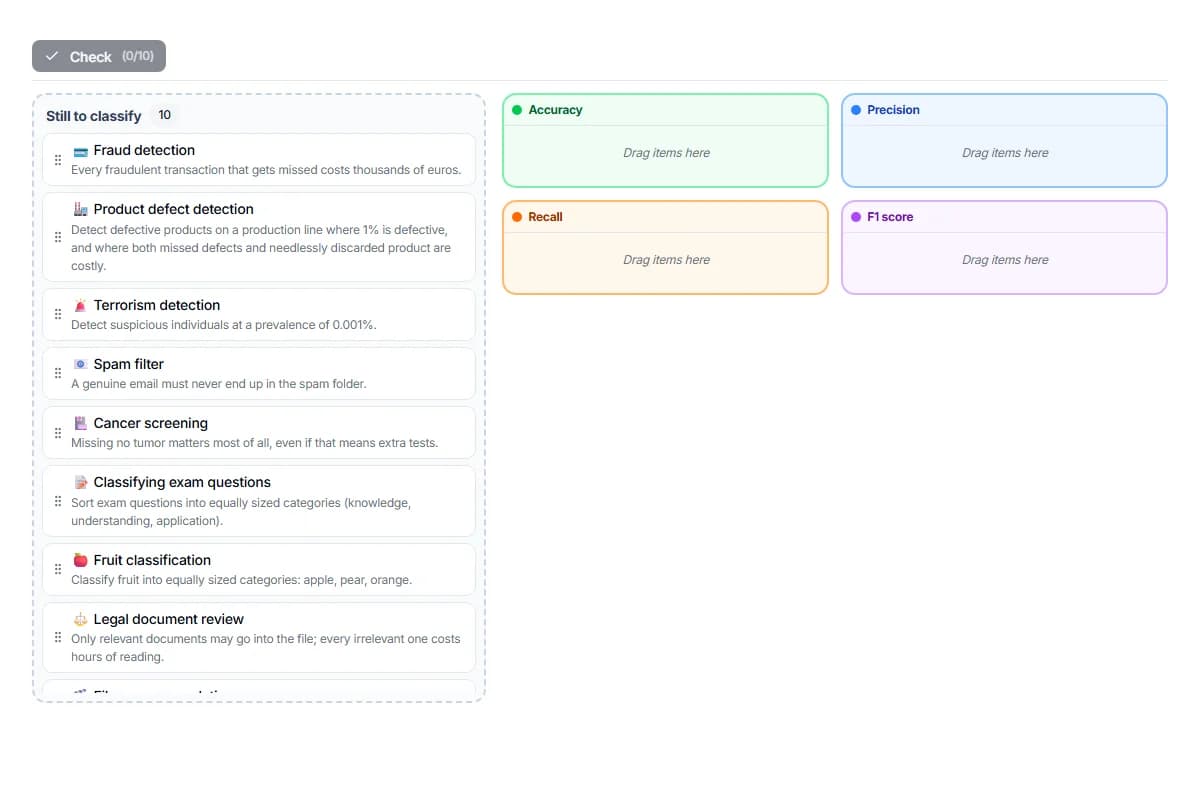
Metric Matcher
Match each AI scenario to the evaluation metric that fits it best.
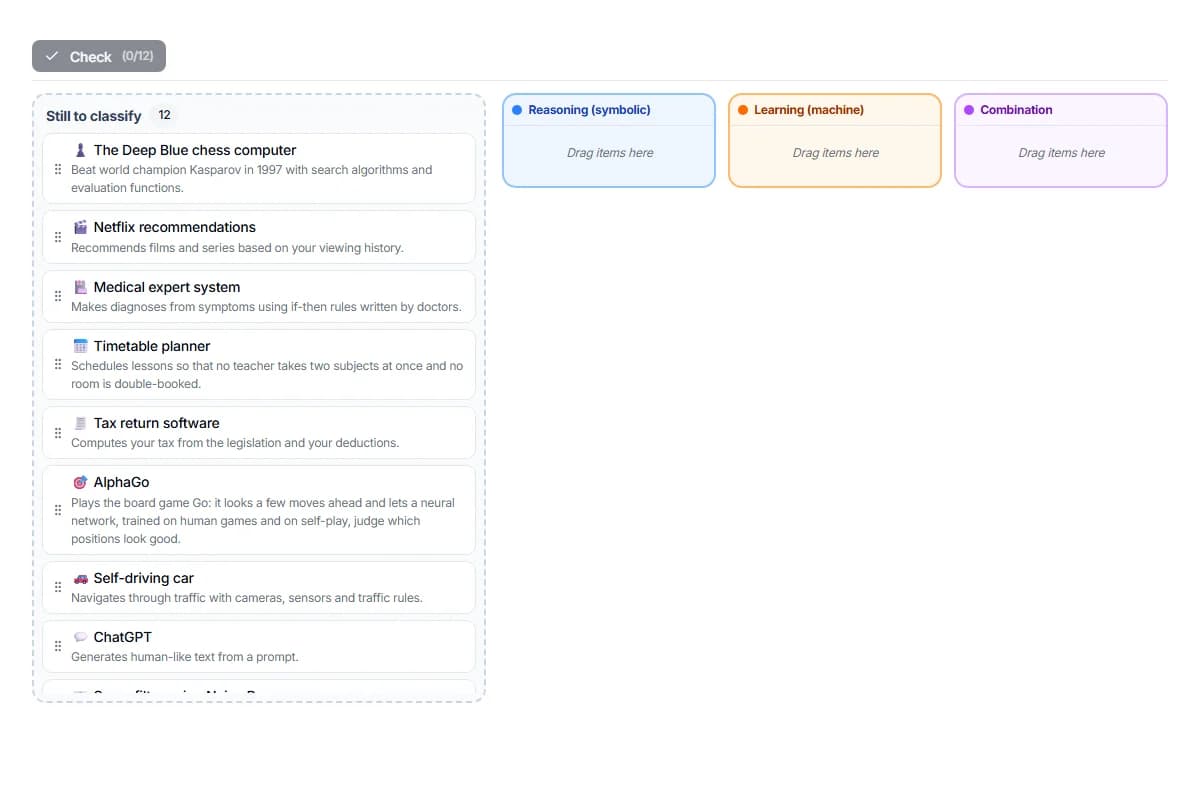
Thinking System Classifier
Classify AI systems as reasoning algorithms, learning algorithms, or a combination of both.
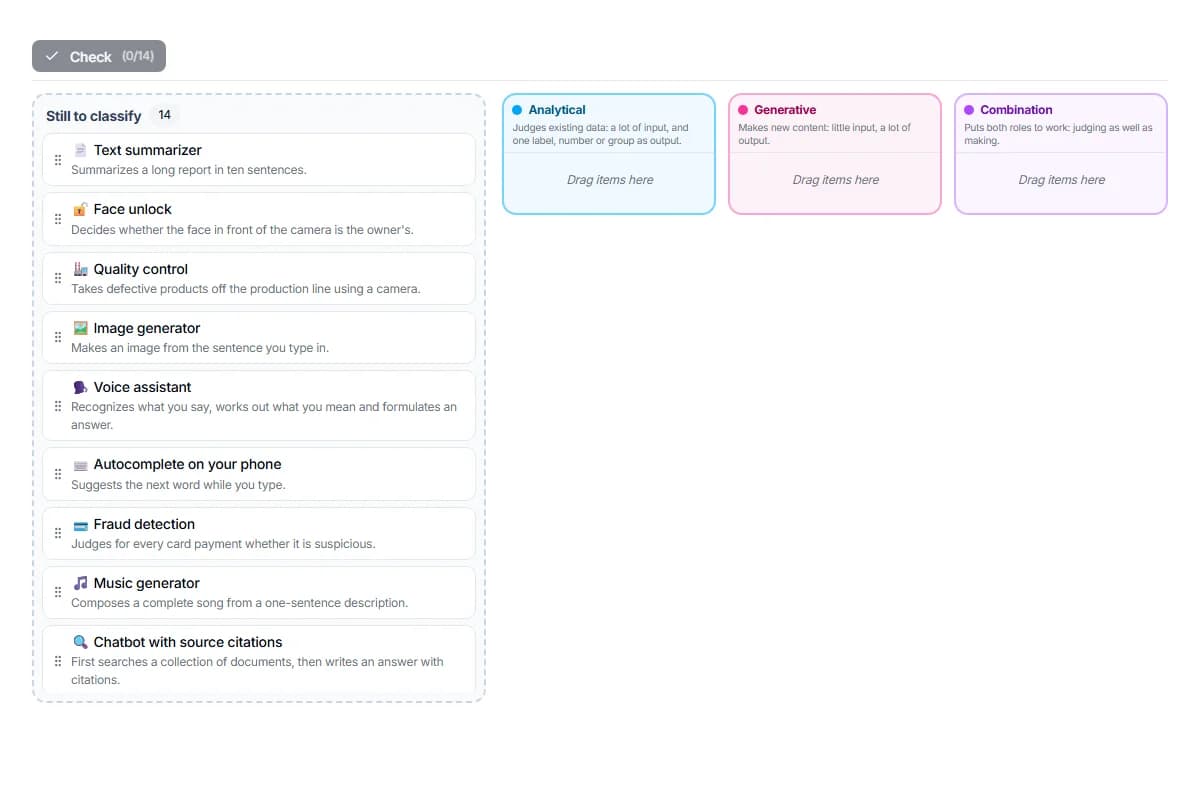
Purpose Classifier
Work out whether an AI system analyzes existing data, generates new content, or does both.
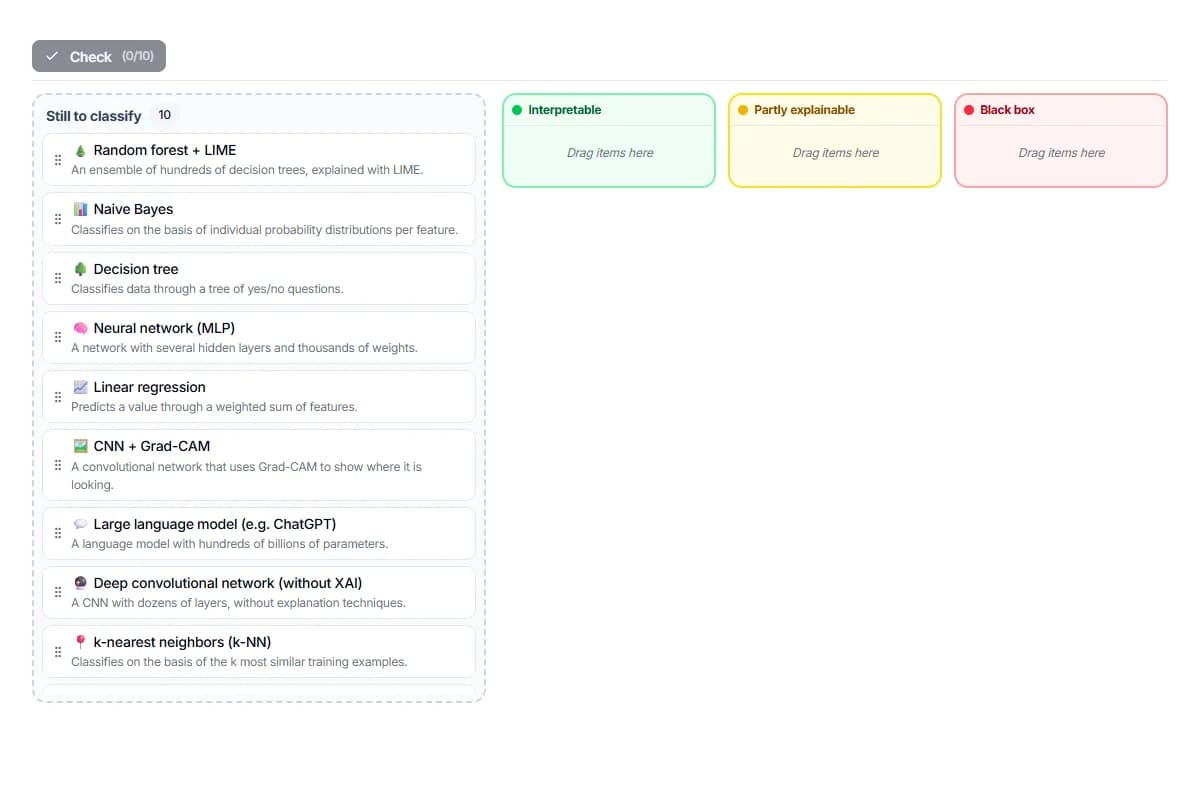
Interpretability Classifier
Place AI models on the interpretability spectrum.
🗣️ Language models
Language models, tokenizers and chatbot interaction.
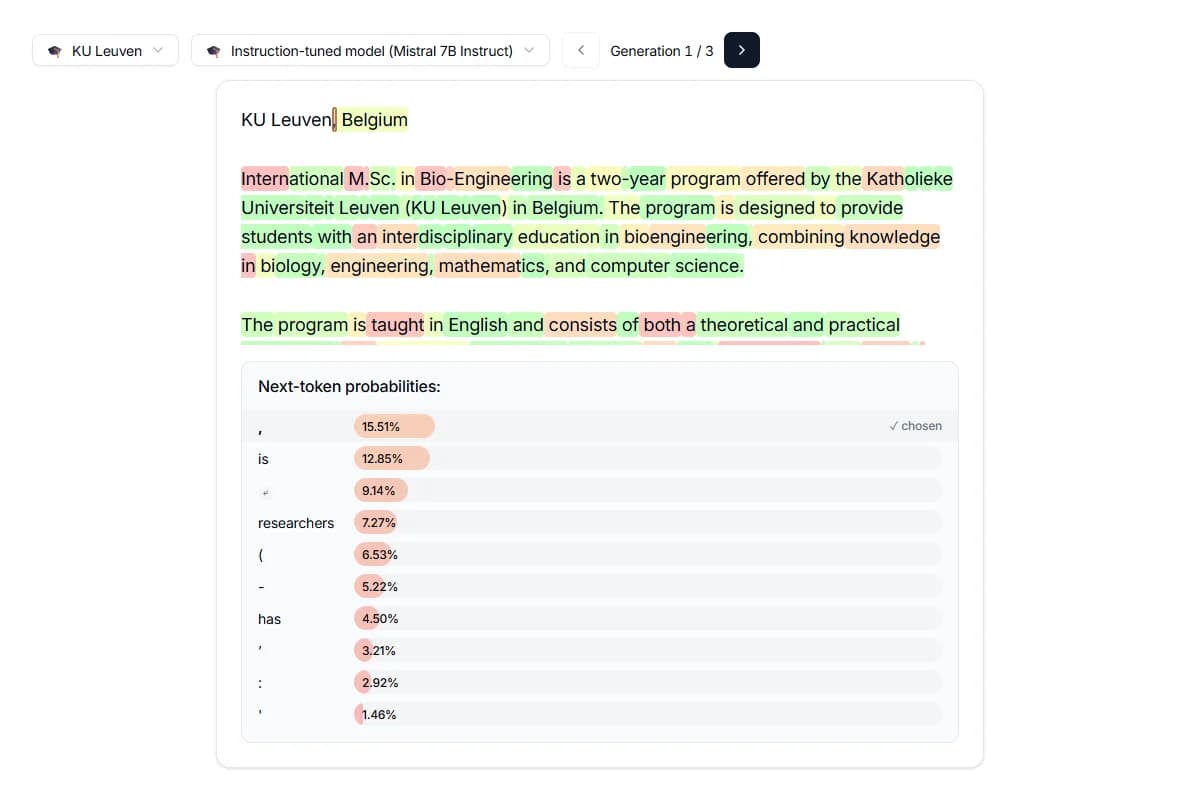
Token prediction
Click a token to see which alternatives the language model considered and how confident it was.
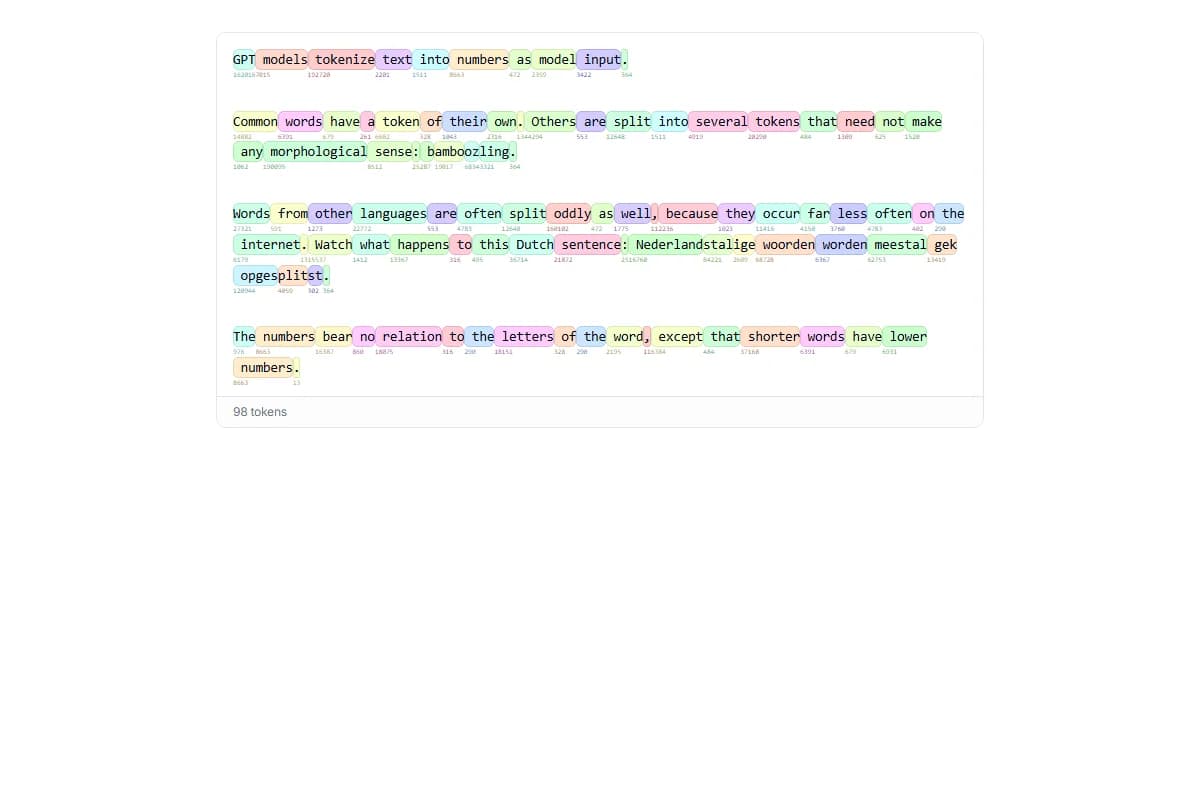
Tokenizer
See how large language models split text into tokens and give each token a number.
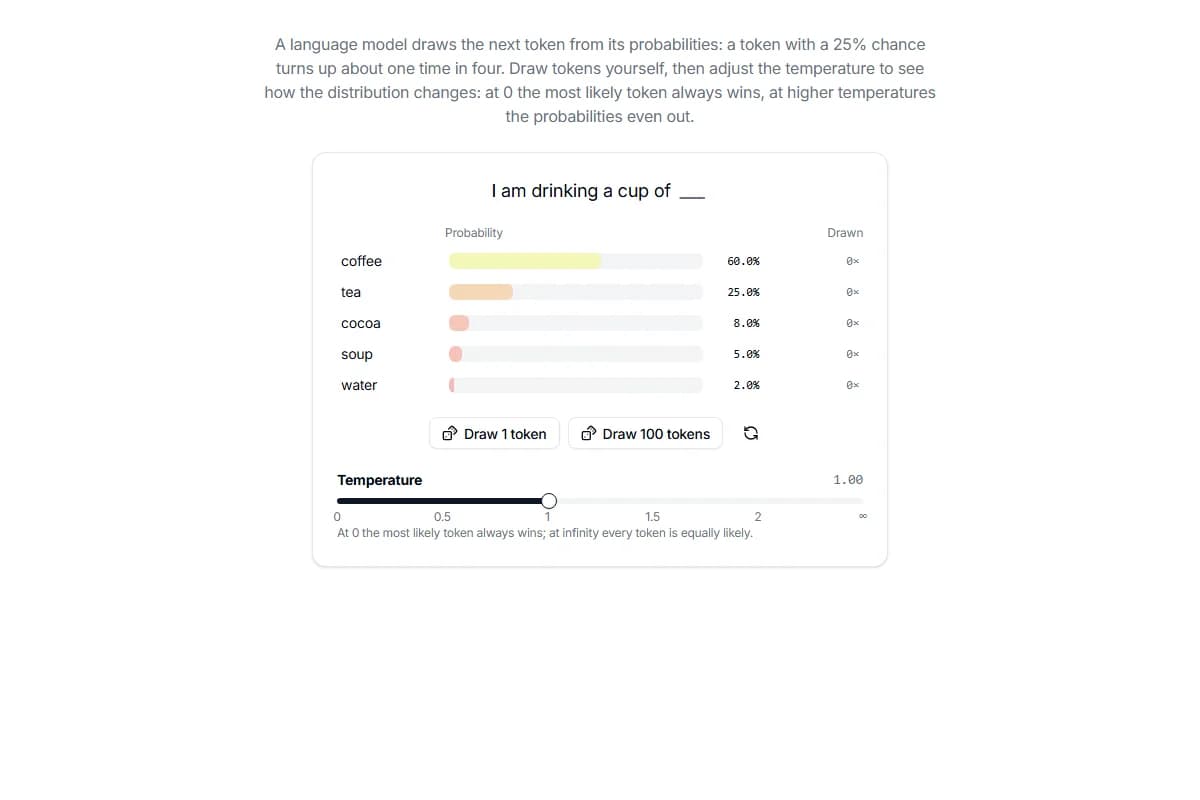
Temperature and randomness
Draw tokens from a language model's probabilities yourself and see how temperature reshapes the distribution.
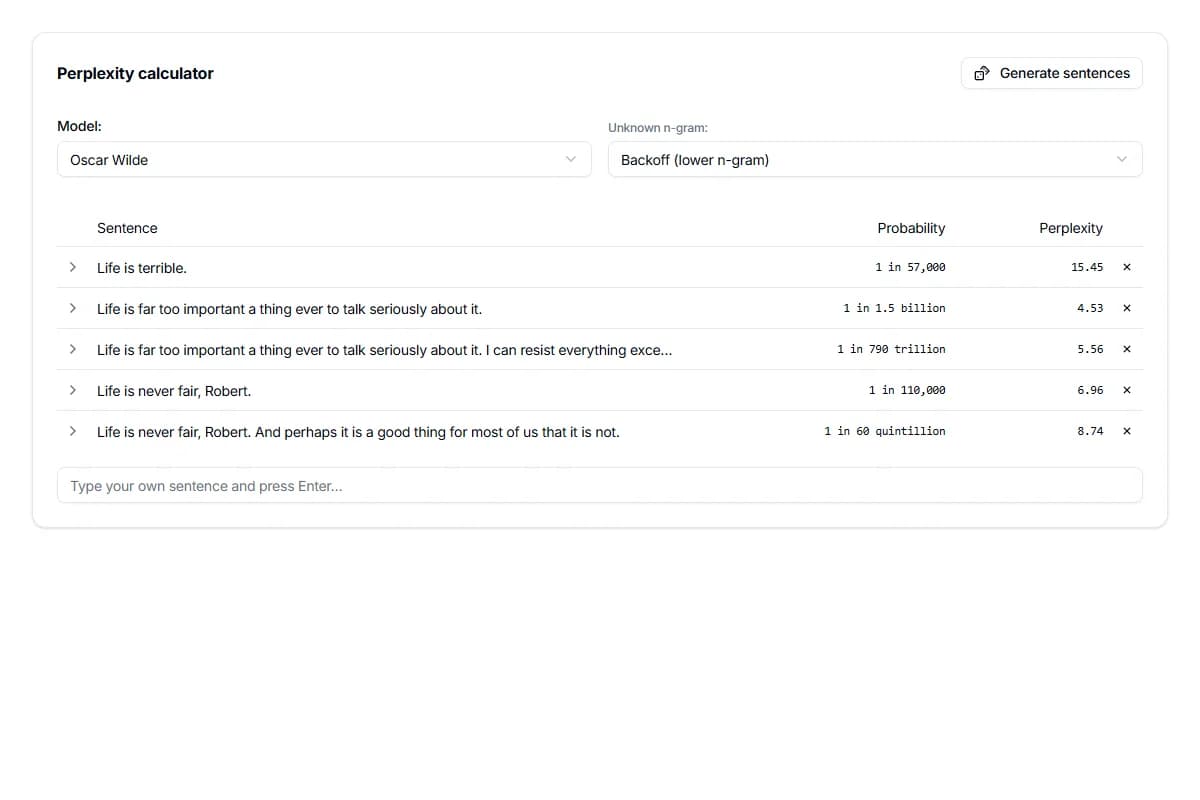
Perplexity
Understand perplexity as a measure of how well a language model predicts text.
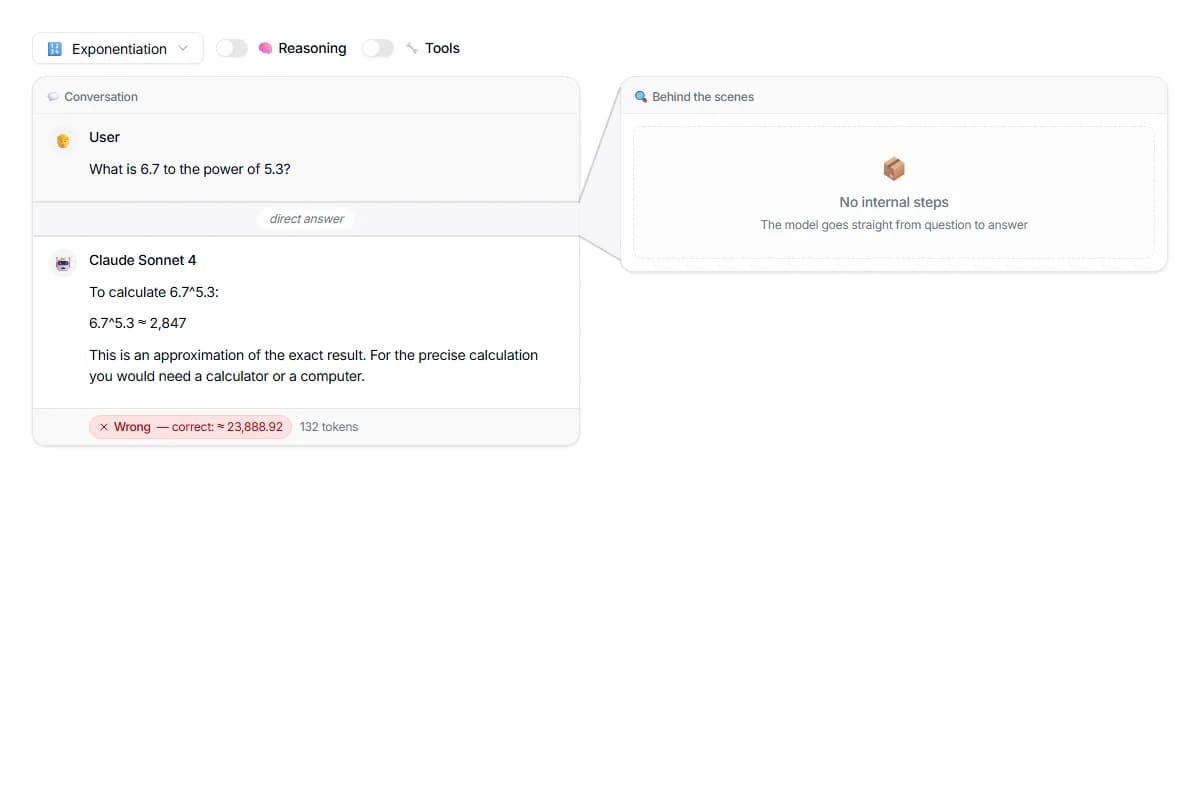
Language model tool calling
Compare how reasoning and tools change a language model's answer.
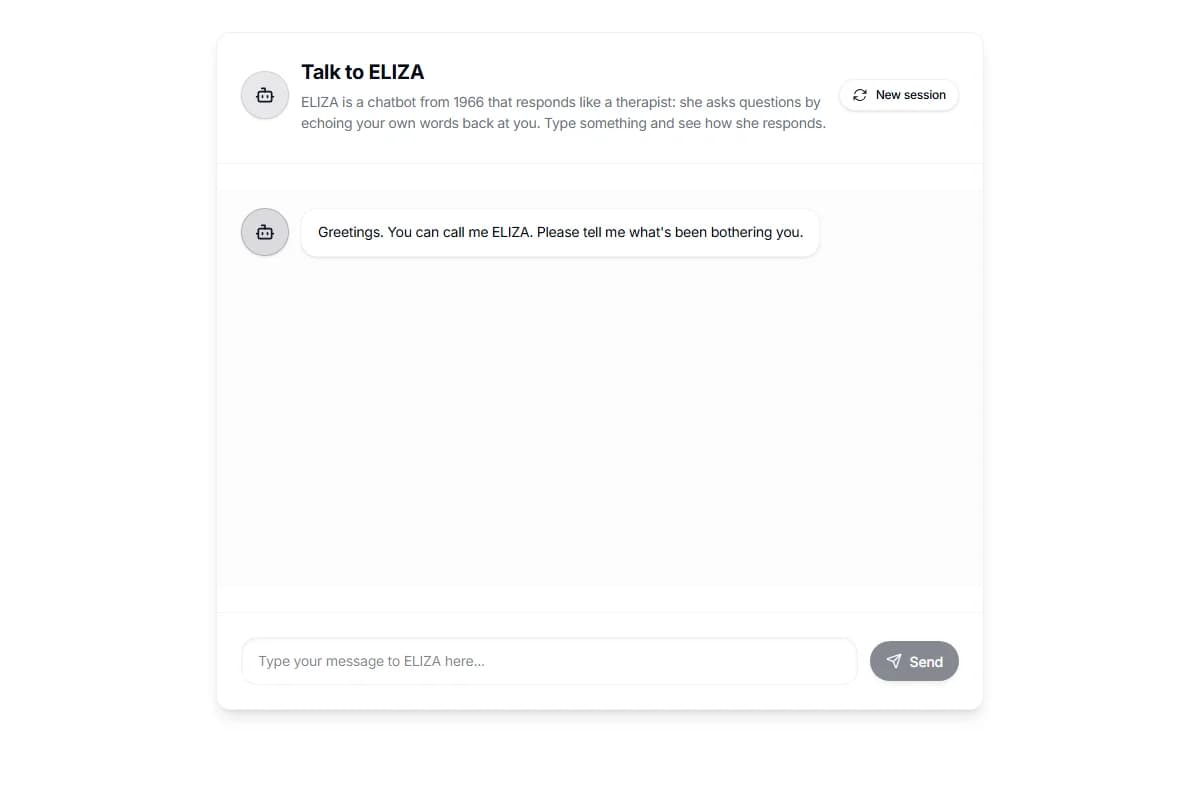
ELIZA bot
Talk to the first chatbot, written in 1966.
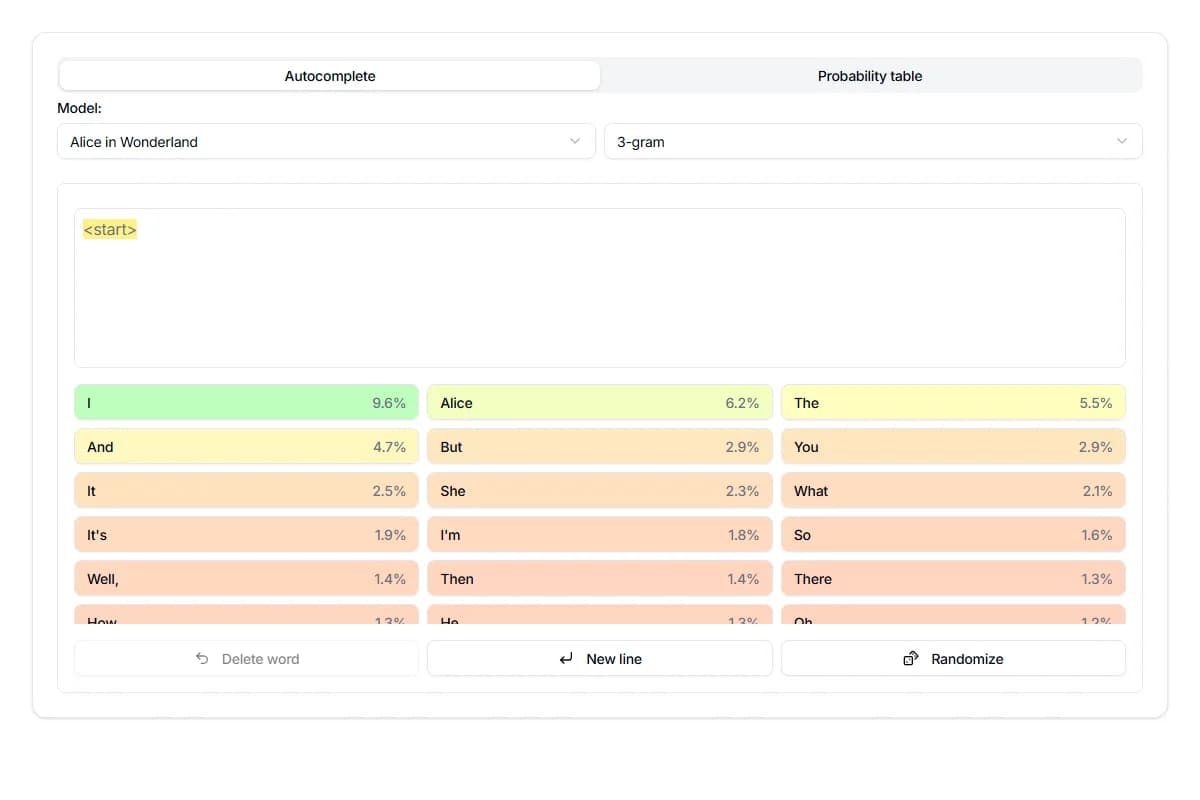
Autocomplete model
See how n-grams predict the next word, and where they go wrong.
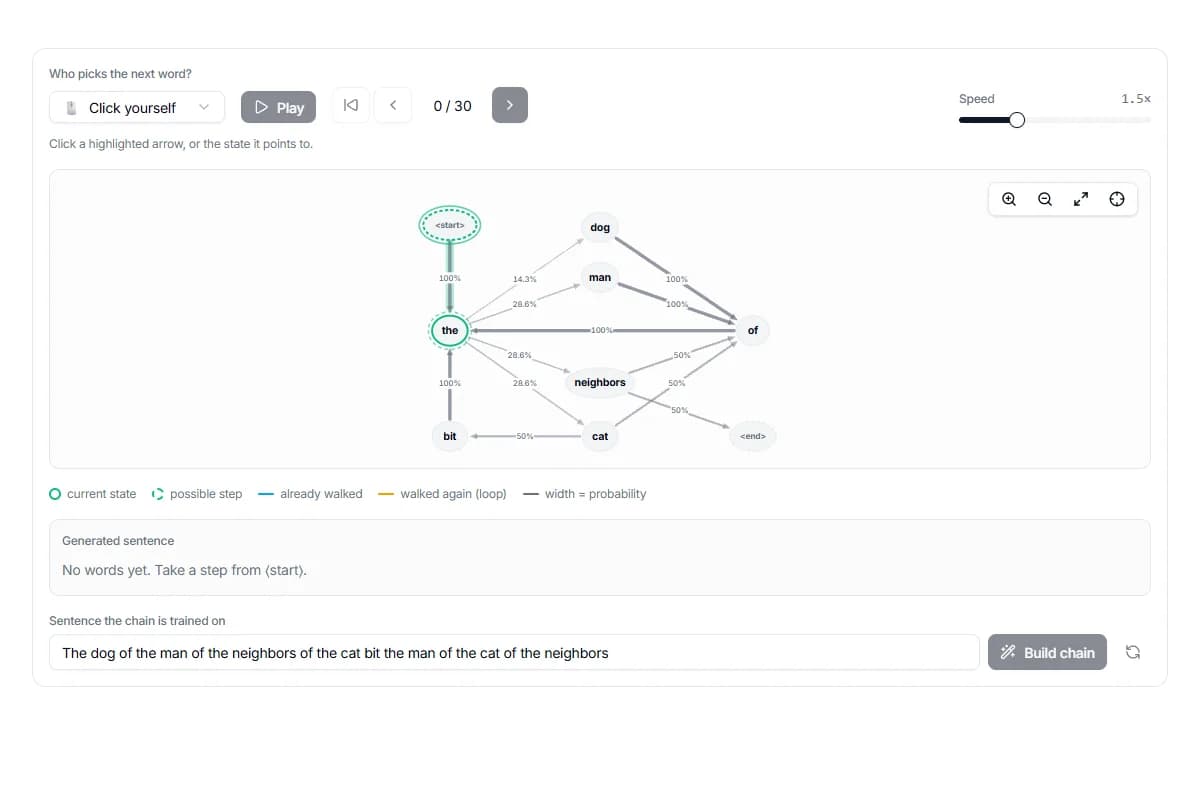
Markov chain graph
Walk word by word through a Markov chain and see how you end up in a loop.
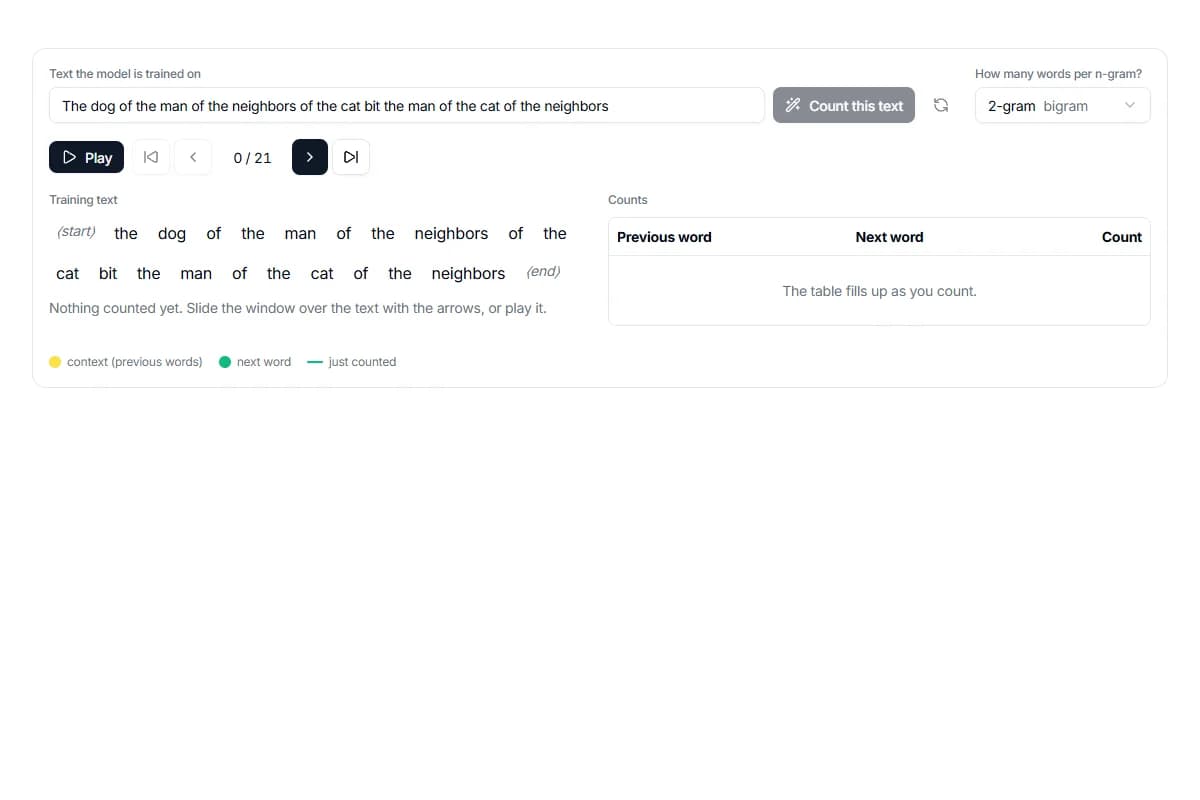
Counting n-grams
Slide a window over a text and watch the n-gram table grow row by row until the counts become probabilities.
🖼️ Image models
Image recognition and image generation.
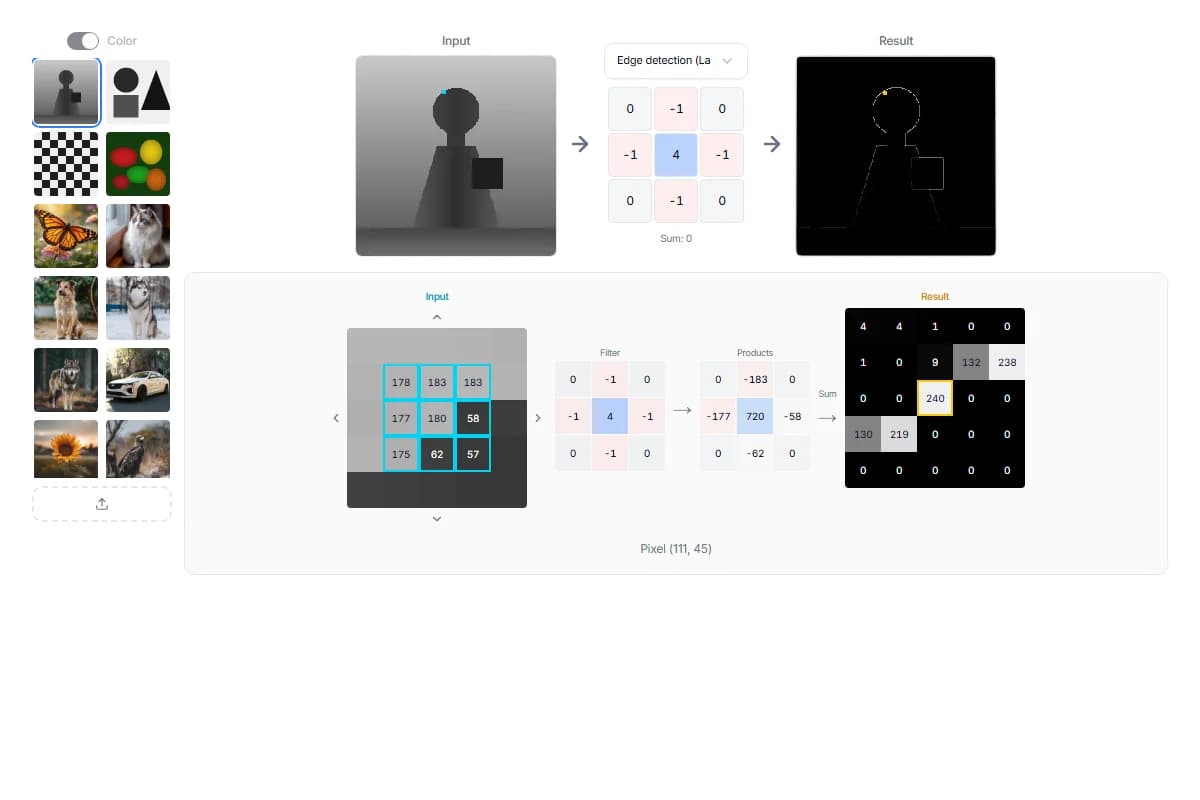
Convolution
Apply convolution filters to images and see step by step how a convolution works.
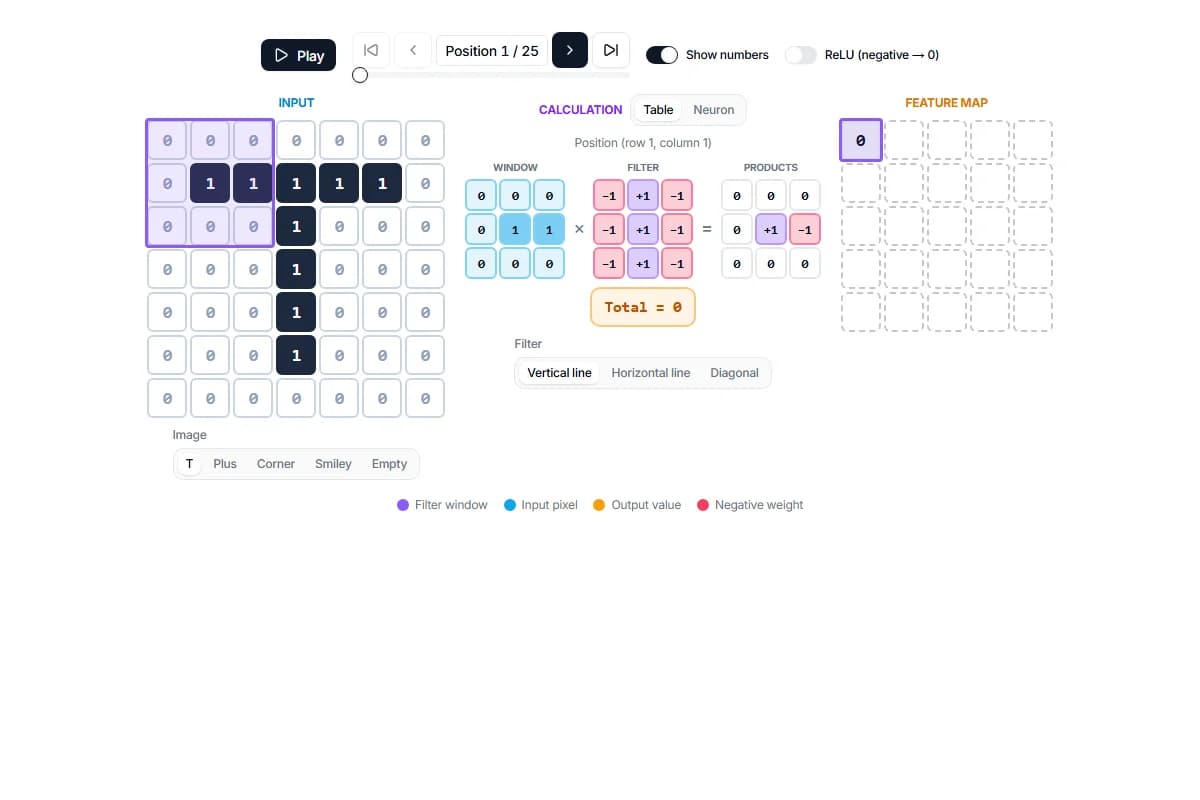
Convolution on a mini grid
Slide a 3×3 filter across a 7×7 pixel grid and compute the feature map cell by cell.
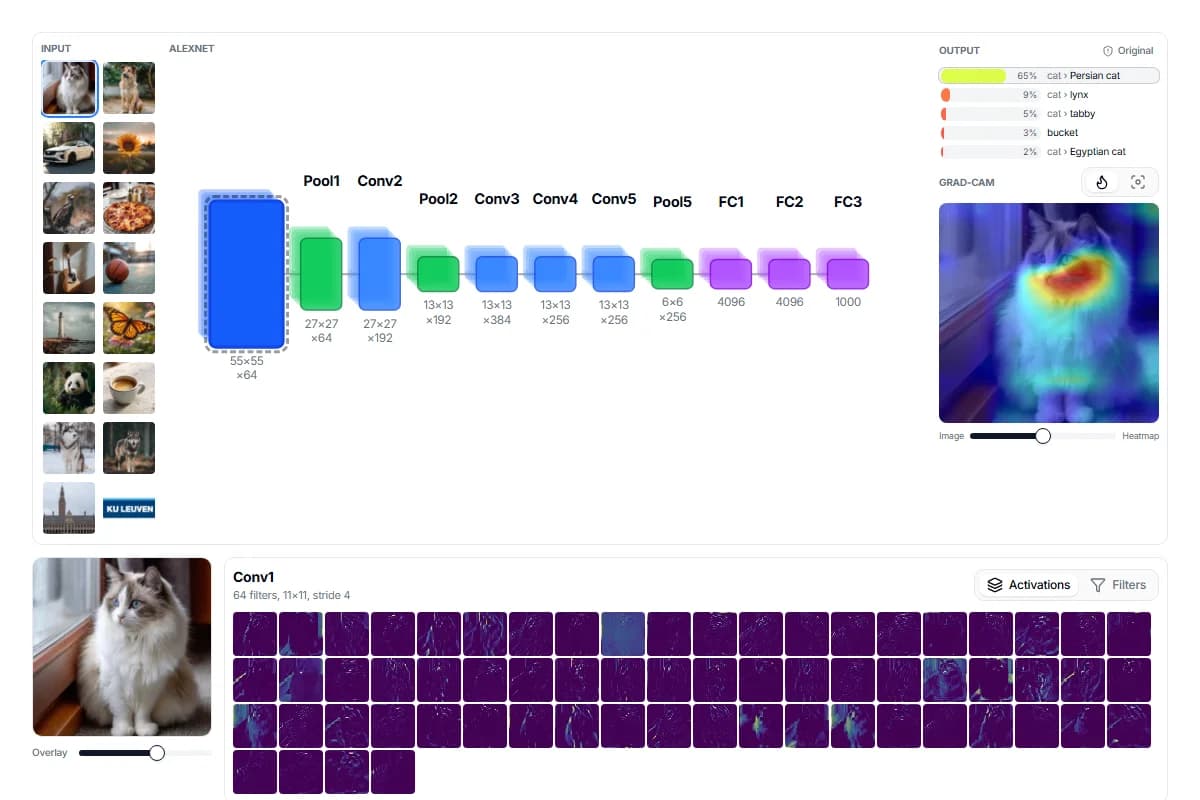
Convolutional Neural Network
Explore a convolutional neural network layer by layer and discover how it classifies images.
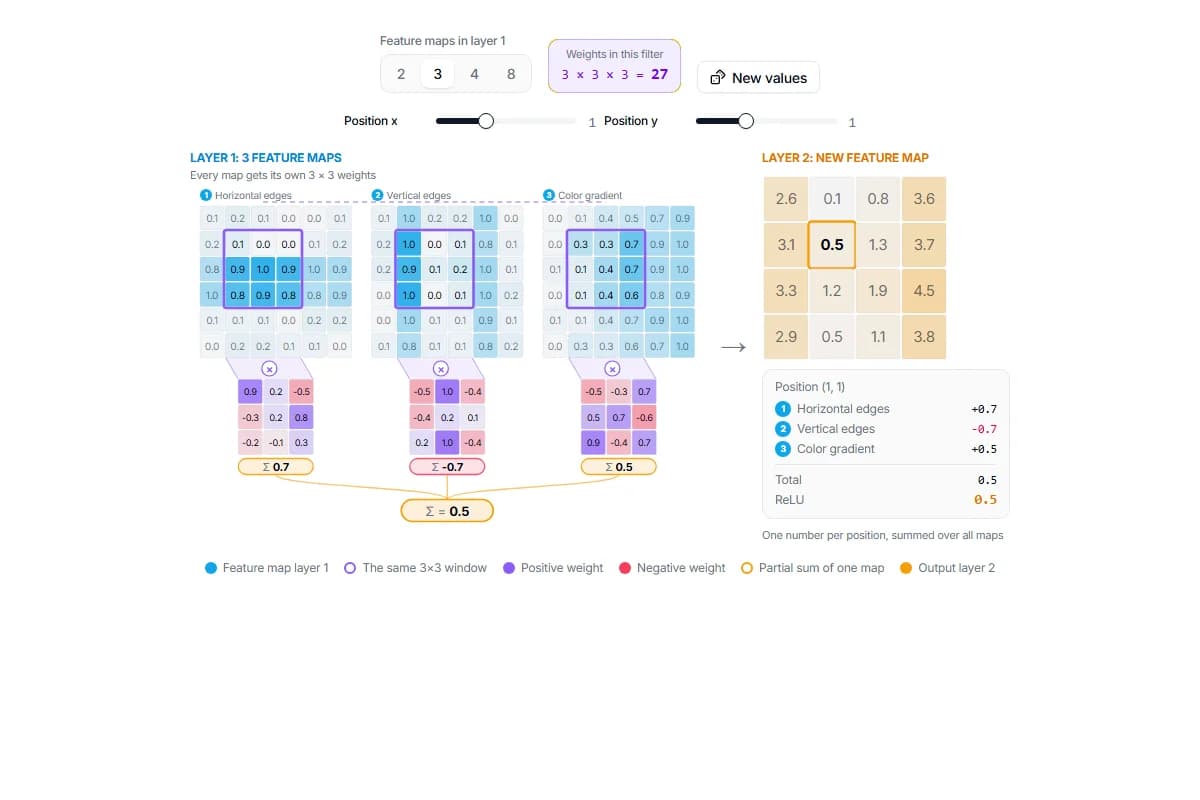
Filter through the depth
See how a single second-layer filter looks through all feature maps at once at every position, and how its number of weights grows with the depth.
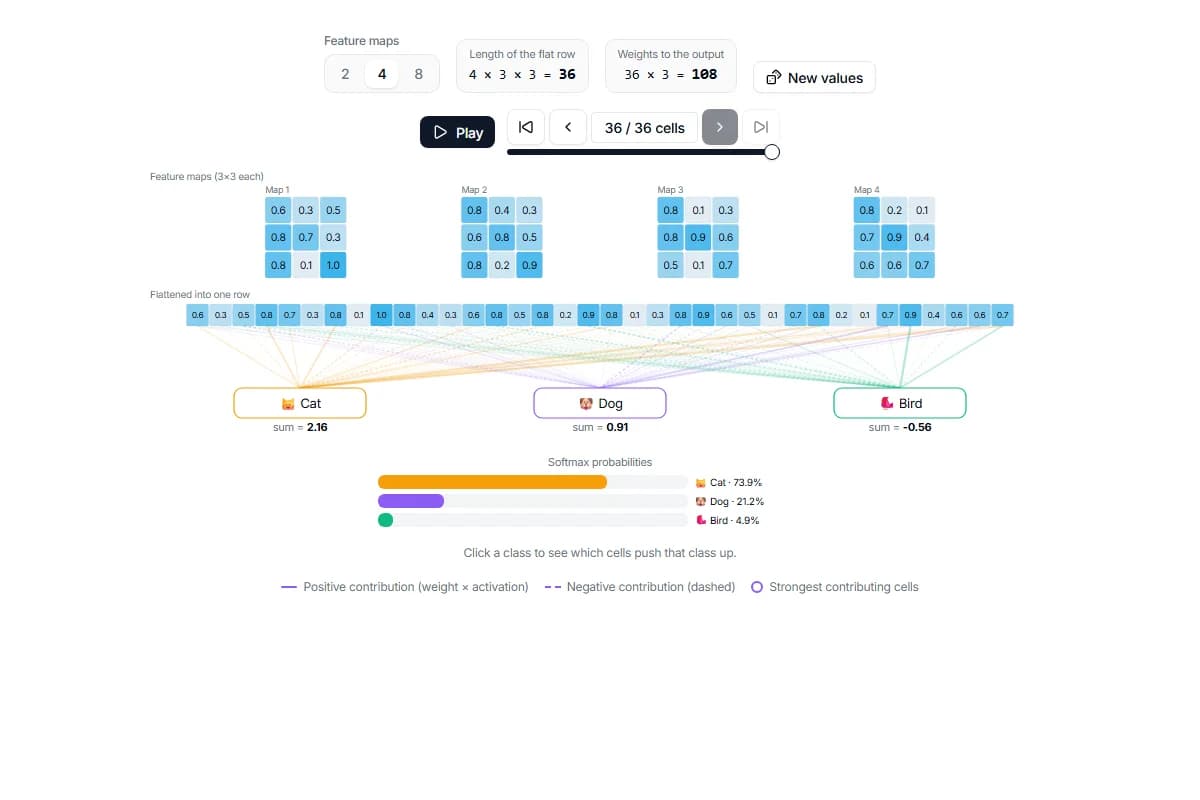
Flatten and classify
Follow step by step how feature maps are flattened into one row of numbers that leads to a class through a fully connected layer and softmax.
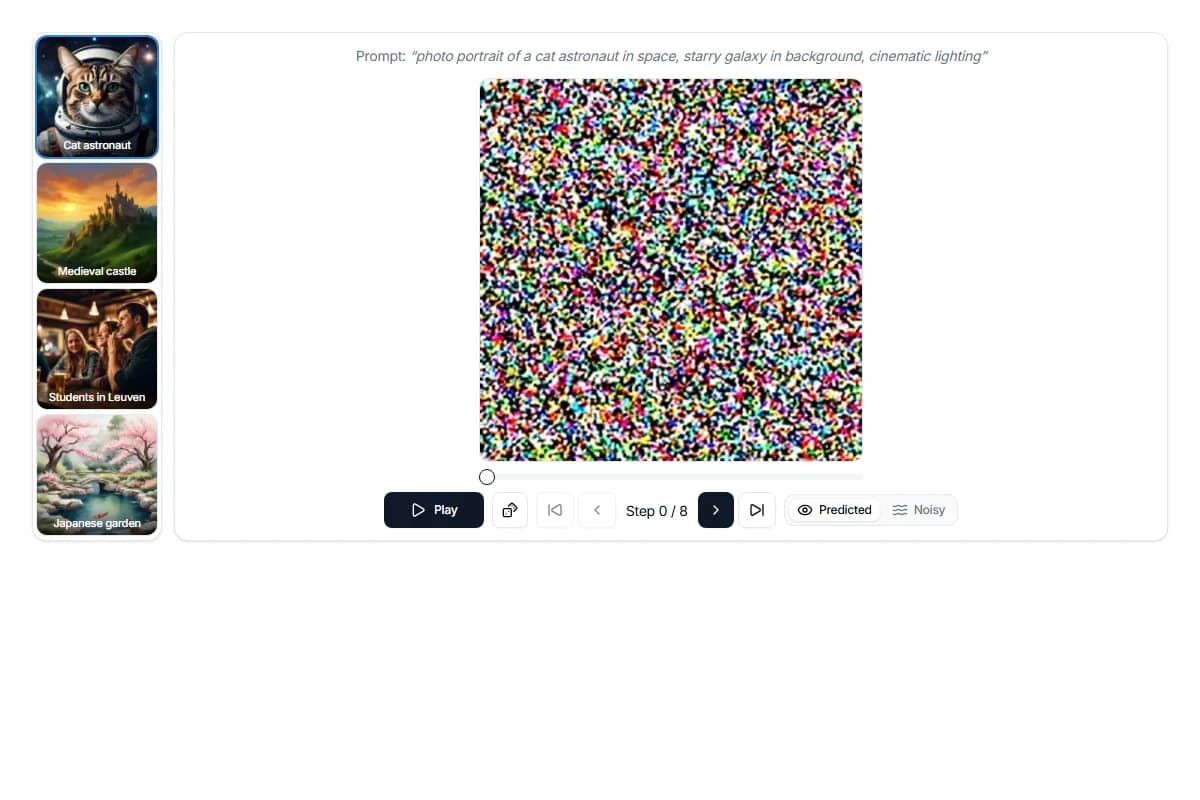
Diffusion: Denoising
Watch step by step how a diffusion model turns noise into an image, guided by a text prompt.
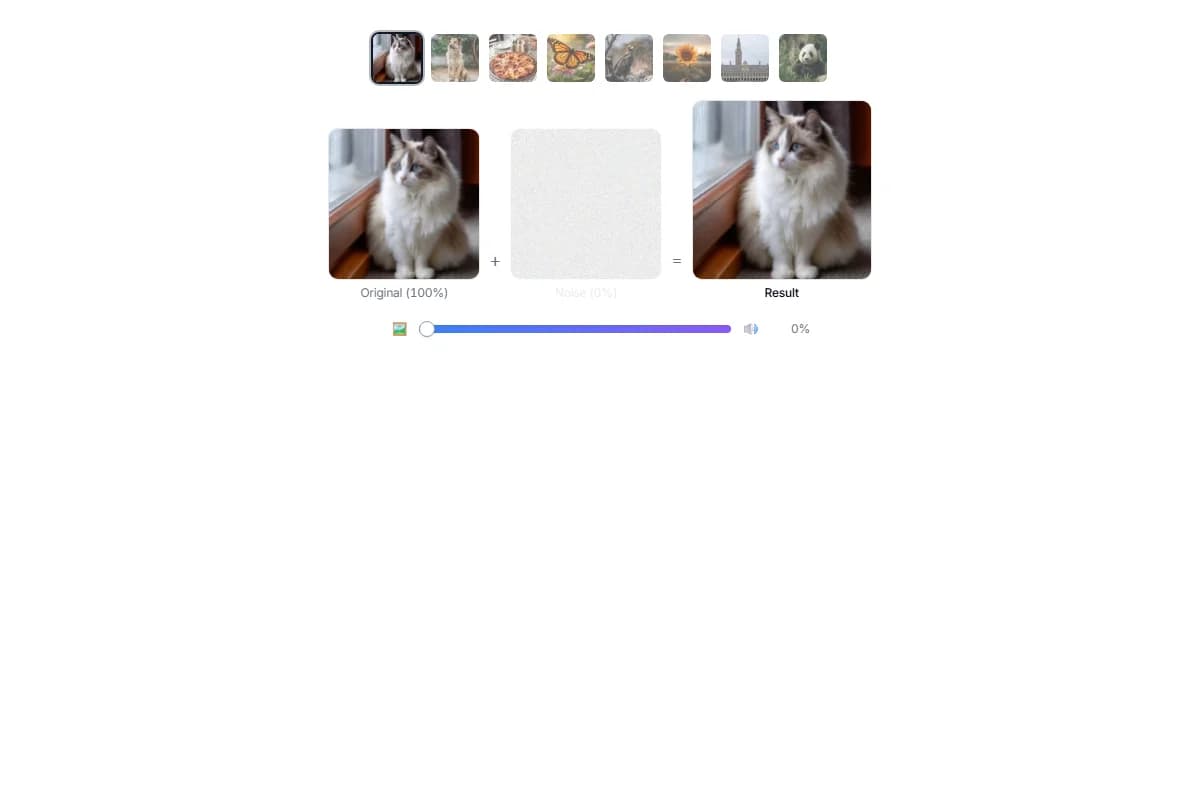
Diffusion: Forward Process
See how noise is added to an image step by step, following the cosine noise schedule.
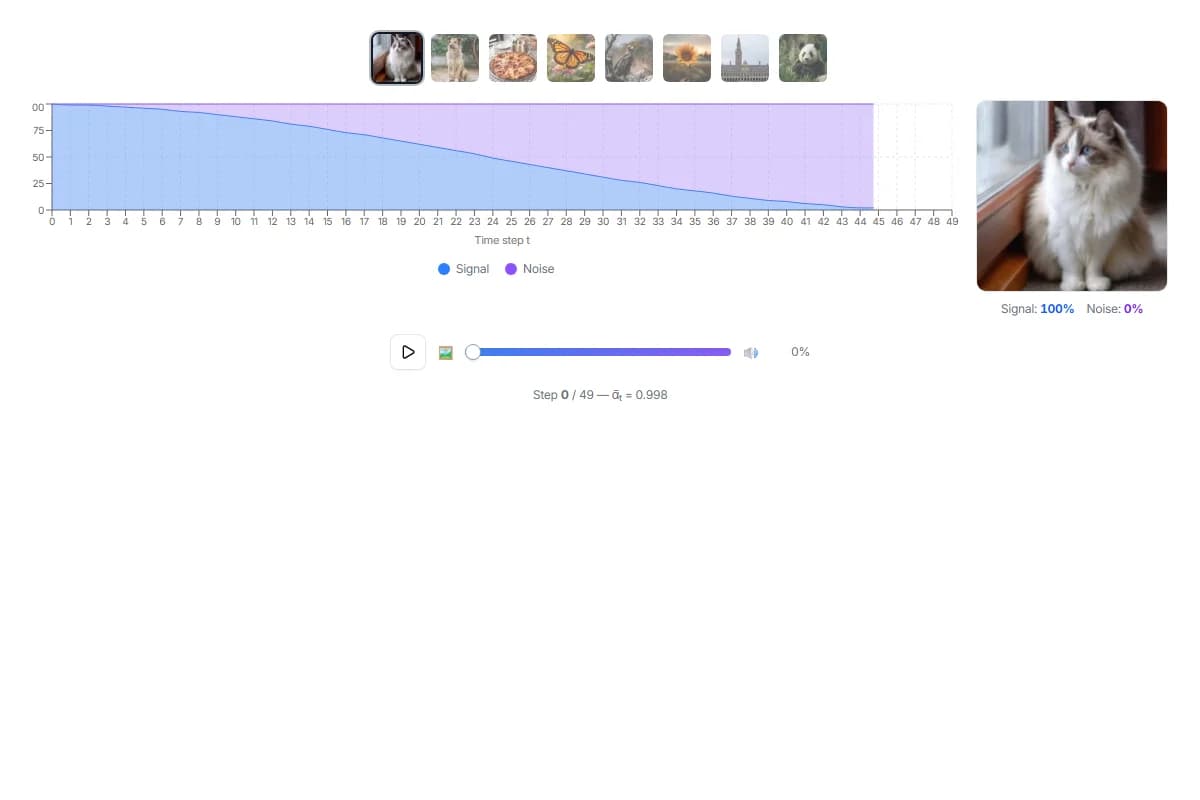
Noise schedule
See the cosine noise schedule and how signal and noise are balanced at each time step.
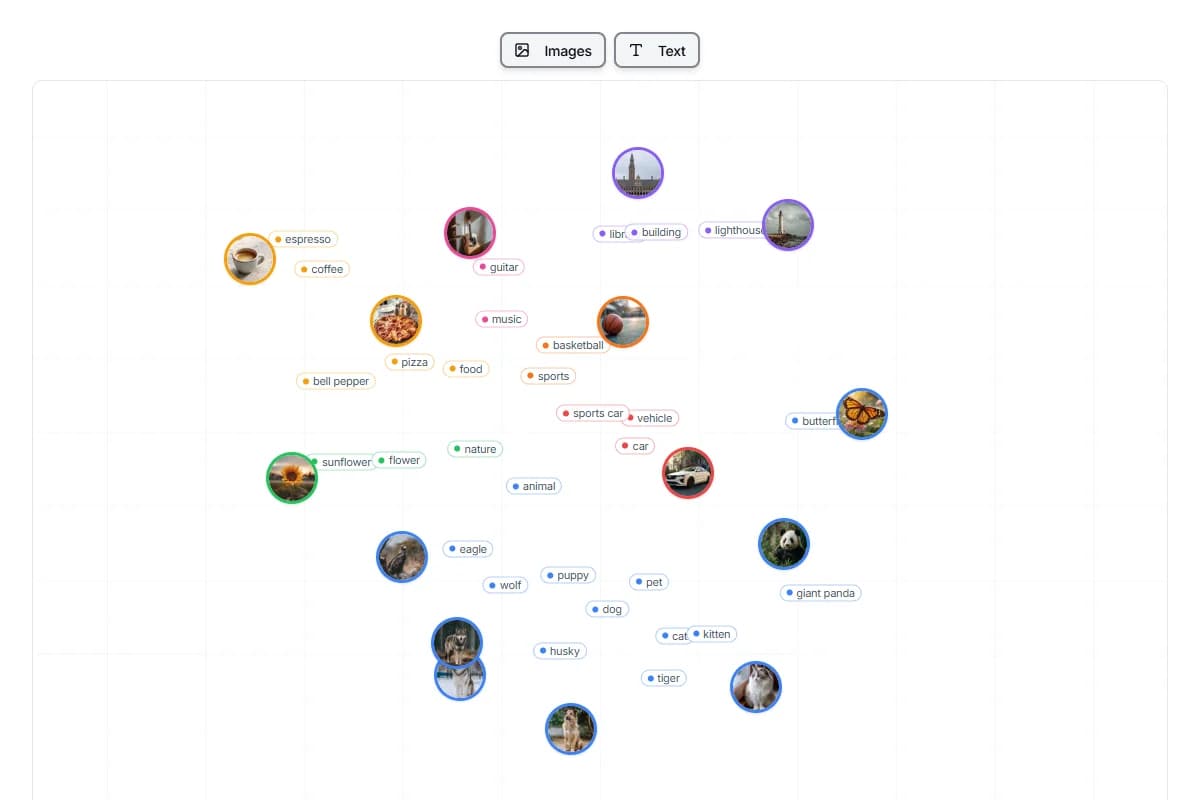
CLIP Latent Space
Explore how CLIP places text and images in the same vector space: similar concepts end up close together.
🌍 Society
Societal impact, ethics, legislation and the future of AI.
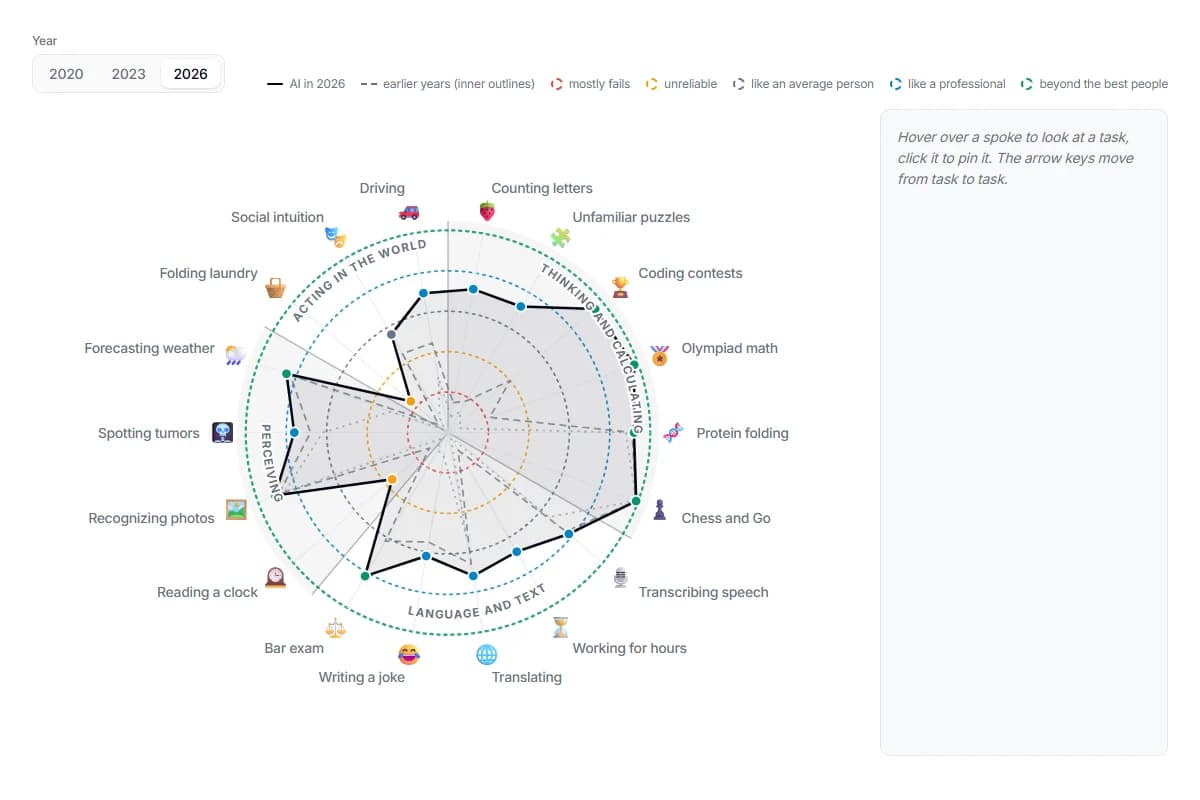
The Jagged Frontier
Every spoke is a task: see how far AI reaches on the colored scale, and switch between 2020, 2023 and 2026 to watch the shape grow.
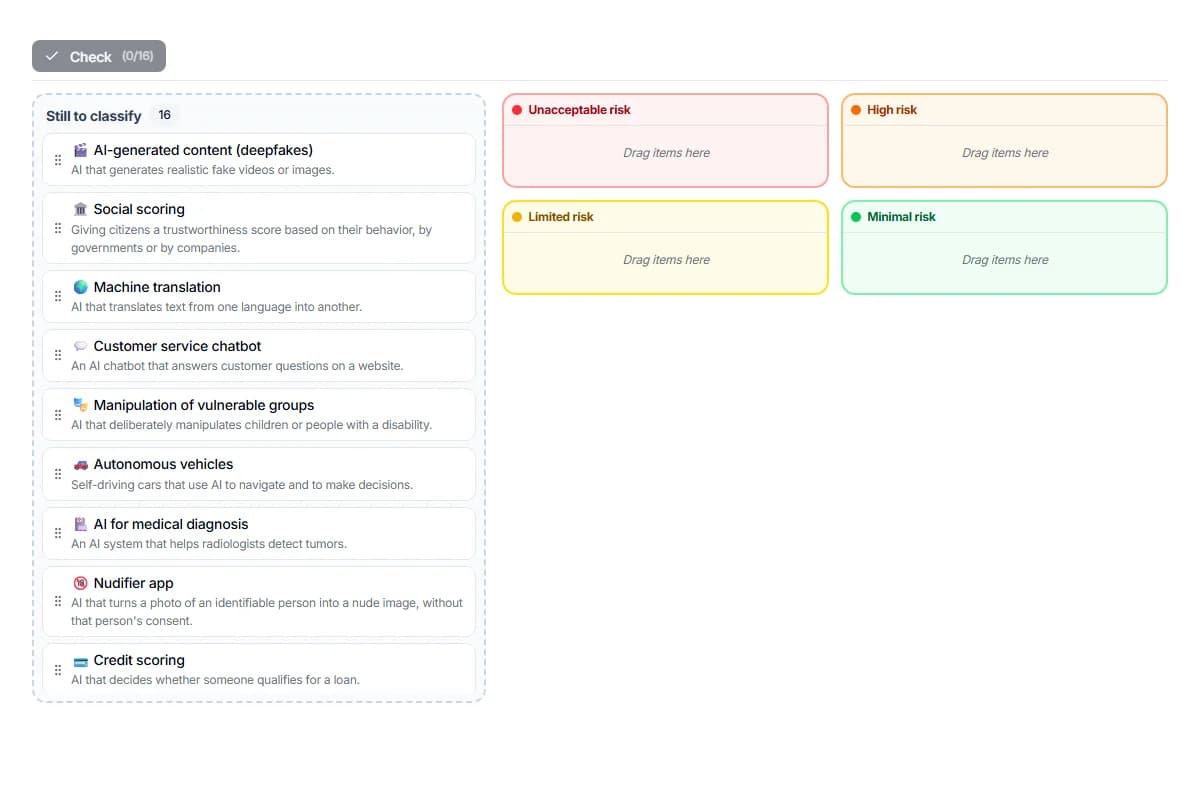
EU AI Act Risk Classification
Sort AI applications into the right risk category of the EU AI Act.
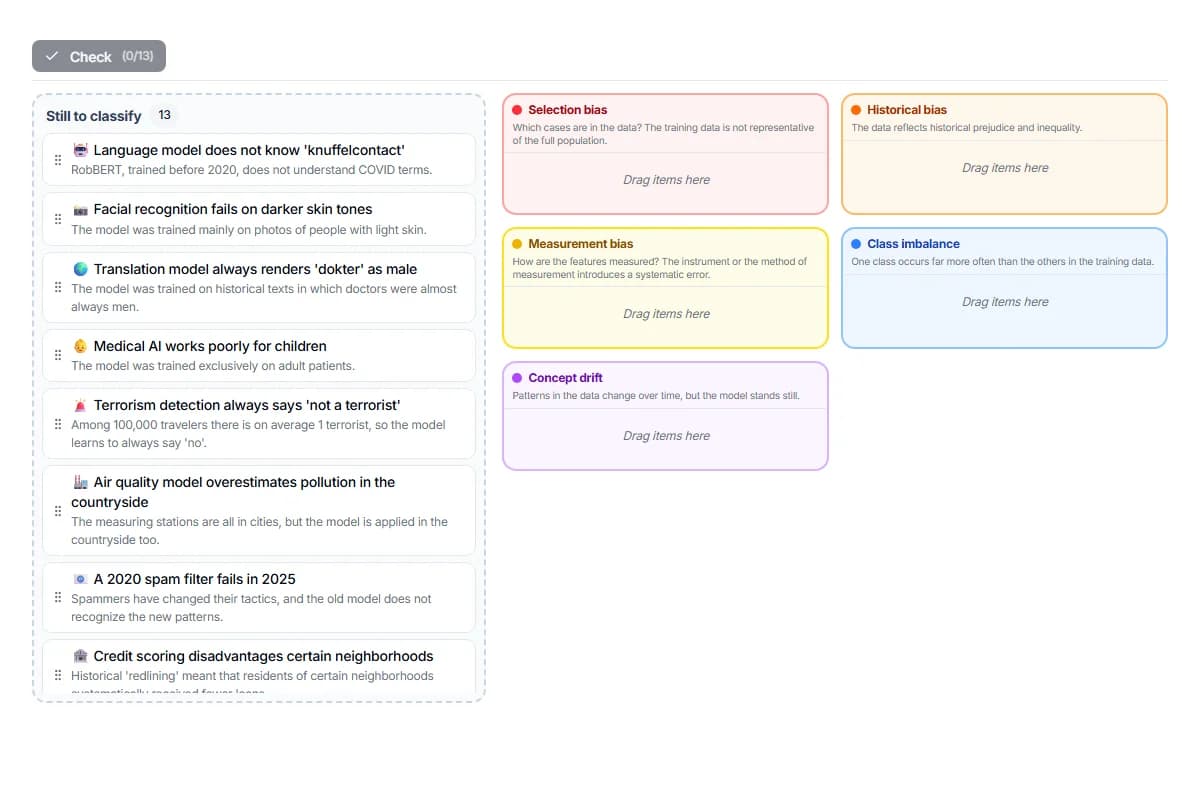
Bias Recognizer
Recognize the type of data bias in examples of AI going wrong.