📓 Notebooks
The notebooks of the course are Jupyter notebooks (external link): documents that alternate explanation with short pieces of Python code that you run and change yourself. You run them in Google Colab (external link) without installing anything, or you download the file and open it on your own computer.
🧪 All notebooks
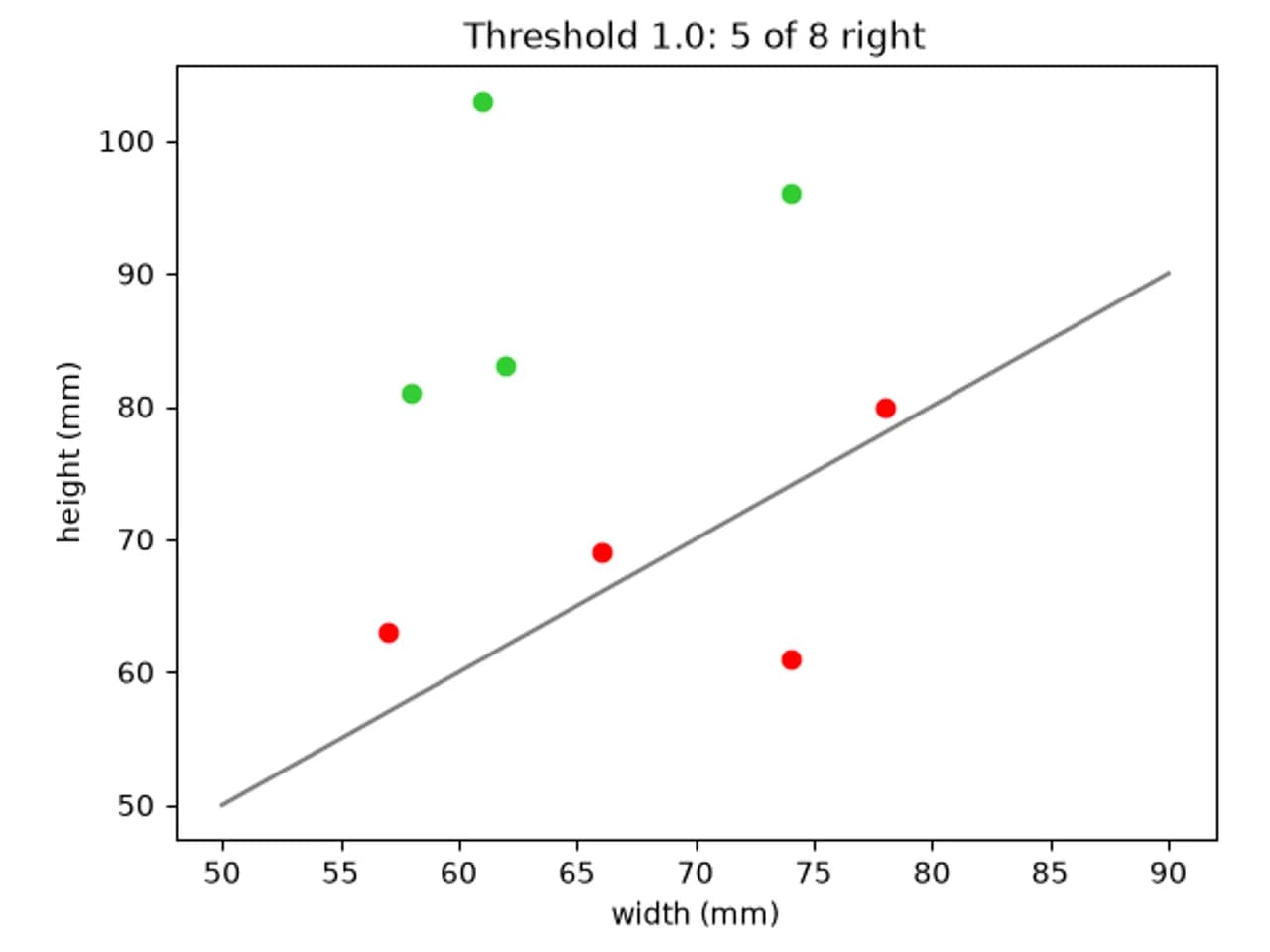
A short, optional start for anyone who has never worked with Python or a notebook: how a notebook works and which building blocks of Python the other notebooks use, with a rule that tells apples from pears.
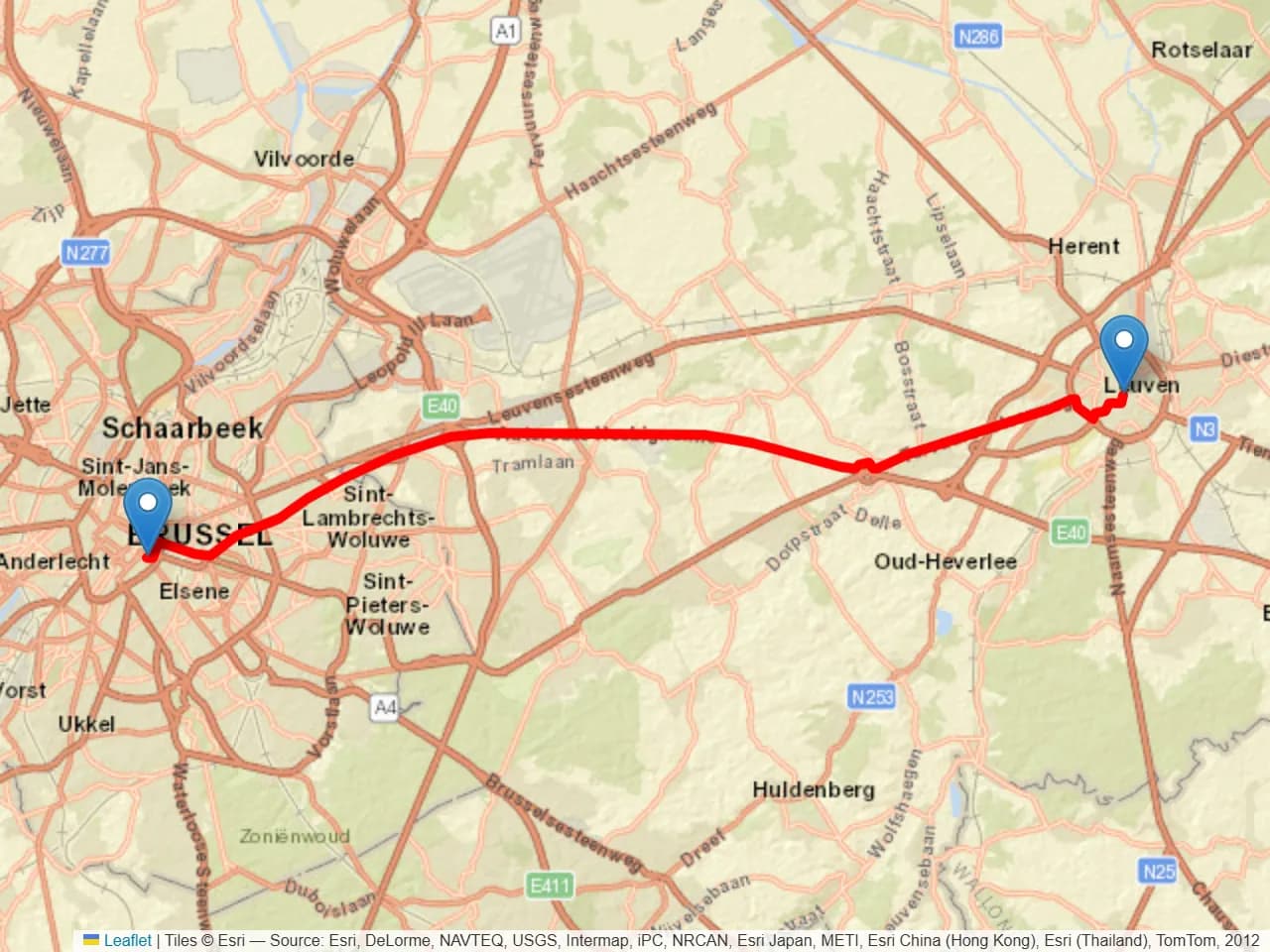
An implementation of A*, applied to a word ladder and to a real route between two places on OpenStreetMap.
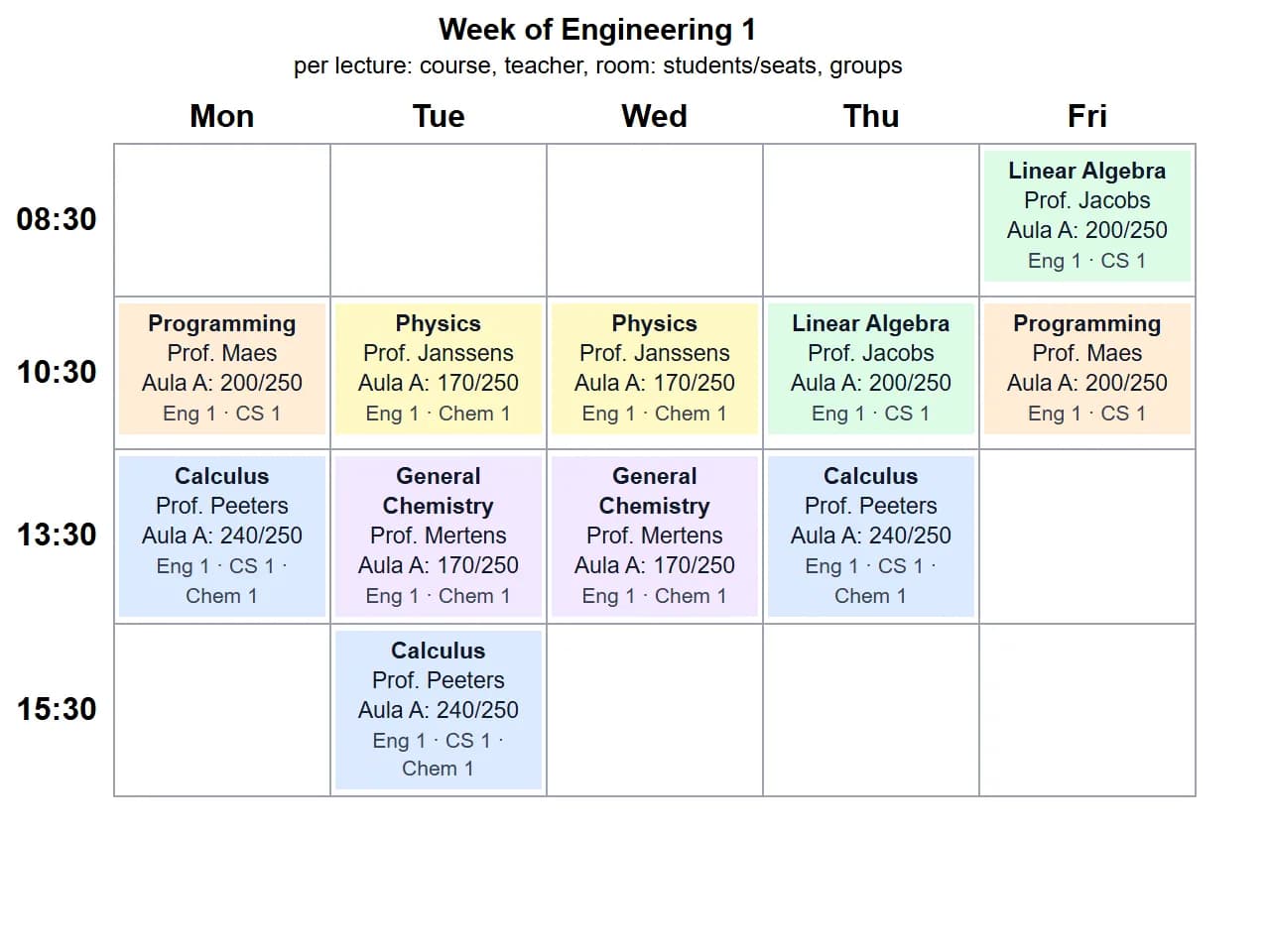
A Secret Santa draw and a full weekly timetable for a small faculty, with rules in Python and the solver CPMpy.
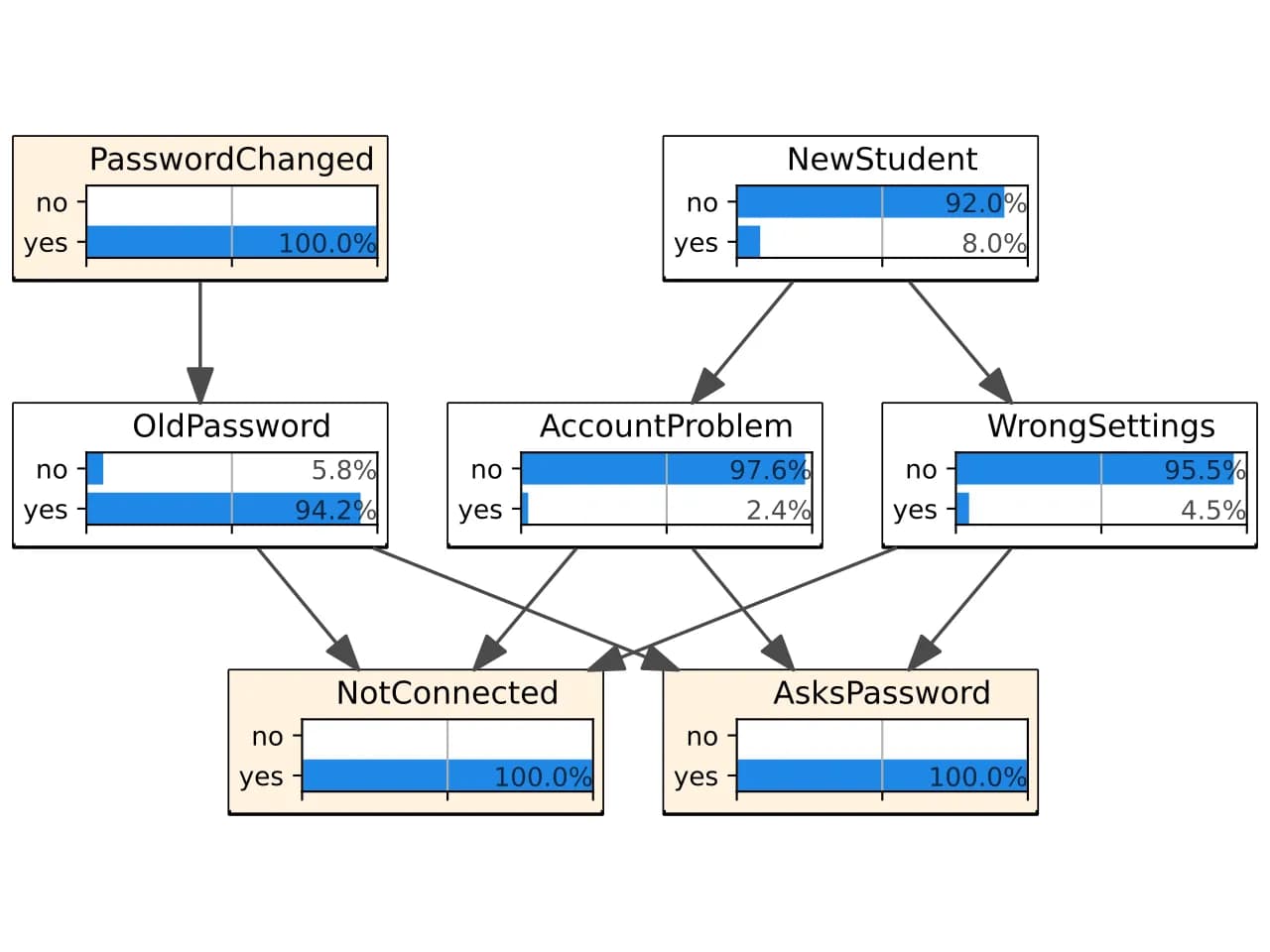
The sprinkler network and a 22-variable troubleshooter for Wi-Fi problems, built in Python with pyAgrum.
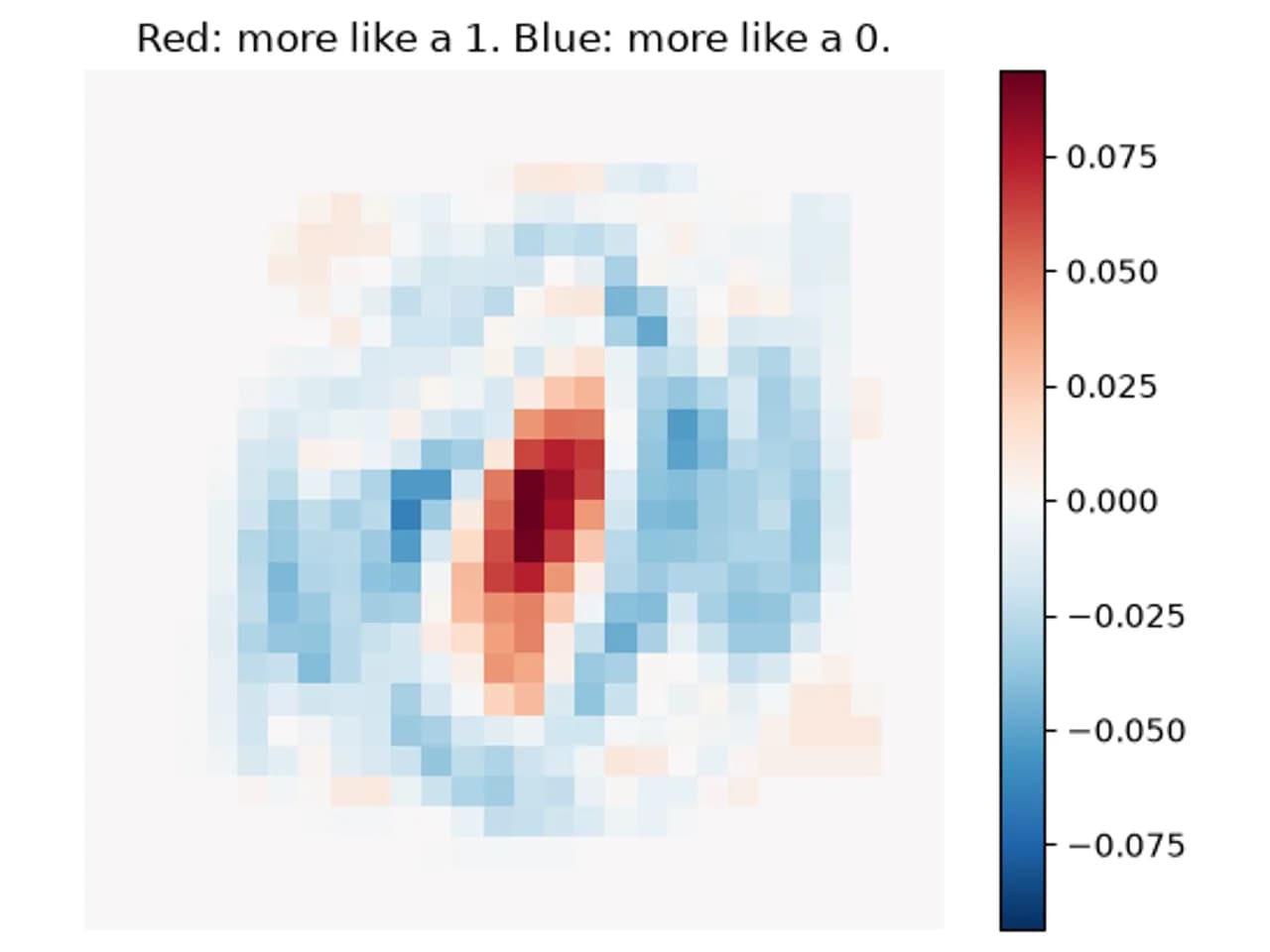
The apples and pears from the chapter, handwritten digits and a kernel: find support vectors, read weights as numbers and as an image, and see why you scale features first.
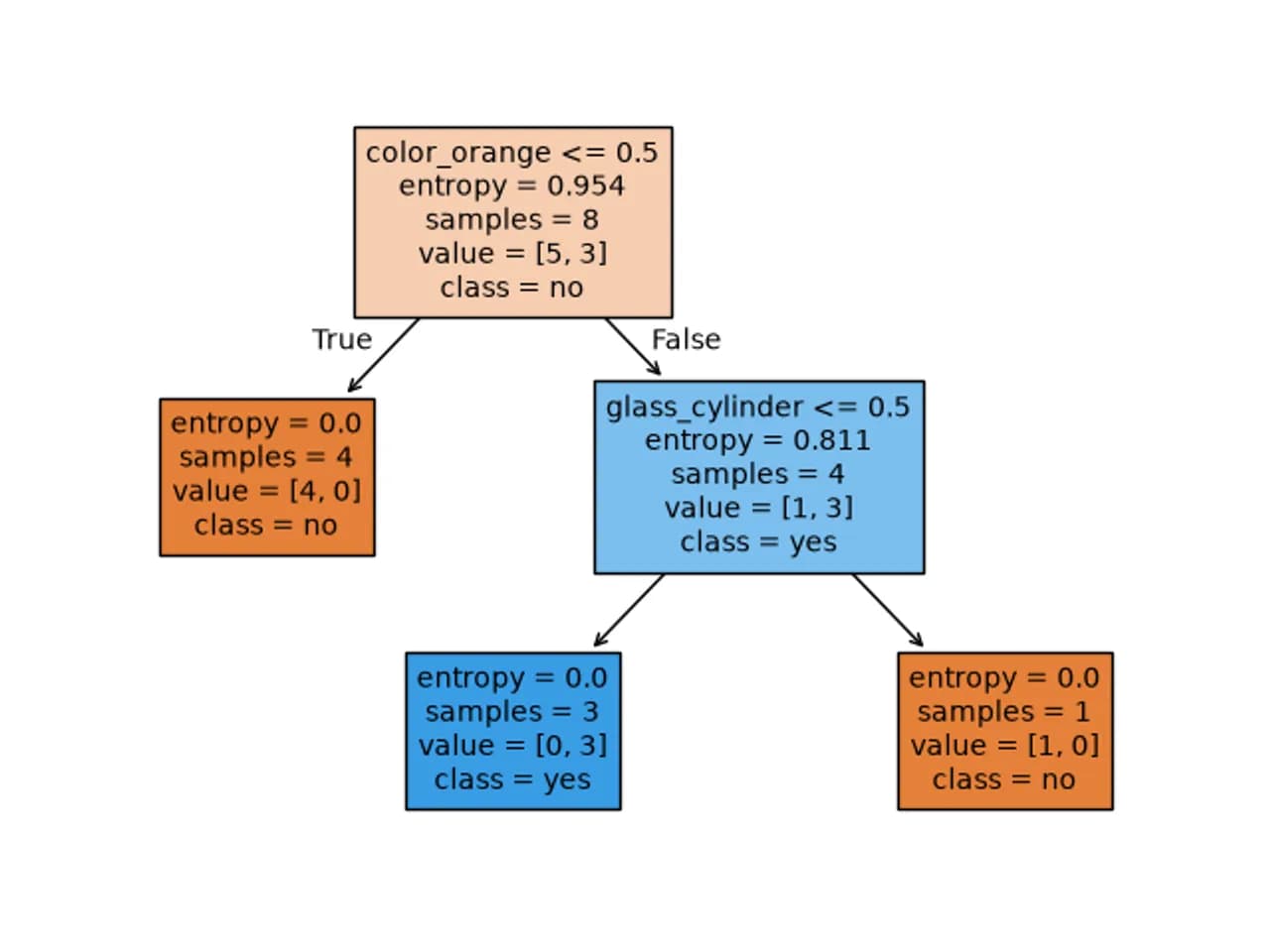
The cocktails from the chapter and a milling machine that sometimes fails: read the questions of a tree, compare a random forest with one tree, look at the feature importance, and let a tree find the failure rules of the machine.
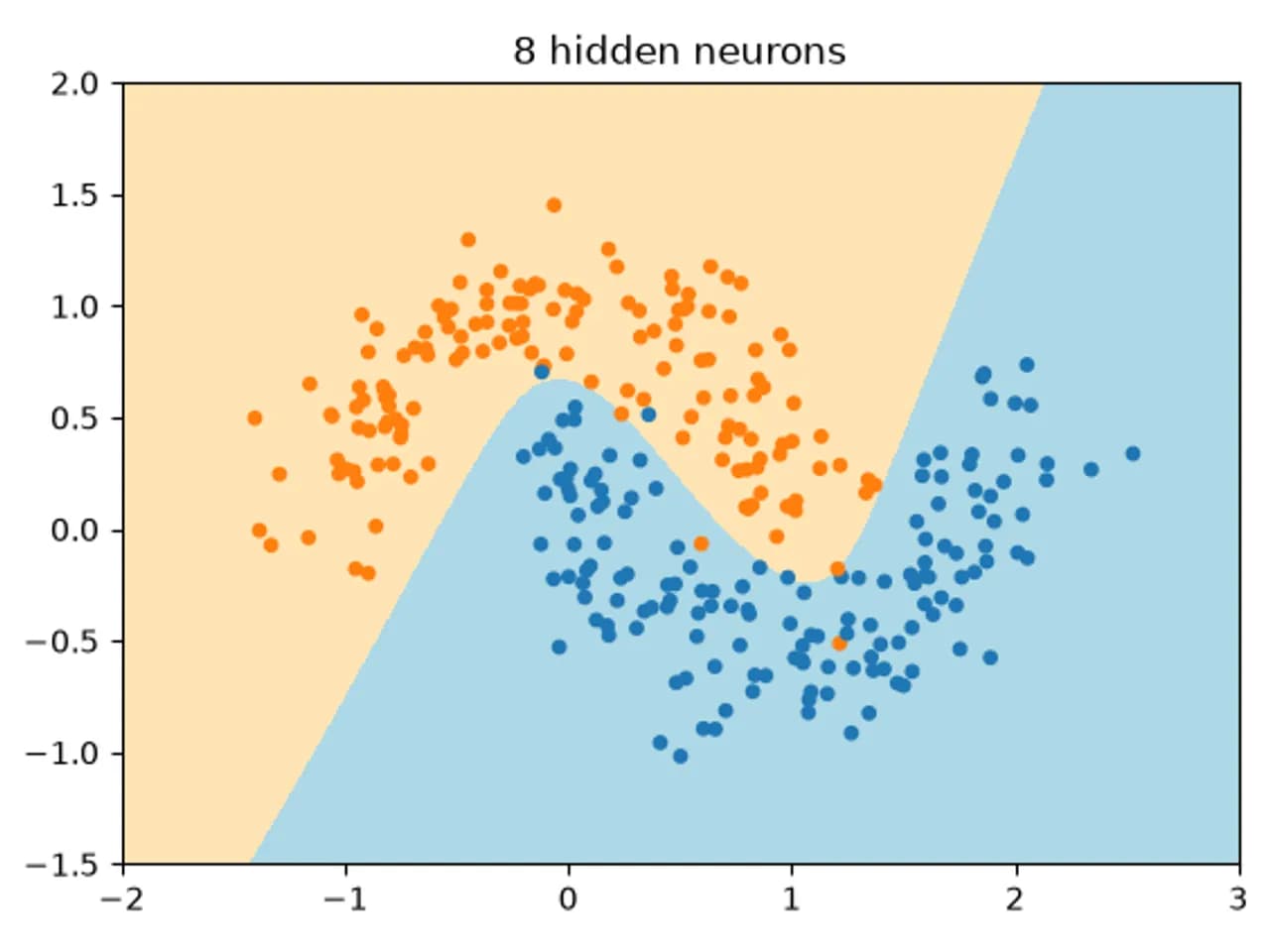
Two half-moons and handwritten digits in PyTorch: train a neuron and a network yourself, rebuild the network from the handwriting demo, choose how big it should be, and see which digits it reads wrong.
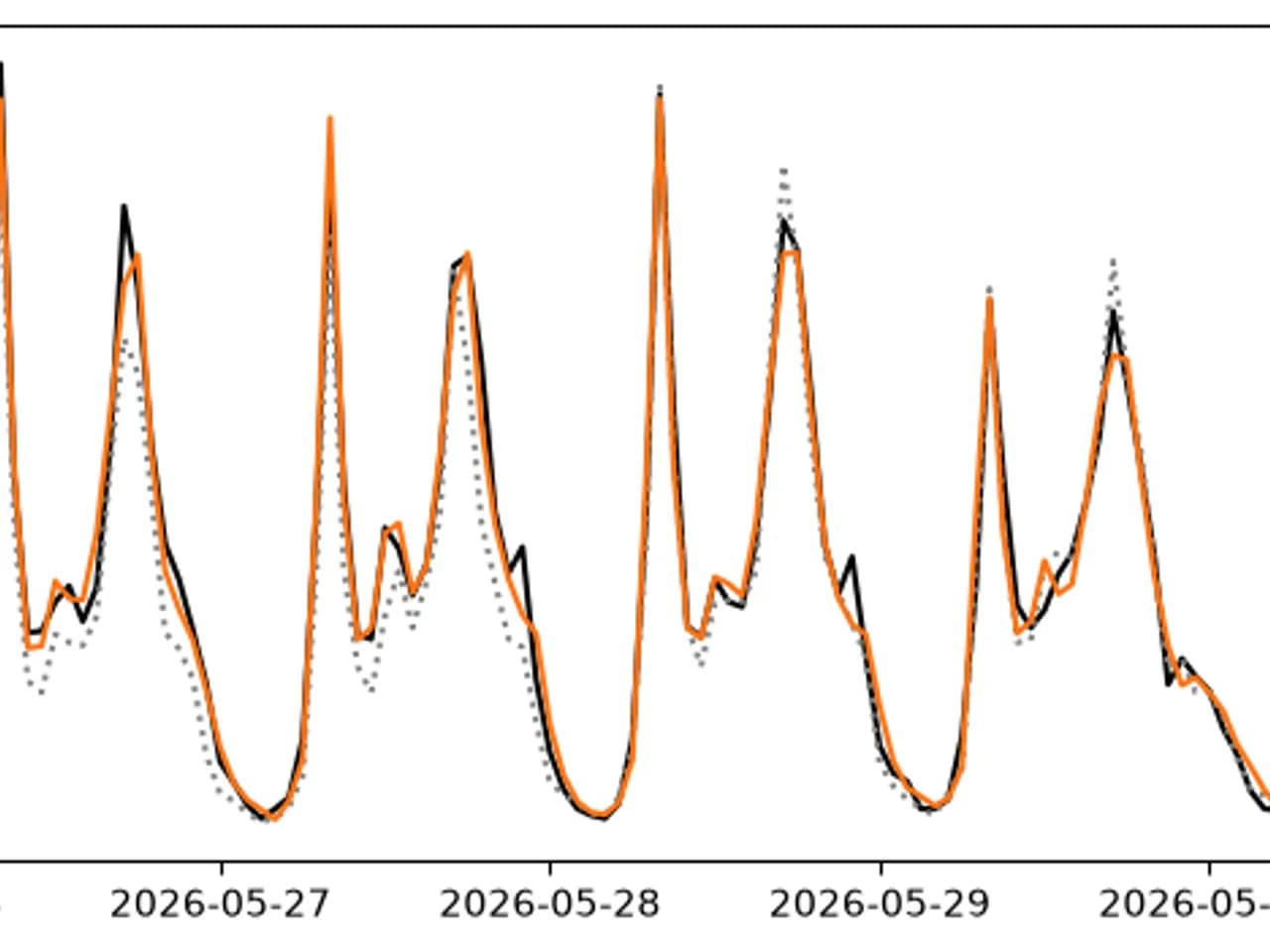
A bike counter at the VUB in Brussels, hour by hour for four and a half years: split the series in time, measure three rules of thumb, train a GRU in PyTorch that reads the counts hour by hour, and see on which days it goes wrong.
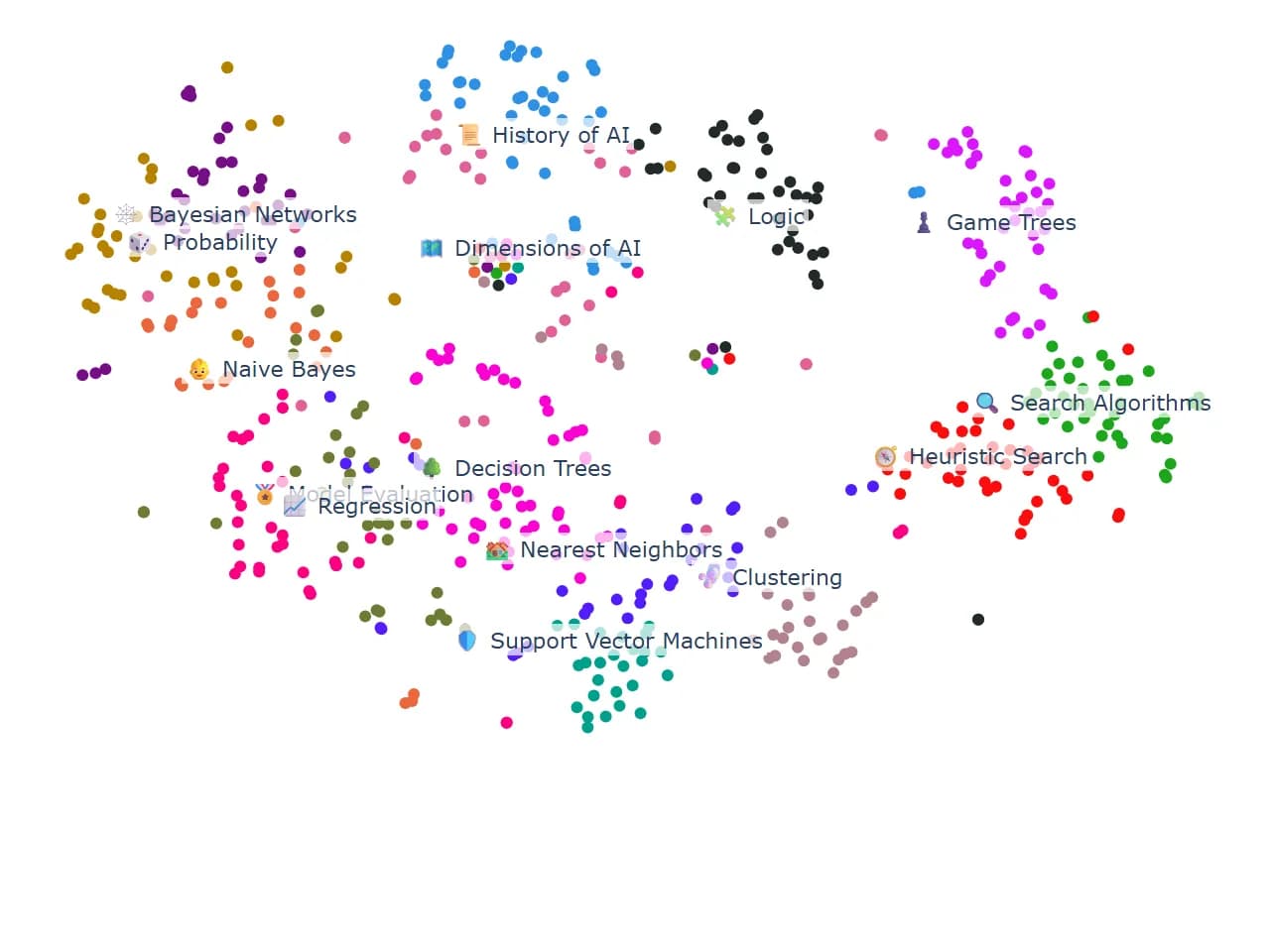
Sentences become numbers, and this course becomes data: a map of all its sections, topics that k-means and hierarchical clustering find on their own, a search engine that searches on meaning, and as an extra a study assistant that looks things up in the course before it answers, with links.
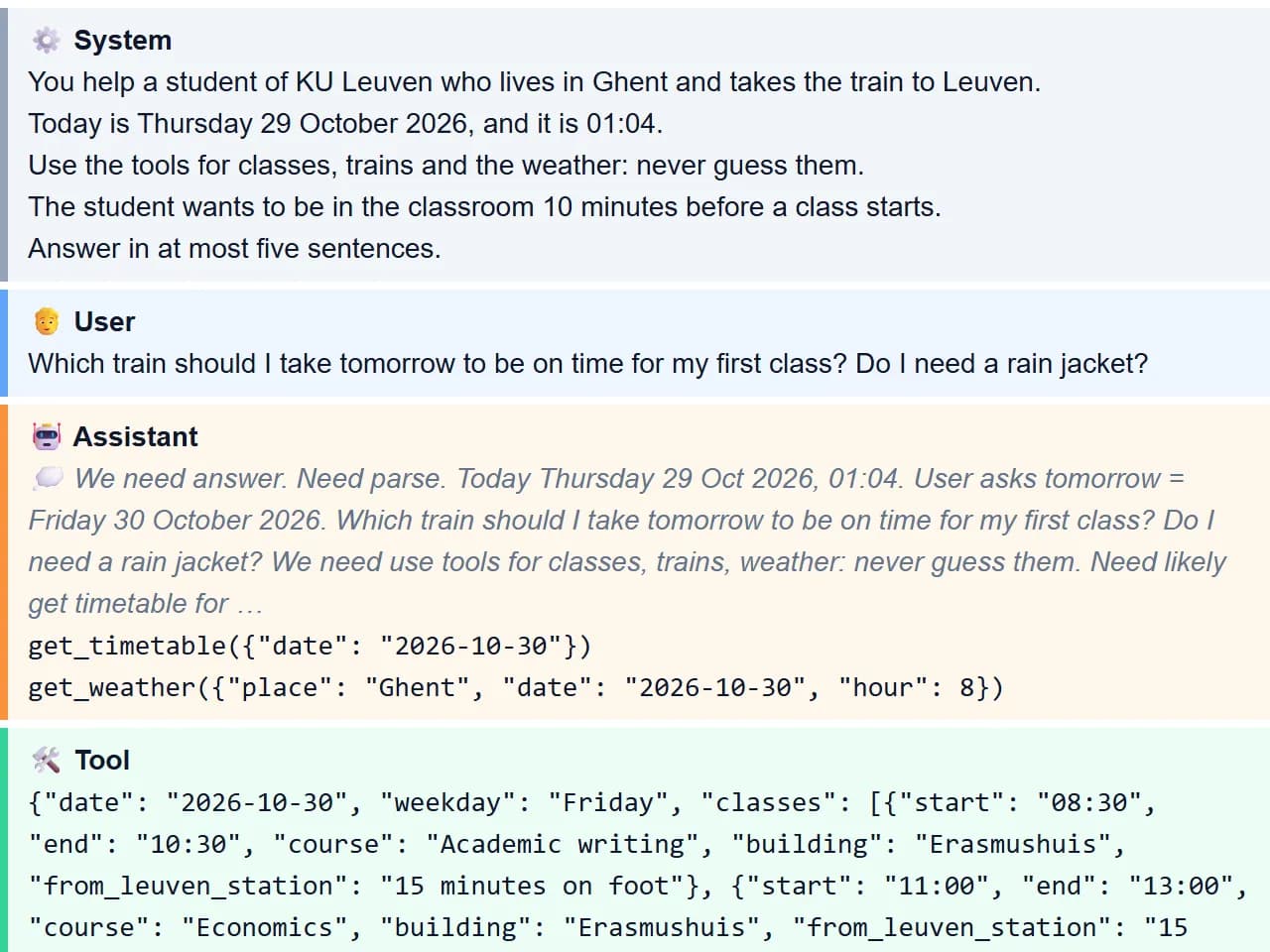
Call a free language model from Python, and make it an agent that plans which train takes you to your first class, with the live train times, the weather forecast and your timetable.
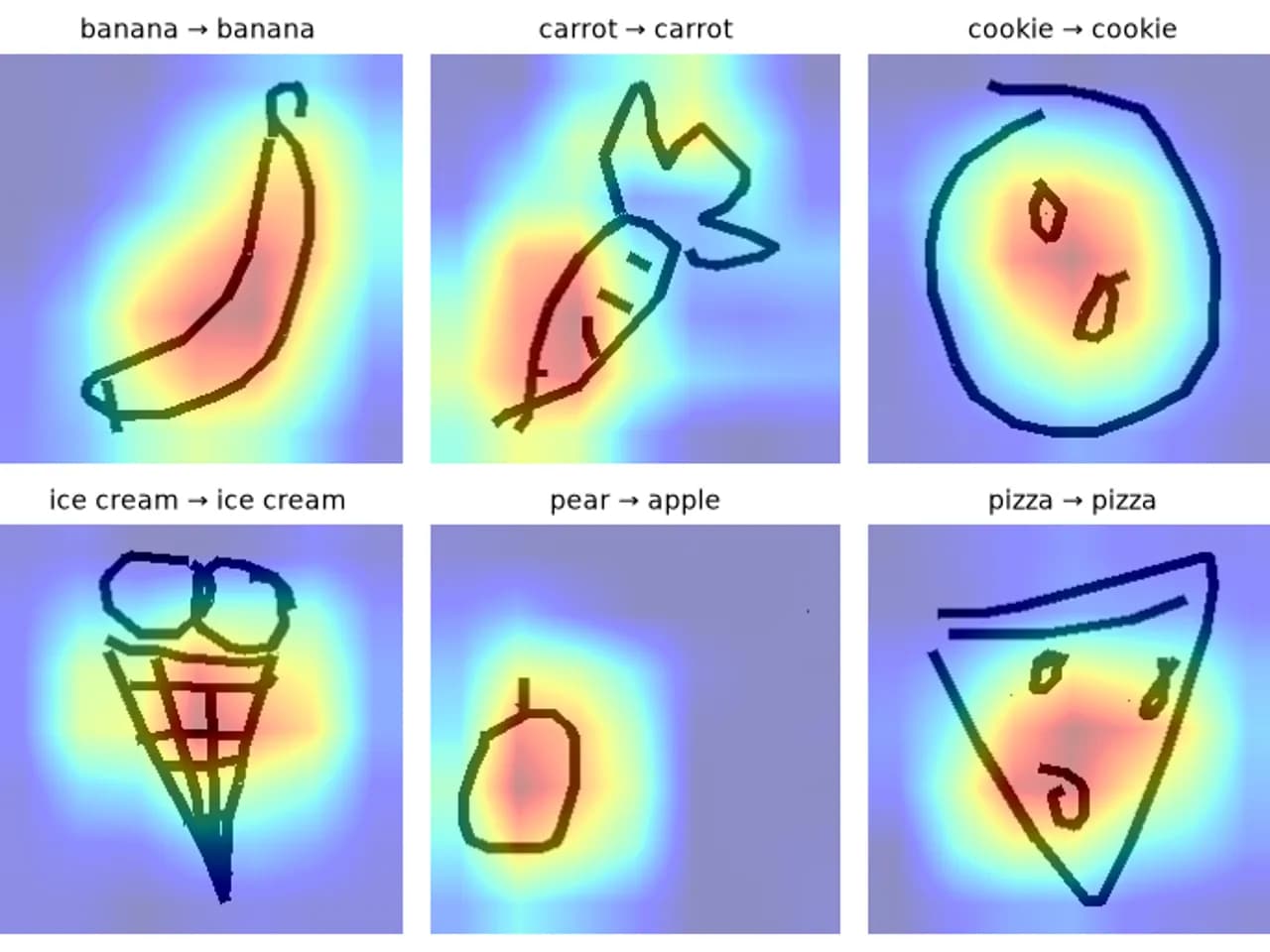
A network that has seen more than a million photos recognizes the photos from the demo. Then you teach a network to recognize ten kinds of food from only a hundred doodles per kind: first with a small CNN from scratch, with and without data augmentation, then by reusing the trained network, with its mistakes and a heatmap of where it looks.
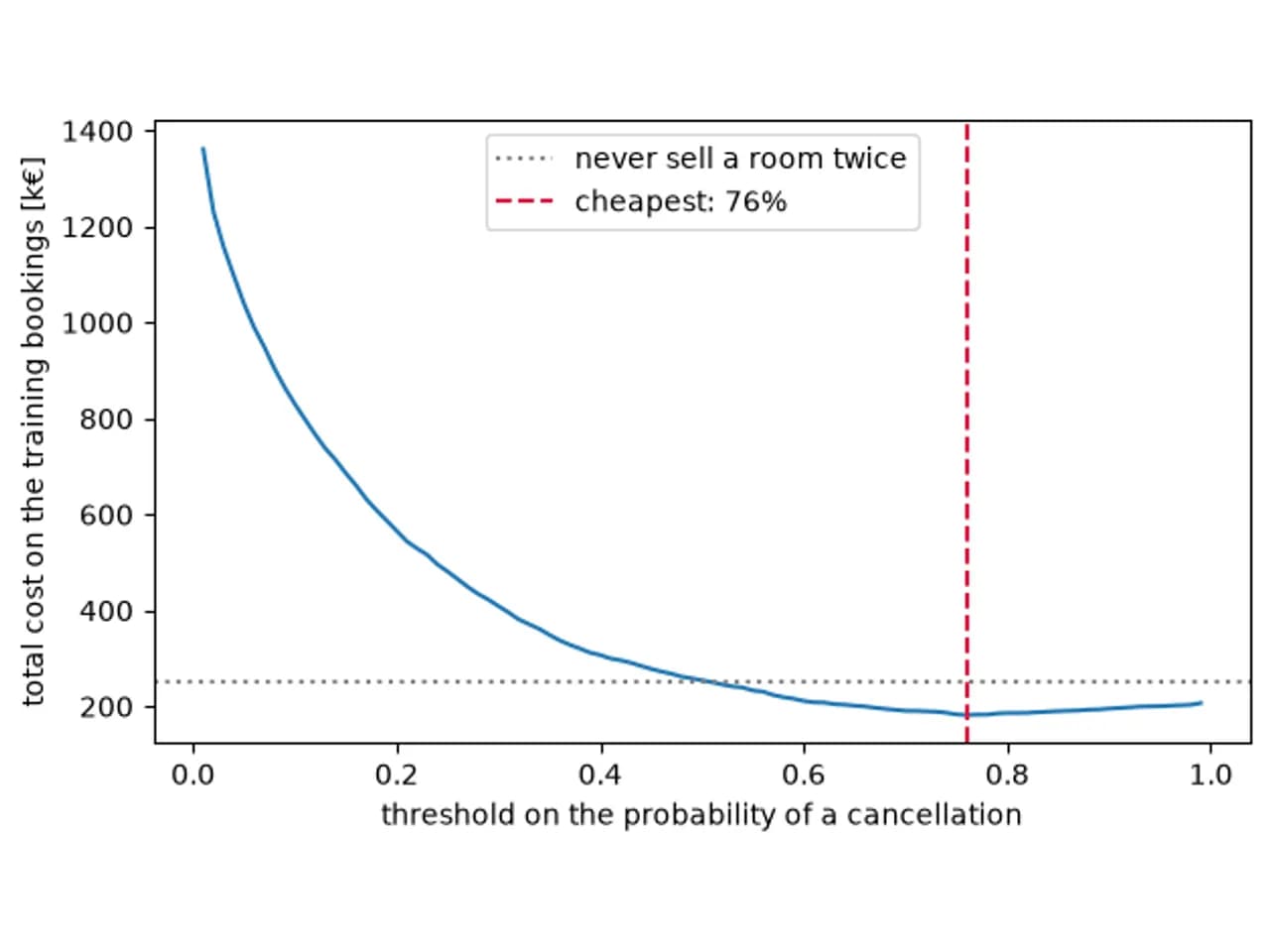
The full pipeline to evaluate AI models that predict whether a hotel guest will cancel their booking, step by step: setting aside a test set, selecting features without data leaks, preparing the data, comparing seven models with cross-validation, choosing a threshold from what each mistake costs, studying the chosen model, and measuring it once on the test set.